Uttar Pradesh set aside ₹1,000 crore in its 2024-25 budget for one scheme with a blunt goal: turn one lakh young people a year into business owners. The Mukhyamantri Yuva Udyami Vikas Abhiyan, or CM YUVA, gives a UP resident aged 21 to 40 with at least a Class 8 pass a collateral-free loan for a project of up to ₹5 lakh. The state pays the interest for four years, adds a 10% margin money subsidy and covers the credit guarantee fee. Borrowers who repay on time can come back for a larger second loan.
Key Takeaways
- CM YUVA covers UP residents aged 21 to 40 with a Class 8 pass and government skill training or a recognised certificate, diploma or degree.
- Phase 1 subsidises a project of up to ₹5 lakh: interest-free for four years, 10% margin money subsidy, CGTMSE guarantee with the fee paid by the state.
- Your own contribution is 15% (general), 12.5% (OBC) or 10% (SC, ST, Divyang and backward or aspirational districts).
- On a ₹5 lakh project, a general-category borrower puts in ₹75,000, borrows ₹4.25 lakh and, on our assumptions, avoids roughly ₹1.02 lakh of interest.
- Anyone who has already used another central or state interest or capital subsidy (PM SVANidhi excepted) is not eligible.
What CM YUVA Actually Pays For
The scheme was announced in March 2024 with a target of 10 lakh units over ten years, financed by nationalised, scheduled and rural banks, SIDBI and other RBI-notified lenders. It is run by the state’s MSME department, which describes it on the MSME 1-Connect portal as interest-free lending of up to ₹5 lakh, followed by a second, larger loan with a smaller subsidy. Banks treat it as a composite loan, part term loan and part working capital, with at least 10% of the project cost as term loan, according to Canara Bank’s scheme page.
| Feature | Phase 1 (new unit) | Phase 2 (expansion) |
|---|---|---|
| Maximum project cost | ₹10 lakh, but subsidies apply only to the first ₹5 lakh | ₹20 lakh |
| Interest support | 100% for four years | 50% for three years |
| Margin money subsidy | 10% of project cost, on up to ₹5 lakh | None |
| CGTMSE guarantee fee | Paid by the state for four years, up to ₹5 lakh project cost | Paid by the state for three years, up to ₹7.5 lakh loan |
| Collateral | None; the assets created are the security | None stated beyond CGTMSE cover |
| Repayment | Term loan over four years, including up to six months’ moratorium | Term loan over four years |
Figures compiled from the state MSME portal, the ODOP UP scheme page and Canara Bank (data as of October 2026). Canara also says the interest rate the bank charges on the subsidised portion is capped, currently at 10% a year, so the state’s bill per borrower is predictable.
Who Is Eligible for the CM YUVA Loan?
- Residence: a permanent resident of Uttar Pradesh. The scheme is not open to units set up in other states.
- Age: 21 to 40 years.
- Education: at least Class 8 pass. Bank of Baroda says Intermediate pass applicants get preference.
- Skills: training under a state or central scheme, such as Vishwakarma Shram Samman, ODOP training and toolkit, the SC/ST/OBC training schemes or UP Skill Development Mission courses, or a certificate, diploma or degree from a recognised institution.
- No earlier subsidy: you must not have taken an interest or capital subsidy under any other central or state scheme. PM SVANidhi is the only exception, and banks ask for a notarised affidavit.
- Udyam registration: mandatory, per Canara Bank.
Businesses the Scheme Will Not Fund
The negative list rules out tobacco products, alcohol and fizzy drinks, firecracker manufacturing and plastic carry bags thinner than 40 microns (or any thickness the Centre or state bans). Land and buildings cannot be counted in the project cost, so the money goes to machinery, equipment, fit-out and working capital. Manufacturing, service and rural enterprises all qualify, the MSME department’s own explainer says.
How Much of Your Own Money You Need
The contribution is paid upfront, before the bank releases the loan. Bank of Baroda’s terms set it by category, with a flat 10% for every applicant in economically backward areas and aspirational districts.
| Applicant | Own contribution | On a ₹5 lakh project | Bank loan |
|---|---|---|---|
| General category | 15% | ₹75,000 | ₹4,25,000 |
| OBC | 12.5% | ₹62,500 | ₹4,37,500 |
| SC, ST, Divyang | 10% | ₹50,000 | ₹4,50,000 |
| Any category, backward area or aspirational district | 10% | ₹50,000 | ₹4,50,000 |
That ₹4.5 lakh ceiling matches the maximum Phase 1 loan Bank of Baroda lists. Canara Bank names Bundelkhand, Purvanchal and districts such as Chitrakoot, Sonbhadra and Bahraich among the backward areas, though its wording on the 10% rate is less clear than Baroda’s, so confirm with your branch.
Worked Example: A ₹5 Lakh Tailoring Unit in Lucknow
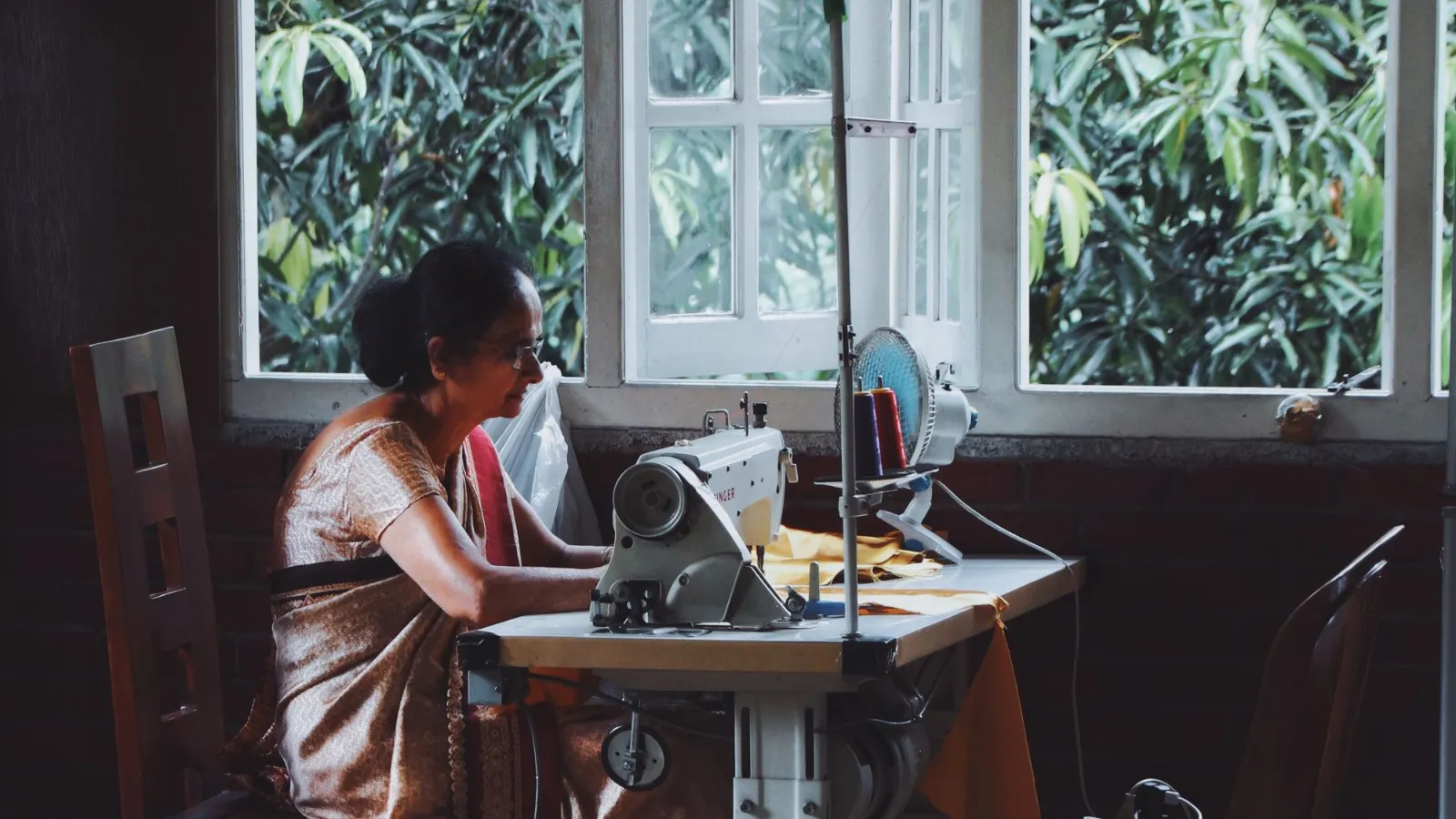
Take a 26-year-old general-category applicant in Lucknow with an ODOP training certificate who wants to set up a small garment unit costing ₹5 lakh in machines and starting stock. To estimate the interest the state absorbs, we assumed the whole loan behaves like a term loan at the 10% cap, with six months of moratorium followed by 42 equal monthly instalments. Real loans split between term loan and working capital, so treat the interest figure as an order of magnitude. We ran the numbers in Python.
| Item | Amount |
|---|---|
| Project cost | ₹5,00,000 |
| Own contribution (15%) | ₹75,000 |
| Bank loan | ₹4,25,000 |
| Margin money subsidy (10% of project cost, back-ended) | ₹50,000 |
| Interest during six-month moratorium at 10% | ₹21,250 |
| Interest over 42 instalments at 10% (EMI ₹12,035) | ₹80,455 |
| Total interest paid by the state | ≈ ₹1,01,705 |
| Principal-only instalment the borrower actually funds | ≈ ₹10,119 a month |
Put together, the state’s support is worth roughly ₹1.5 lakh on this project: about ₹1.02 lakh of interest plus the ₹50,000 subsidy, before counting the CGTMSE fee. The subsidy is back-ended, which means it is adjusted against the loan later instead of landing in your account on day one. Budget for the full ₹4.25 lakh repayment schedule when you work out whether the unit can carry its instalments. Our EMI guide walks through the formula, and a break-even check tells you how many sales a month the ₹10,119 instalment needs.
What If the Project Costs ₹8 Lakh?
Phase 1 allows projects of up to ₹10 lakh, but the benefits stop at the first ₹5 lakh. On an ₹8 lakh project the margin money subsidy is still ₹50,000, and the extra ₹3 lakh is priced, margined and guaranteed under the bank’s normal rules. You would pay full interest on that slice from the first month.
Phase 2: The Expansion Loan
Borrowers who repay the Phase 1 principal within four years can apply for a second loan; anyone who defaulted cannot, Canara Bank says. Official descriptions of its size differ. The state portal describes Phase 2 loans of ₹10 lakh to ₹20 lakh with a 50% interest subsidy for three years. Bank of Baroda puts it at twice the first loan or ₹7.5 lakh, whichever is lower, and Canara allows projects of up to ₹20 lakh but limits the state-paid guarantee fee to loans of ₹7.5 lakh. Our reading is that the subsidised slice tops out around ₹7.5 lakh even when the project is bigger, but ask the District Industries and Entrepreneurship Promotion Centre before you plan around it. There is no margin money subsidy in Phase 2.
How to Apply for CM YUVA, Step by Step
- Get Udyam registration: banks will not process the loan without it.
- Register on the state portal: create a profile on the Directorate of Industries UPMSME portal linked from MSME 1-Connect, choose CM YUVA from the beneficiary section and fill in the project details.
- District review: the application goes to the District Industries and Entrepreneurship Promotion Centre, which forwards it to a bank, per ODOP UP.
- Bank appraisal: the branch assesses the project under its own norms, collects your contribution and sanctions the composite loan.
- Subsidy and guarantee: the bank claims the margin money, interest reimbursement and CGTMSE fee from the state through its nodal office.
For documents, Canara Bank lists identity proof with its MSME application form, address proof for the unit and promoter, licences and permissions, financial statements with ITRs and projections where available, guarantor details, a stock statement and the Udyam certificate. Add the training or education certificate and the no-previous-subsidy affidavit. The state helpline is 155343.
Where Applications Most Often Fall Short
- An earlier subsidy: a past PMEGP or other central or state interest or capital subsidy disqualifies you.
- Land in the budget: a project cost that includes buying land or a building has to be redrawn.
- Missing contribution: the margin is front-ended, so your share has to be in place before the loan is released.
- Negative-list activity: tobacco, liquor, aerated drinks and thin plastic bags are out regardless of the plan.
More guides on loans and state schemes sit in our Finance section.
This article is for information and education only and is not investment, tax or financial advice. Figures were checked on 28 October 2026; confirm current details with the official source or a registered adviser before acting.
FAQ
Is the CM YUVA Loan Really Interest-Free?
For Phase 1, yes, on a project of up to ₹5 lakh. The state reimburses 100% of the interest for four years. Any loan above that limit carries normal interest.
What Is the Age Limit for CM YUVA?
21 to 40 years. You also need to be a permanent UP resident with at least a Class 8 pass.
Is Collateral or a Guarantor Needed?
No collateral. The loan is covered by CGTMSE, and the assets bought with it serve as security. Banks may still ask for guarantor details under their own norms.
Can I Apply If I Took a PM SVANidhi Loan?
Yes. PM SVANidhi is the only earlier scheme that does not disqualify you. Any other central or state interest or capital subsidy does.
How Much Is the Margin Money Subsidy?
10% of the project cost, calculated on a maximum of ₹5 lakh, so ₹50,000 at most. It applies only in Phase 1.