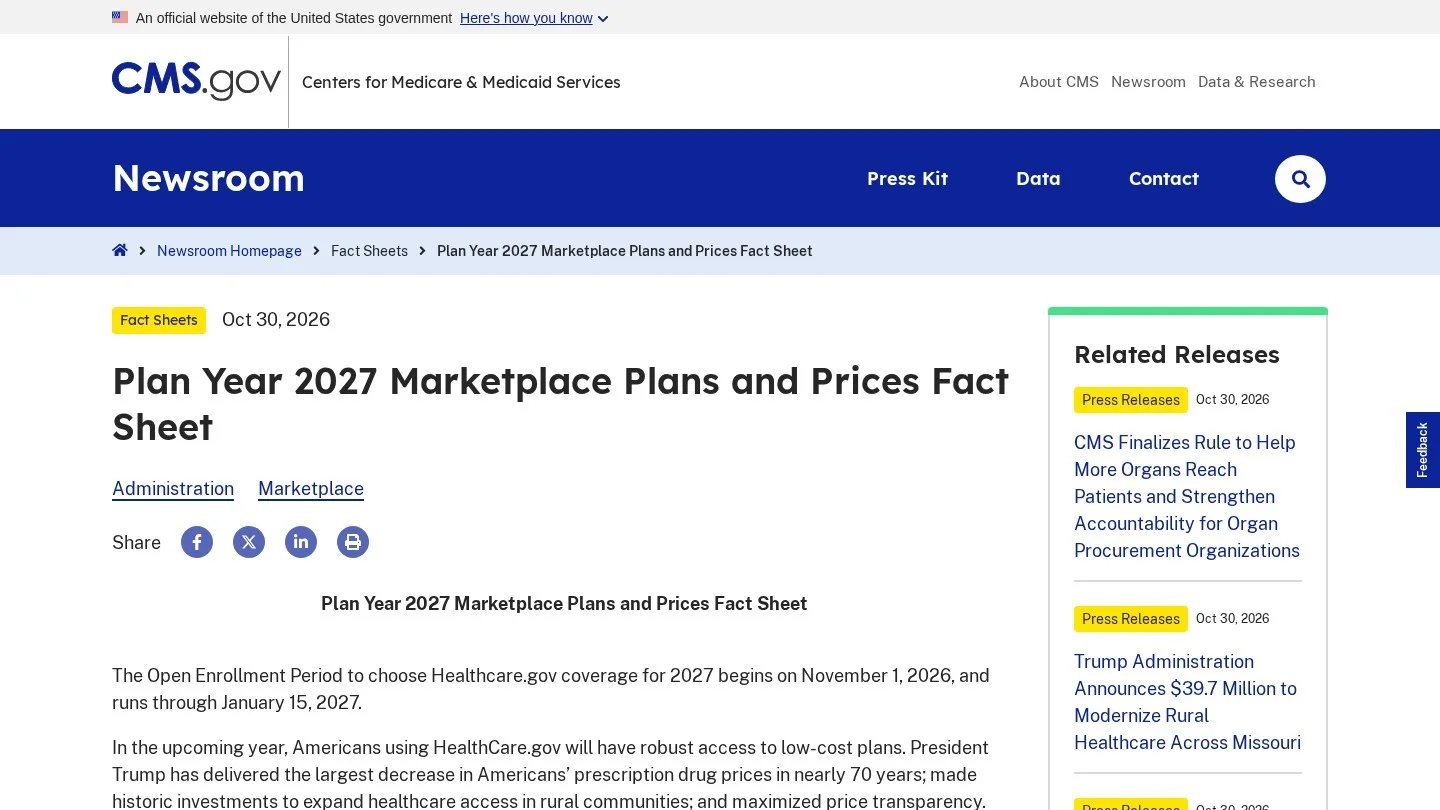
Shopping for Affordable Care Act coverage for 2027 opened on November 1, 2026, and the first number most buyers will see is higher. Benchmark silver premiums are up about 13% on average for 2027, after a 26% jump the year before. The Centers for Medicare & Medicaid Services released its plan year 2027 Marketplace fact sheet on October 30. Open enrollment runs through January 15, 2027, in HealthCare.gov states, and December 15 is the deadline for coverage that starts January 1.
This year’s window also brings smaller subsidies for many people, new limits for some immigrants and stricter checks on enrollment. For the self-employed and small business owners who rely on the Marketplace, the stakes are high.
2027 ACA Enrollment in Seven Figures
- Open enrollment for 2027 coverage started November 1, 2026, in most states and ends January 15, 2027, on HealthCare.gov.
- Benchmark silver premiums rose about 13% on average: around 11% in HealthCare.gov states and around 16% in state-run Marketplaces.
- People earning above 400% of the federal poverty level no longer qualify for premium tax credits.
- More than 75% of HealthCare.gov shoppers can find a plan for $50 or less.
- Eleven insurers have announced exits from at least one state, including Cigna, which is leaving the individual market in all 11 of its states.

The ACA Enrollment Calendar for 2027 Coverage
Most states opened on November 1, but not all. Idaho started on October 15, and Connecticut and Massachusetts started on October 23. Deadlines also differ by state.
| Group of states | Enroll by, for January 1 coverage | Open enrollment ends |
|---|---|---|
| All HealthCare.gov states | December 15, 2026 | January 15, 2027 |
| Massachusetts | December 23, 2026 | January 23, 2027 |
| Rhode Island | December 23, 2026 | January 31, 2027 |
| California, New Jersey | December 31, 2026 | January 31, 2027 |
| Virginia | December 31, 2026 | January 29, 2027 |
| Idaho | December 15, 2026 | December 15, 2026 |
Maryland, Nevada, New Mexico, Oregon and Washington also accept sign-ups until December 31 for January 1 coverage. New York and the District of Columbia keep enrollment open until January 31, 2027.
A rule that would have cut open enrollment to nine weeks was vacated in court. So the familiar mid-January end date holds for this cycle.
Why ACA Premiums Rose Again for 2027
The average benchmark silver increase is about 13%, with HealthCare.gov states near 11% and state-based Marketplaces near 16%. The rise is driven mainly by rising health care costs and hospital market concentration.
Subsidies cushion most buyers. For people eligible for tax credits, the federal government pays nearly 90% of the premium for the lowest-cost plan, up from 85% in 2020. People with income above 400% of the poverty level get no tax credit at all, so they pay the full increase.
Consider what a 13% rise means for someone paying full price. A hypothetical $600 monthly premium would become $678, or $8,136 a year instead of $7,200. That is $936 more for the same type of plan. You can run your own numbers with our percentage calculator.
What Shoppers Will Find on HealthCare.gov
The CMS fact sheet focuses on choice. On average, HealthCare.gov shoppers will have five to six insurers in their area and about 100 plans. More than 75% can find a plan for $50 or less. Shoppers will have about 35 plans eligible for health savings accounts on average, which CMS calls a more than 1,000% increase. The lowest-cost catastrophic plan averages nearly 10% less than the next cheapest plan at other metal levels.
Those figures apply to HealthCare.gov states. People in states that run their own exchange should check that exchange directly.
Subsidy and Eligibility Changes Taking Effect
Several rule changes hit at once this year. These are the main ones:
- Higher earners: People above 400% of the poverty level do not qualify for premium tax credits.
- Some lawfully present immigrants: Immigrants other than green card holders, Cuban and Haitian entrants and Compact of Free Association residents lose premium tax credits. They can still buy coverage at full price. This change is projected to leave one million more people uninsured by 2035.
- Tax time repayments: Caps on paying back excess tax credits are gone from the 2026 tax year. If your income rises during the year, you could owe much more when you file.
- Medicaid work rules: From 2027, people denied or removed from Medicaid only for not meeting work requirements cannot get premium tax credits in affected states.
- Broker checks: A pause on new agent and broker registrations runs until February 2027, and new conduct standards apply. HHS also cancelled about 760,000 enrollments it called “phantom” enrollments.
Some states are filling part of the gap. New Mexico fully replaced lost federal help in 2026 and continues in 2027. California is expanding partial help to households at 165% to 200% of the poverty level. New Jersey, Rhode Island and Virginia also run state subsidy programs.
Who Is Most Affected by the 2027 Changes
The self-employed and freelancers: Without employer coverage, many buy Marketplace plans. Anyone who sets prices should include the new premium in their costs; our freelance hourly rate calculator lets you add it as an overhead. Sole traders using bookkeeping tools for 1099 contractors should track income through the year, because the repayment caps are gone.
Small business owners: Owners who are not covered through a group plan face the same price rise. A clear small business expense spreadsheet helps plan for the monthly premium.
Early retirees: People not yet on Medicare whose income is above the 400% line now pay the full premium, with no tax credit.
Current enrollees in plans that are leaving: As of October 29, 11 insurers had announced exits from at least one state, and 7 had announced entries. Cigna is leaving the individual market in all 11 states where it sells. If your insurer is leaving, you need to pick a new plan.
Enrollment Is Expected to Fall
Fewer people are buying. Plan selections for 2026 fell by 1.2 million, and paid enrollment stood at 19.2 million in February 2026, down 12%. Enrollment is projected to drop from a 2025 peak of 22.4 million to 13.1 million in 2027.
Cynthia Cox of KFF put it this way: “I think there’s going to be fewer people enrolled in this market, but it’s going to be harder to understand why.” Price, smaller subsidies, tighter checks and insurer exits are all pulling in the same direction.
How Shoppers Can Approach the 2027 Season
Most subsidized shoppers can still find a cheap plan. The bigger increases land on everyone else: buyers above the subsidy line, some immigrants, and people caught by new paperwork rules.
The practical advice is simple. Do not let last year’s plan roll over without checking it. Prices, insurers and subsidy amounts have all changed. Update your income estimate with care, since overestimating subsidies now carries a bigger tax bill. And if a bronze or catastrophic plan looks cheaper, compare the deductible as well as the monthly premium before you switch.
ACA 2027 Enrollment Questions From Shoppers
When Is the Deadline for ACA Open Enrollment for 2027?
In HealthCare.gov states, open enrollment runs from November 1, 2026, to January 15, 2027. Enroll by December 15, 2026, for coverage starting January 1. Some state exchanges have later dates.
How Much Are ACA Premiums Going Up in 2027?
Benchmark silver premiums are up about 13% on average for 2027. The rise is about 11% in HealthCare.gov states and about 16% in state-run Marketplaces.
Can I Get an ACA Subsidy if I Earn Over 400% of the Poverty Level?
No. For 2027, people with income above 400% of the federal poverty level do not qualify for premium tax credits.
Is Cigna Leaving the ACA Marketplace?
Cigna is leaving the individual market in all 11 states where it currently sells. Its enrollees need to choose a new plan.
How Many Plans Are Available on HealthCare.gov for 2027?
HealthCare.gov shoppers have about 100 plans to choose from on average, offered by five to six insurers in their area.