
Expect a Fuel Charge on Nearly Every Parcel You Ship
A shipping fuel surcharge is a percentage that carriers add on top of your postage to cover fuel costs. UPS and FedEx reset theirs every week from US government fuel prices. USPS added its first one in April 2026, and in October it posted plans to make it weekly too. So the fuel line on your label is now a moving cost for every online seller in the US.
We researched the fuel pages of all three carriers and the USPS filings. Then we compiled how each one sets its rate and what the rate is charged on. We also worked out how sellers can protect their margin. In our original research we found one detail that changes the math. At FedEx, the fuel percentage also lands on surcharges such as residential delivery. So the real fuel cost runs higher than the headline rate suggests.
| Carrier | What the fuel charge follows | How often it changes | What it is charged on |
|---|---|---|---|
| USPS (temporary) | Flat 8% on base postage | Fixed from 26 April 2026 to 17 January 2027 | Base postage for four package services |
| USPS (planned) | EIA diesel or jet fuel prices | Weekly, from January 2027 | Base postage, excluding extra services |
| UPS | EIA diesel (ground) or Gulf Coast jet fuel (air) | Every Monday | Transportation charges and listed accessorial charges |
| FedEx | National diesel average (ground) or Gulf Coast jet fuel (other services) | Weekly | Net package rate plus listed surcharges |

Follow the USPS Switch From a Flat 8% to a Weekly Fuel Fee
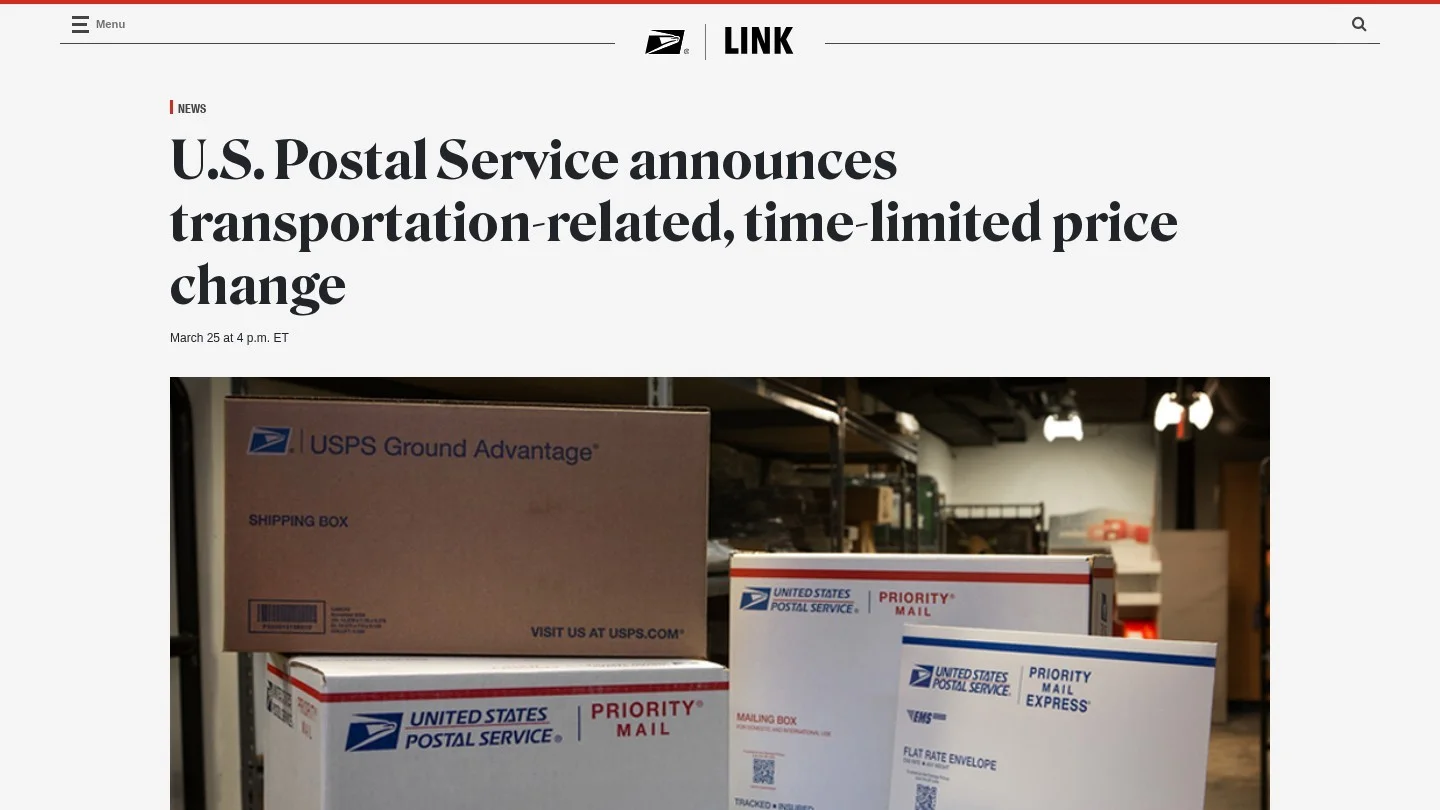
USPS had long avoided package surcharges. That changed in 2026. On 25 March, the Postal Service announced a time-limited 8% increase on base postage. It covers Priority Mail, Priority Mail Express, USPS Ground Advantage and Parcel Select. First-Class stamps were left out.
Then came the news that matters for next year. On 26 October 2026, USPS posted a Fuel Surcharge Implementation FAQ on its PostalPro site, which Supply Chain Dive reported the same day. The FAQ described a weekly fuel surcharge from January 2027 on the same four services. However, Value Added Resource reported that USPS took the FAQ down on 28 October without explaining why. So the plan is public, but the first percentages and the exact start day are not.
We put the dates in one timeline so you can plan around them.
| Date | What happened |
|---|---|
| 24 March 2026 | USPS Board of Governors approved a time-limited price change |
| 25 March 2026 | USPS announced an 8% increase on base postage for four package services |
| 26 April 2026 | The 8% increase took effect at midnight Central time |
| 26 October 2026 | USPS posted an FAQ describing a weekly fuel surcharge from January 2027 |
| 28 October 2026 | The FAQ was removed from the PostalPro site |
| 17 January 2027 | The temporary 8% increase is set to end |
The removed FAQ still gave sellers useful detail. Ground Advantage and Parcel Select would follow diesel prices. Priority Mail and Priority Mail Express would follow jet fuel prices. In each case, the source would be the US Energy Information Administration (EIA). USPS would publish new diesel-based rates 3 to 5 days ahead and jet fuel rates 3 to 4 days ahead. Also, the FAQ warned that a package carrying an old surcharge amount could be charged postage due.
Match Each Carrier’s Fuel Charge to the Fuel Price It Tracks
Every fuel surcharge has two parts. First, there is an index, which is a published fuel price. Second, there is a table that turns that price into a percentage. Ground services follow diesel because trucks carry them. Air services follow jet fuel instead.
Check the UPS Fuel Rules
UPS sets its ground surcharge from the US on-highway diesel price that the EIA publishes, rounded to the nearest cent. Its domestic air and international air surcharges follow the US Gulf Coast price for kerosene-type jet fuel. In fact, a new percentage takes effect every Monday, based on the EIA price from the week before. The percentage on your shipping date applies, even if fuel moves later that week.
The UPS fuel charge also reaches beyond the base rate. It applies to all transportation charges and to certain accessorial and value-added charges on a separate list. Still, there is one gap. UPS Ground packages sent from the 48 contiguous states at retail rates do not carry the ground fuel surcharge.
Check the FedEx Fuel Rules
FedEx Ground, FedEx Home Delivery and International Ground follow the weekly national average price of on-highway diesel. All other FedEx services follow the US Gulf Coast jet fuel spot price. There is a lag between the fuel price and the surcharge. Also, FedEx says percentages and trigger points can change without notice.
Next, look at what the percentage is charged on. For ground parcels, FedEx charges fuel on the net package rate plus listed surcharges. That list includes residential delivery, delivery area, signature options, oversize and additional handling. As a result, a home delivery to a remote ZIP code pays fuel on several lines at once. FedEx also says your customer agreement is the final word on how your surcharge is set.
Work Out the Fuel Cost on One Real Order
Percentages hide the dollars, so we ran the numbers. FedEx listed a ground fuel surcharge of 30.50% for the week of 9 to 15 November 2026. For the example, say your net FedEx Ground rate on a parcel is $11.00 and the residential delivery charge is $5.00. These two inputs are ours for illustration. The fuel rate is the real one from the FedEx page.
| Line on the invoice | Amount | How we got it |
|---|---|---|
| Net ground rate | $11.00 | Example input |
| Residential delivery charge | $5.00 | Example input |
| Base for the fuel charge | $16.00 | $11.00 + $5.00 |
| Fuel surcharge at 30.50% | $4.88 | $16.00 × 0.305 |
| Total before other fees | $20.88 | $16.00 + $4.88 |
| Fuel cost if charged on the rate only | $3.36 | $11.00 × 0.305 |
The gap is $1.52 on one parcel. That is the cost of fuel being charged on the residential fee as well. Now compare USPS for the same idea. Under the temporary 8% rule, a $9.00 Ground Advantage label becomes $9.72. So the fuel cost there is $0.72, again using our own example price.
You can run this on your own invoices with any percentage calculator. First, add the base rate and every surcharge on the fuel list. Then multiply by the week’s fuel percentage. Finally, add that number to your costs in an Amazon seller profit calculator or your own sheet. Your sheet then shows the real margin per order.
Watch the Carrier Tables as Closely as Diesel Prices
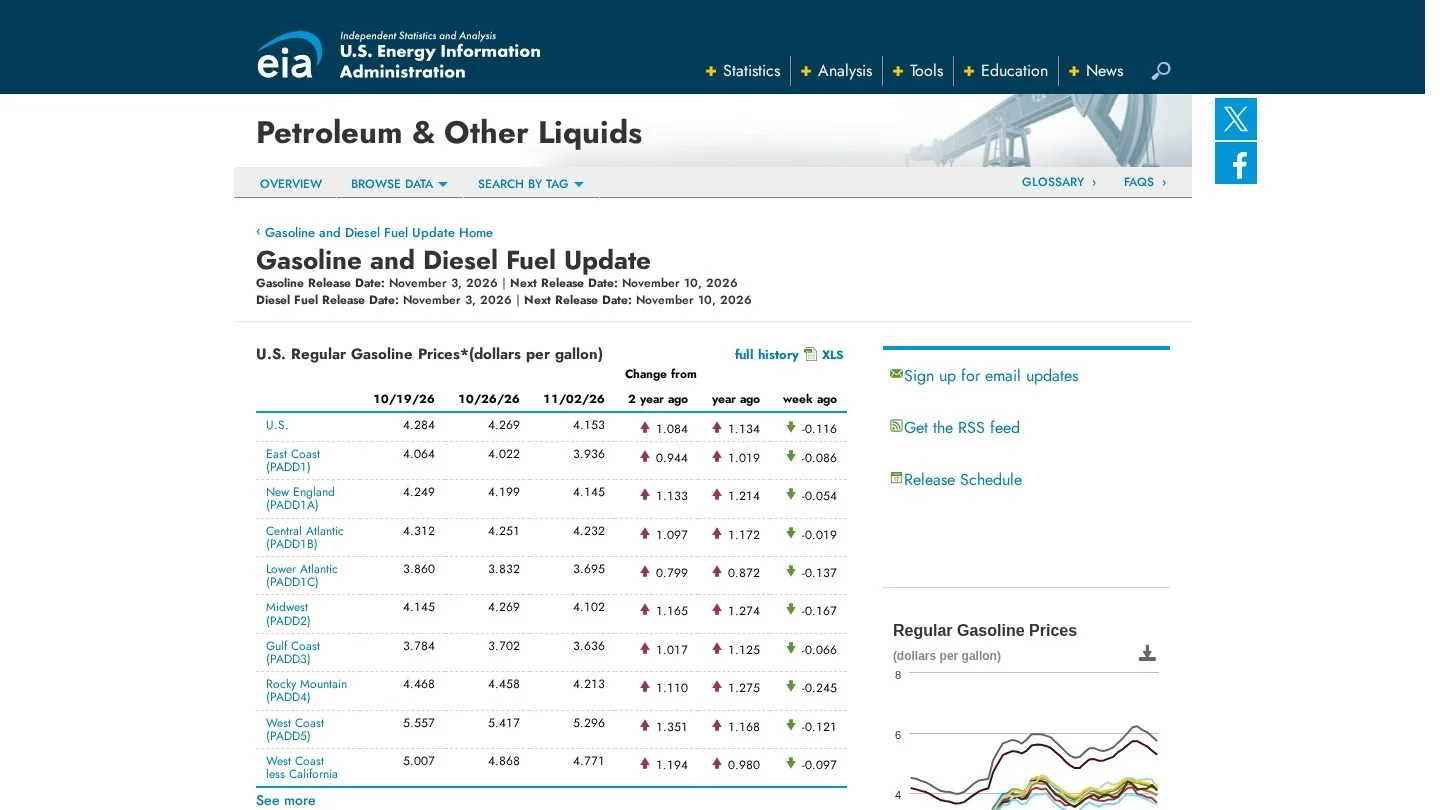
Fuel prices explain only part of the weekly change. The tables matter just as much. For example, the EIA’s US diesel average fell from $6.352 a gallon on 26 October 2026 to $6.292 on 2 November. Even so, the FedEx Ground surcharge rose from 29.25% for the week of 2 November to 30.50% for the week of 9 November. The FedEx page lists a new domestic fuel table effective 9 November 2026.
That is why a falling pump price does not promise a lower fuel line. Carriers can change the table that turns fuel prices into percentages. Because of this, we suggest a weekly habit with three checks:
- Open the EIA Gasoline and Diesel Fuel Update, which publishes new prices each week.
- Open the fuel pages of the carriers you use and note the new percentage.
- Look for a changed table date, since that signals a reset in how fuel prices turn into charges.
Price Shipping So Fuel Swings Do Not Eat Your Margin
A fuel line that moves every week needs a buffer in your prices. So build your customer-facing shipping price on a fuel rate a little above the recent average. For instance, if your carrier’s ground fuel rate has moved between 29% and 31% lately, price on 31%.
Next, check your free shipping threshold. A free shipping offer means you pay the fuel charge yourself. Therefore, the threshold has to cover the label, the fuel and the packing. Our break-even calculator shows how many orders you need once shipping is part of the cost.
Also, remember that returns pay fuel too. The removed USPS FAQ said the planned surcharge would cover return services as well. So a generous returns promise now costs a little more per parcel. Our collection of ecommerce return policy examples shows how stores word who pays for the return label.
Marketplaces pass the cost through, too. For instance, eBay told sellers the USPS 8% charge would show up automatically in eBay label prices. It also appeared in the eBay shipping calculator from 26 April 2026. As a result, a seller who prints labels on a marketplace still pays the surcharge, even without a carrier account.
Shrink the Charges the Fuel Percentage Lands On
The fuel percentage multiplies whatever sits under it. So the cheapest fuel saving is a smaller base. First, cut charges that trigger added fees. At FedEx, oversize and additional handling charges both sit on the fuel list. A box that crosses one of those limits pays the extra fee and then pays fuel on it.
Second, right-size your packaging. A smaller box can bring a parcel under a size limit and reduce the rate itself. Our list of sustainable packaging suppliers for small business includes firms that sell boxes in many sizes.
Third, compare services on the total after fuel. A cheaper base rate with heavy surcharges can end up dearer after fuel. On the other hand, a USPS label under the flat 8% rule had no fuel on extra services. Under the planned weekly fee, USPS also said extra services and nonstandard fees would be excluded from the fuel base.
Negotiate Fuel Terms Once Your Volume Grows
Fuel terms are open to negotiation. FedEx says the customer agreement is the final authority on how its surcharge is worked out and how often it changes. Likewise, the removed USPS FAQ said negotiated service agreements may carry their own terms. So fuel is a line you can raise in a rate talk.
Ask for a discount off the fuel percentage itself. Also ask whether the fuel charge can skip certain accessorial fees. Then track the saving every month, because a carrier can change its tables later. Keep a running log in a small business expense spreadsheet so you can show the real fuel spend in your next talk.
Finally, think about a carrier mix. UPS and FedEx move every week, and USPS plans to do the same. Still, the three use different indexes and tables. Splitting volume lets you shift ground parcels to whichever carrier is cheaper after fuel.
Short Answers on Fuel Fees and Shipping Labels
Is a Fuel Surcharge the Same as a Peak Surcharge?
No. A fuel surcharge follows fuel prices and changes during the year. A peak or holiday surcharge covers busy seasons instead. USPS set its holiday increases to end on 17 January 2027, the same day as its temporary 8% rule.
Can I Avoid the USPS Fuel Charge?
Not on the four package services it covers. However, First-Class stamps and other products were outside the 8% increase. Large shippers with negotiated agreements may have different terms.
Why Did My Fuel Charge Rise When Diesel Fell?
The carrier probably changed its fuel table. For example, FedEx Ground went from 29.25% to 30.50% in early November 2026, while the EIA diesel average went down. The FedEx page shows a new domestic table that week.
Do Carriers Charge Fuel on International Parcels?
Yes, they do. In fact, UPS charges fuel on international air and on UPS Standard to and from Canada and Mexico. FedEx listed 44.75% on export and import shipments for the week of 9 to 15 November 2026.