
Three plumbing companies in the same town all say “quality service at fair prices.” A homeowner with a leaking water heater cannot tell them apart, so she calls whichever one answers first. None of the three has a unique selling proposition. They have a slogan everyone else could also use.
A unique selling proposition (USP) is the specific reason a customer should choose you over the alternatives. The term was coined by advertising executive Rosser Reeves in his 1961 book “Reality in Advertising.” His test still works: the claim must be a specific benefit, competitors must not offer it, and it must be persuasive enough to move people to buy. This guide looks at famous USPs that worked and failed, then builds one for a small business step by step.
Three Real USPs and What They Teach
Avis: Turn a Weakness Into the Promise
In 1962, Avis was a distant second to Hertz in car rentals and losing money. Its agency, Doyle Dane Bernbach, wrote “When you’re only No. 2, you try harder.” The ads explained that Avis could not afford dirty cars or long lines.
Within a year, Avis went from a $3.2 million loss to a $1.2 million profit, its first profit in over a decade. Between 1963 and 1966, Hertz’s share lead narrowed from 61-29 to 49-36.
Lesson: An honest admission can be a USP if it explains a benefit the customer feels. Being smaller became the reason to expect better service.
Domino’s: A Promise That Became a Liability
From 1979, Domino’s guaranteed delivery in 30 minutes or the pizza was free. It was simple, measurable and different from Pizza Hut, which did not deliver at the time. It helped build one of the largest pizza chains in the world.
It also encouraged drivers to rush. After a series of crash lawsuits, including one jury award of $78 million in punitive damages, Domino’s dropped the guarantee in the US in 1993. It still uses versions in some other countries.
Lesson: A USP is a promise your operations must keep safely, every time. If delivering it creates risk, it will eventually cost more than it earns.
Zappos: Make the Risk Disappear
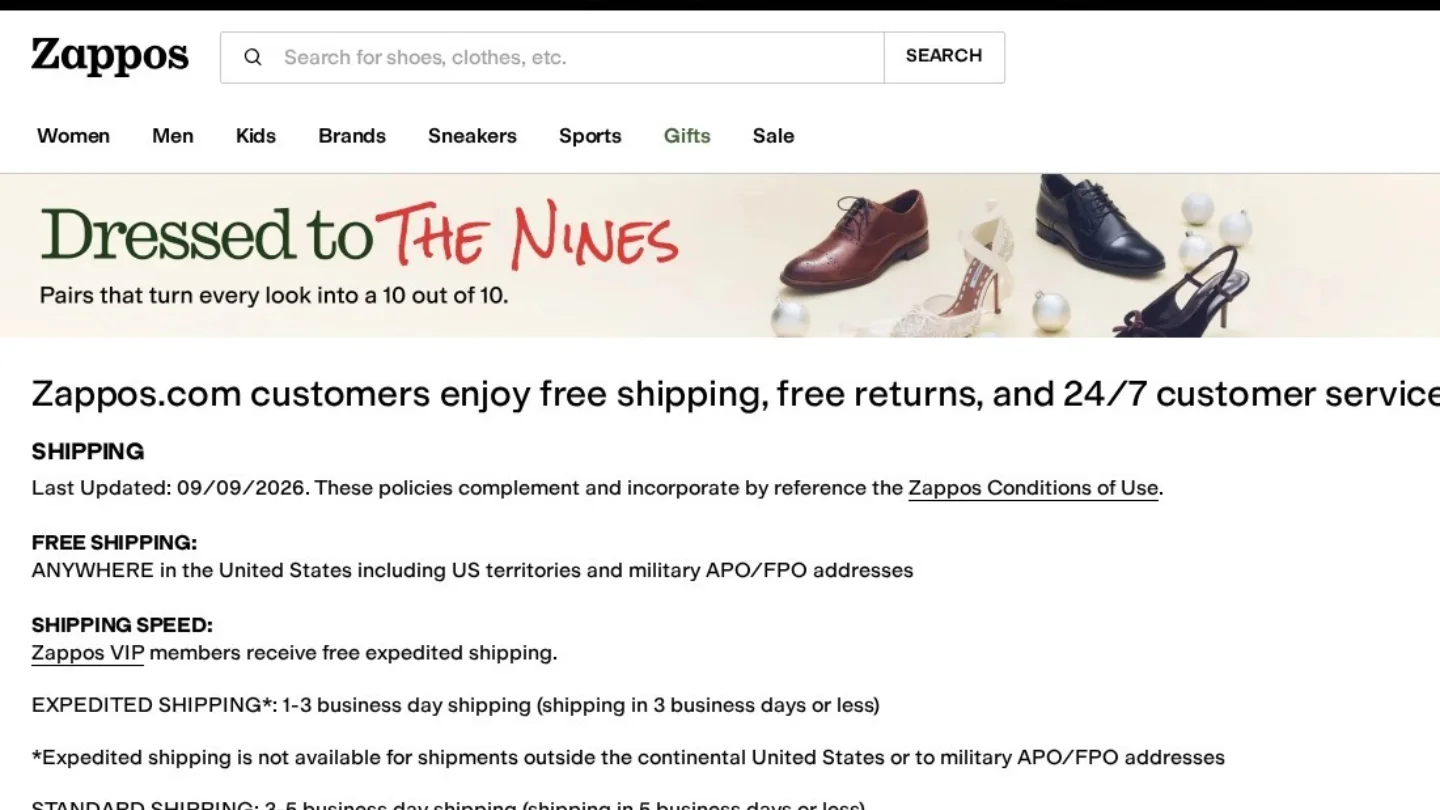
Online shoe shopping had an obvious problem: you cannot try shoes on. Zappos built its name on free shipping both ways, a generous return window and famously helpful phone support. The pitch was not “we sell shoes.” It was “buying shoes online carries no risk.”
Lesson: The best USPs often remove the customer’s biggest fear about buying, not just add a feature.
What a USP Is Not
| Not a USP | Why it fails |
|---|---|
| “Quality service” | Every competitor says it, so it signals nothing |
| “Family owned since 1998” | A fact, not a benefit, unless you explain why it matters to the buyer |
| “Best prices in town” | Hard to prove, easy for a rival to match and often a race to the bottom |
| “Innovative solutions” | Vague; the customer cannot picture what changes for them |
| A list of five benefits | A USP is one main reason; the rest are supporting points |
Building Your USP in Five Steps
Step 1: Ask Recent Customers Why They Chose You
Talk to five to ten recent customers. Short phone calls work well. Ask:
- What were you trying to fix or achieve when you started looking?
- Who else did you consider?
- What almost stopped you from buying from us?
- What made you decide to go ahead?
- How would you describe us to a friend?
Write down their exact words. Customers often describe your real advantage in plainer language than you would.

Step 2: Map the Competition
Make a simple grid of what you and your three main competitors promise, using their websites, reviews and ads.
Step 3: Find the Gap That Matters
Look for something customers care about that competitors either do not offer or do not talk about. It might be speed, a guarantee, a specialty, a pricing model or a level of service.
Step 4: Check You Can Prove It and Keep It
Every claim needs evidence. In the US, the Federal Trade Commission requires that advertising claims be truthful and backed by evidence before they run. If you promise “same-day repairs,” you need the staff and parts to deliver it most days, and the records to show it.
Step 5: Write It in One Plain Sentence
A simple structure works: For [specific customer] who [problem], we [specific benefit], unlike [alternative] that [what they get instead]. Then shorten it for your website headline.
A Worked Example: A Small HVAC Company
Take an invented heating and cooling company with six technicians in a mid-sized city.
What customers said: “I hate taking a day off waiting for a technician.” “The last company quoted one price and charged another.” “They showed up when they said they would.”
Competitor grid:
| Promise | Company A | Company B | Company C | Our company |
|---|---|---|---|---|
| 24/7 emergency service | Yes | Yes | Yes | Yes |
| Upfront flat-rate pricing | No | Yes | No | Yes |
| Two-hour arrival window | No, “8 to 5” | No, “morning or afternoon” | No | Yes |
| Pays if late | No | No | No | Could offer |
| Licensed and insured | Yes | Yes | Yes | Yes |
Everyone offers 24/7 service and licenses, so those are not USPs. Nobody gives a tight arrival window or stands behind it, and customers mentioned waiting around as their biggest frustration.
Draft USP: “For homeowners who cannot lose a day waiting for a repair, we give a two-hour arrival window and a flat price before we start. If we are late, your service call is free.”
Website headline: “A two-hour arrival window, or the service call is free.”
Why it works: It is specific, measurable and different from the competitors. Unlike Domino’s, it does not reward speed on the road. It rewards accurate scheduling. Before launching it, the owner checks the dispatch records: technicians already arrive within a two-hour window about 90% of the time, so the cost of free service calls is predictable.
Putting the USP to Work
- Website: Use it as the headline on the homepage and service pages.
- Google Business Profile: Mention it in the description and ask happy customers to mention it in reviews.
- Sales scripts: Teach staff to explain it in one sentence on the phone.
- Ads: Test it against a generic headline. A measurable promise usually earns more clicks than a vague one.
- Operations: Track the metric behind the promise every week. A USP you stop delivering becomes a reason for bad reviews.
Frequently Asked Questions
What is the difference between a USP and a slogan?
A USP is the strategic reason customers should choose you. A slogan is a memorable phrase that expresses it. “When you’re only No. 2, you try harder” was the slogan; better service from a hungrier company was the USP behind it.
Can a small business have a USP if its product is the same as everyone else’s?
Yes. Many USPs are about service, speed, guarantees, specialization or pricing structure, not the product itself. A plumber selling the same water heaters as rivals can still win on a same-day install guarantee.
How long should a USP be?
One sentence for the full version and a few words for headlines. If you need a paragraph to explain it, it is probably not specific enough.
How often should a USP change?
Only when the market changes, such as a competitor copying it or customers caring about something new. Review it once a year using fresh customer interviews and a new competitor grid.