
Can you take months off work without wrecking your finances? Yes, if you know your runway before you leave. Count the cash you can reach, divide it by a bare-bones monthly budget, and you have the number of months you can safely last. Then protect three things during the break: health coverage, your credit and your retirement savings.
We built this guide around a simple worked example, so the steps come with real numbers. We also checked the official rules on health coverage after you leave a job, because that is the cost most people underestimate. Each step can be done in an evening.
Step 1: Work Out Your Financial Runway
Your runway is how long your money lasts with no paycheck. The formula is simple:
Runway in months = Cash you can reach ÷ Monthly bare-bones spending
Take an example. Priya has $24,000 in savings and expects a $2,000 final paycheck. Her bare-bones spending is $3,100 a month. So her runway is $26,000 ÷ $3,100, or about 8.4 months.
| Item | Amount |
|---|---|
| Savings in bank accounts | $24,000 |
| Final paycheck and unused leave payout | $2,000 |
| Total cash she can reach | $26,000 |
| Bare-bones monthly spending | $3,100 |
| Runway | About 8.4 months |
Count only money you can reach without penalties. Retirement accounts usually carry taxes and penalties for early withdrawal, so leave them out of the runway.
Step 2: Build a Bare-Bones Budget
A bare-bones budget covers what you must pay to live safely and keep your credit clean. Everything else can pause during the break.
| Category | Keep paying | Pause or cut |
|---|---|---|
| Housing | Rent or mortgage, utilities | Upgrades, new furniture |
| Food | Groceries | Delivery and frequent dining out |
| Health | Insurance premiums, prescriptions | Elective spending |
| Debt | Minimum payments | Extra payments, unless your runway is long |
| Transport | Fuel, transit, insurance | Car upgrades |
| Subscriptions | One or two you use daily | The rest |
Track your spending for the first month of the break. Many people find their real costs are higher than planned. Our monthly expense tracker and sinking funds examples help you plan for costs that only come up a few times a year.
Step 3: Keep a Separate Emergency Fund
Your runway pays the bills. However, a car repair or a vet bill can still hit during the break. So keep a separate emergency fund that you do not count in the runway.
The Consumer Financial Protection Bureau does not set a fixed amount. Instead, it suggests looking at the unexpected costs you have had in the past and setting a goal from those. It also recommends keeping the money safe and easy to reach, such as in a bank or credit union account, but not so easy that you spend it on non-emergencies.
Step 4: Protect Your Health Coverage
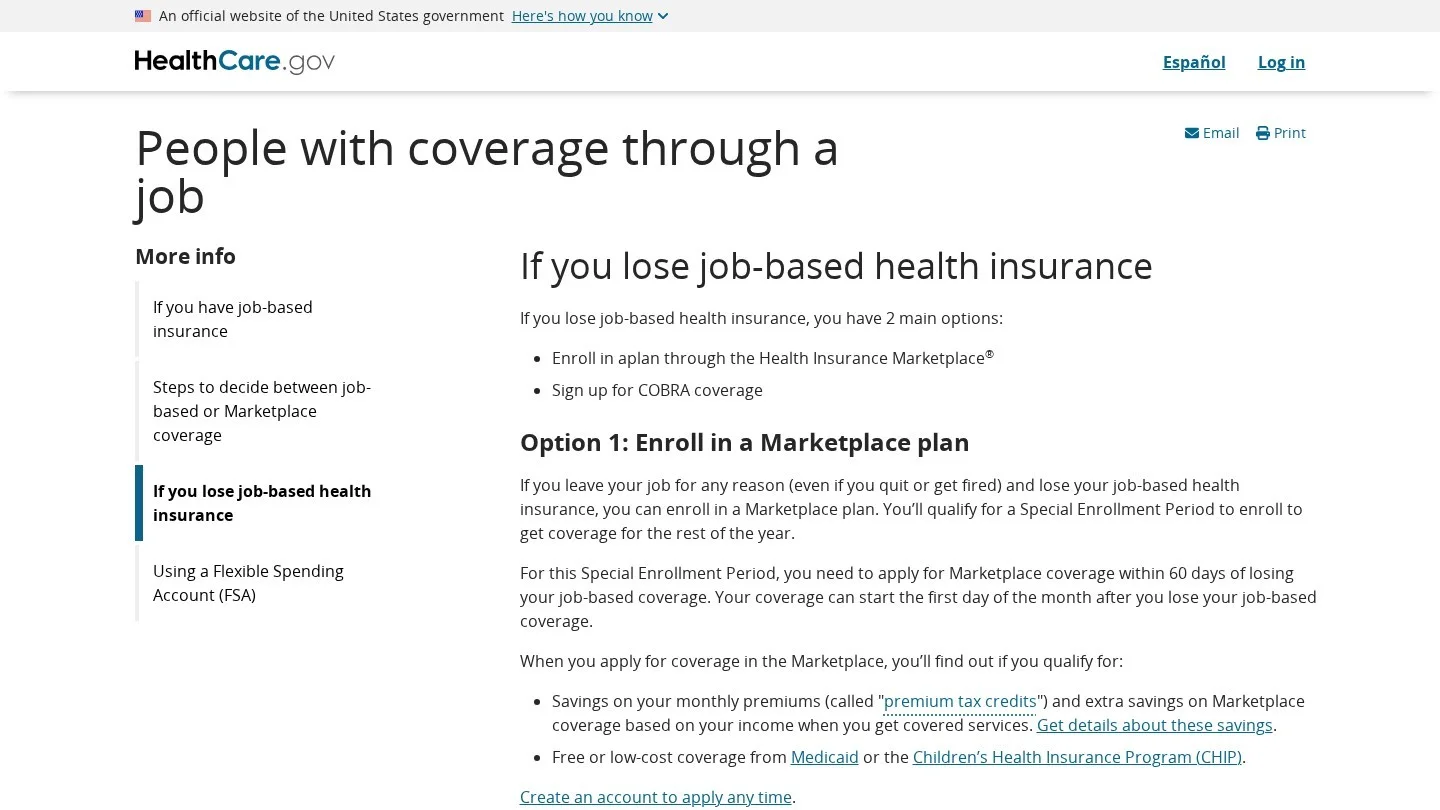
Losing a job usually means losing employer health insurance. In the US, you have two main options, and the rules have deadlines.
| Option | How it works | Cost | Deadline |
|---|---|---|---|
| COBRA | Keep your employer’s plan, usually for up to 18 months | You pay the full premium, which can be up to 102% of the plan’s cost | At least 60 days to elect |
| Marketplace plan | Buy a plan on HealthCare.gov or your state marketplace | May qualify for premium tax credits based on income | Apply within 60 days of losing coverage |
COBRA keeps the same doctors and plan, but it is often expensive because you now pay the share your employer used to cover. A Marketplace plan may cost less if your income during the break is low, since you may qualify for tax credits or even Medicaid. The US Department of Labor COBRA guide and HealthCare.gov explain both options.
Price both before you leave. Then add the premium to your bare-bones budget, because it can change your runway a lot.
Step 5: Keep Retirement Savings on Track
Your retirement savings can keep growing during a break if you leave them alone. Avoid cashing out a workplace plan when you leave, since early withdrawals usually come with taxes and penalties.
Instead, look at these options:
- Leave the money in your old employer’s plan if it allows it and the fees are fair.
- Roll it into an IRA to keep it invested and in one place.
- Keep contributing to an IRA if you have earned income during the break, such as freelance work.
If you plan to freelance during the break, set aside part of each payment for tax, since no employer withholds it for you.
Step 6: Protect Your Credit
Missed payments hurt your credit score for years. So set up automatic minimum payments on every card and loan before the break starts.
- Pay at least the minimum on time, every month.
- Avoid opening new credit you do not need, especially before a mortgage or car loan.
- Call lenders early if money gets tight. Many have hardship programs, but they help more before you miss a payment.

Step 7: Plan Some Income Without Ending the Break
A little income can stretch your runway a long way. In our example, earning $800 a month from freelance work lowers Priya’s net spending to $2,300 and pushes her runway from about 8.4 months to about 11.3 months.
Low-pressure income ideas include part-time freelance projects, tutoring, consulting for a former employer or renting out unused items. Our list of business ideas to start from home has more.
Step 8: Set Your Return Point Before You Leave
Decide in advance when you will start job hunting. A simple rule is to start looking when you have three to four months of runway left, since job searches often take longer than expected.
Write the date in your calendar. Then review your budget and runway on the first day of every month during the break, and adjust if spending or income changes.
Avoid These Common Career Break Money Mistakes
Most career break money problems come from a few habits. Watch for them in the first two months, when spending often drifts.
- Treating the first weeks like a holiday. Big trips early on eat runway you may need later.
- Forgetting yearly bills. Car insurance, property tax and subscriptions renew on their own schedule.
- Leaving health coverage to the last minute. The 60-day windows pass quickly.
- Cashing out retirement savings. Taxes and penalties can wipe out a large share.
- Not tracking spending. Without a monthly check, small purchases add up unnoticed.
- Saying yes to every social plan. Agree on a monthly fun budget and stick to it.
Questions About Money During a Career Break
How much should I save before a career break?
Add up your bare-bones monthly costs, multiply by the number of months you plan to be off, then add a separate emergency fund and a buffer for your job search. Many people also add health insurance as its own line, since it is often the biggest new cost.
Is COBRA or a Marketplace plan better during a career break?
It depends on your income, health needs and doctors. COBRA keeps your plan but you pay the full premium. A Marketplace plan may cost less if your income is low enough for tax credits. Compare both before the 60-day deadlines.
Should I pay off debt before a career break?
Paying down high-interest debt helps, but do not drain the savings you need for your runway. Keep enough cash to cover your plan, and keep paying minimums on time during the break.