In the CBSE vs ICSE debate, the right board depends on three things. These are where your family may live in the next ten years, what your child is good at, and the actual school you are choosing. CBSE is the safer pick for families who move often or whose child is heading for JEE or NEET. ICSE pays off for children who read a lot, enjoy languages and do well with project work. Beyond that, a good school on either board beats a weak school on the “right” board.
Most parents hear firm opinions from relatives and other parents, and most of those opinions are a decade old. Both boards have changed a lot recently. CBSE now gives Class 10 students two board exams a year, and CISCE has added improvement exams and new internal assessments. So we went through both boards’ own sites and the 2026 results to give you a clear, current comparison.
CBSE and ICSE: Who Runs Each Board
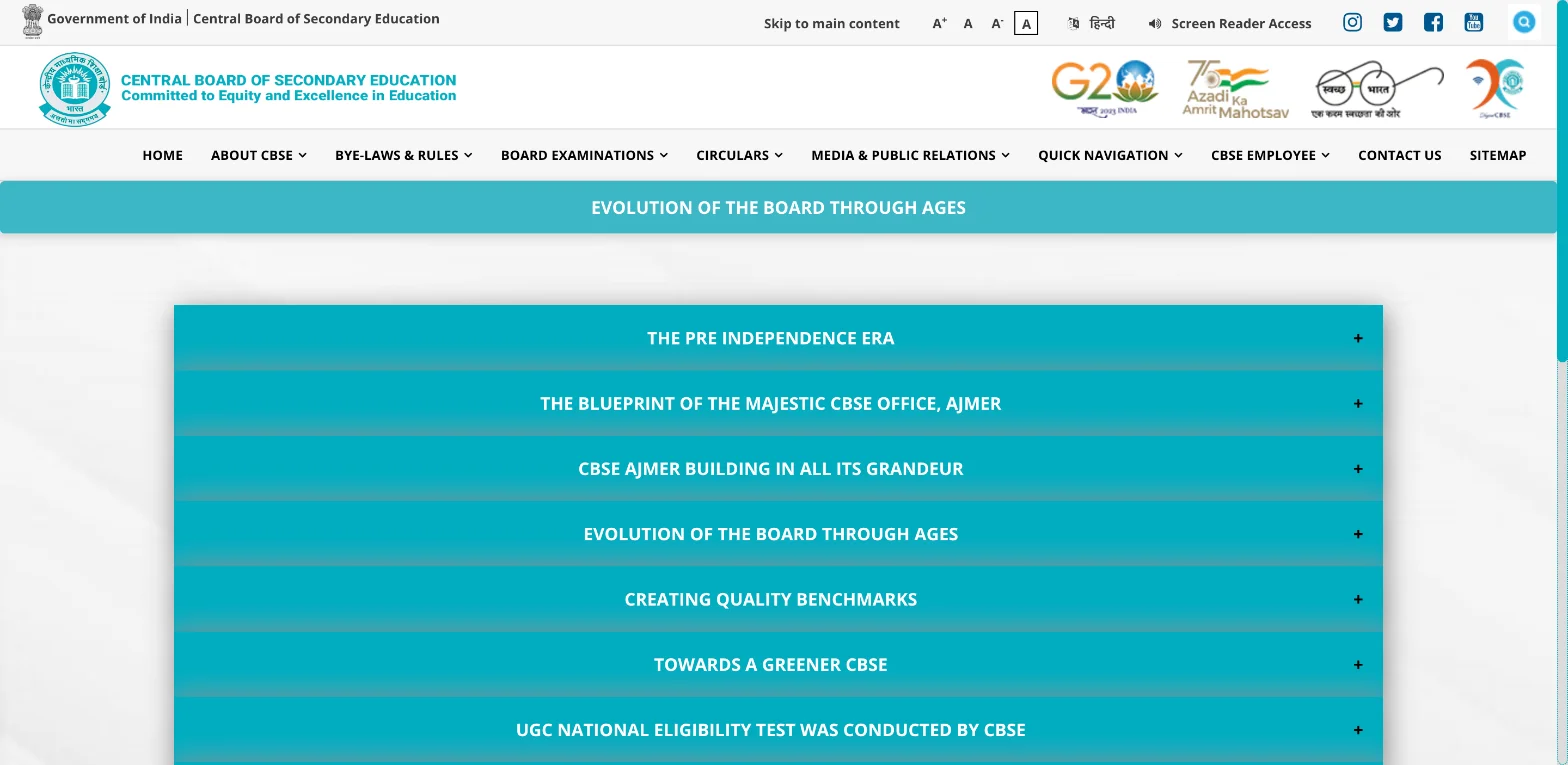
The first difference is ownership. CBSE (Central Board of Secondary Education) works under the Government of India. Its history goes back to a board set up in 1929 for Rajputana, Ajmer-Merwara, Central India and Gwalior. The board took its present form on 1 July 1962, and it held its first all-India Class 10 exam in 1977.
ICSE is the Class 10 exam of CISCE, the Council for the Indian School Certificate Examinations. CISCE is an independent council founded in 1958, and the Delhi Education Act, 1973 recognises it as a body that conducts public exams. If the letters confuse you, our guide to the ICSE full form explains ICSE, ISC and CVE in detail.
| Point | CBSE | ICSE (CISCE) |
|---|---|---|
| Type of board | Under the Government of India | Independent national council |
| Class 10 exam | Secondary School Examination | ICSE |
| Class 12 exam | Senior School Certificate Examination | ISC |
| Schools | About 30,000 in India and about 250 abroad | More than 3,300 |
| Textbooks | NCERT books are mandatory in Classes 9 to 12 | Set by the CISCE syllabus for each subject |
| Class 10 board exams | Two a year, the second one optional | One main exam, plus improvement exams |
| Class 10 pass rate in 2026 | 93.70% after the main exam, 96.78% after the second | 99.18% |
CBSE’s school count comes from its secretary’s statement reported by Careers360. CISCE publishes its own count of more than 3,300 schools.
How the Subjects Differ in Classes 9 and 10
Here the two boards feel most different to a child. In CBSE, Class 10 students study Science as one subject and Social Science as one subject. In the ICSE system, those areas split into separate papers. The ICSE 2027 regulations and syllabuses list Physics, Chemistry and Biology as separate subjects. History and Civics and Geography are separate too.
ICSE also offers a long menu of applied subjects. Students can pick from Computer Applications, Economic Applications, Commercial Applications, Art, Performing Arts, Home Science, Cookery, Fashion Designing and Physical Education, among others. Modern foreign languages and classical languages are on the list as well.
CBSE, meanwhile, ties its syllabus closely to NCERT. In 2024, CBSE amended its affiliation rules so that schools “shall mandatorily follow the NCERT textbooks” in Classes 9 to 12, as reported by Careers360. Schools may add supplementary material, but the NCERT book is the base.
What this means for your child:
- A child who likes reading and writing often enjoys the ICSE literature and language load, with more to read and more to write.
- A child who prefers fewer, focused books often finds CBSE’s single NCERT textbook per subject easier to manage.
- A child with a hobby that could become a subject, such as cooking, art or fashion, gets more formal options in ICSE.
The Exam Systems Have Changed
If your information about board exams comes from your own school days, it is out of date.
CBSE now runs two Class 10 board exams. The first batch under this system took the main exam in February and March 2026. Then an optional second exam ran from 15 to 21 May 2026. Students could try to improve their marks in up to three subjects, and the better score counts. In all, 6,63,777 students took the second exam, and the overall pass rate rose from 93.70% to 96.78%.
CISCE now holds improvement exams too. It has released question papers from both its 2026 main and improvement exams. On top of that, health and physical education becomes a compulsory internal assessment at ICSE and ISC level from the 2028 exam year.
So both boards now give a second chance after a bad day in the exam hall. That takes some pressure off the choice.
What the 2026 Results Tell You
The headline numbers look very different:
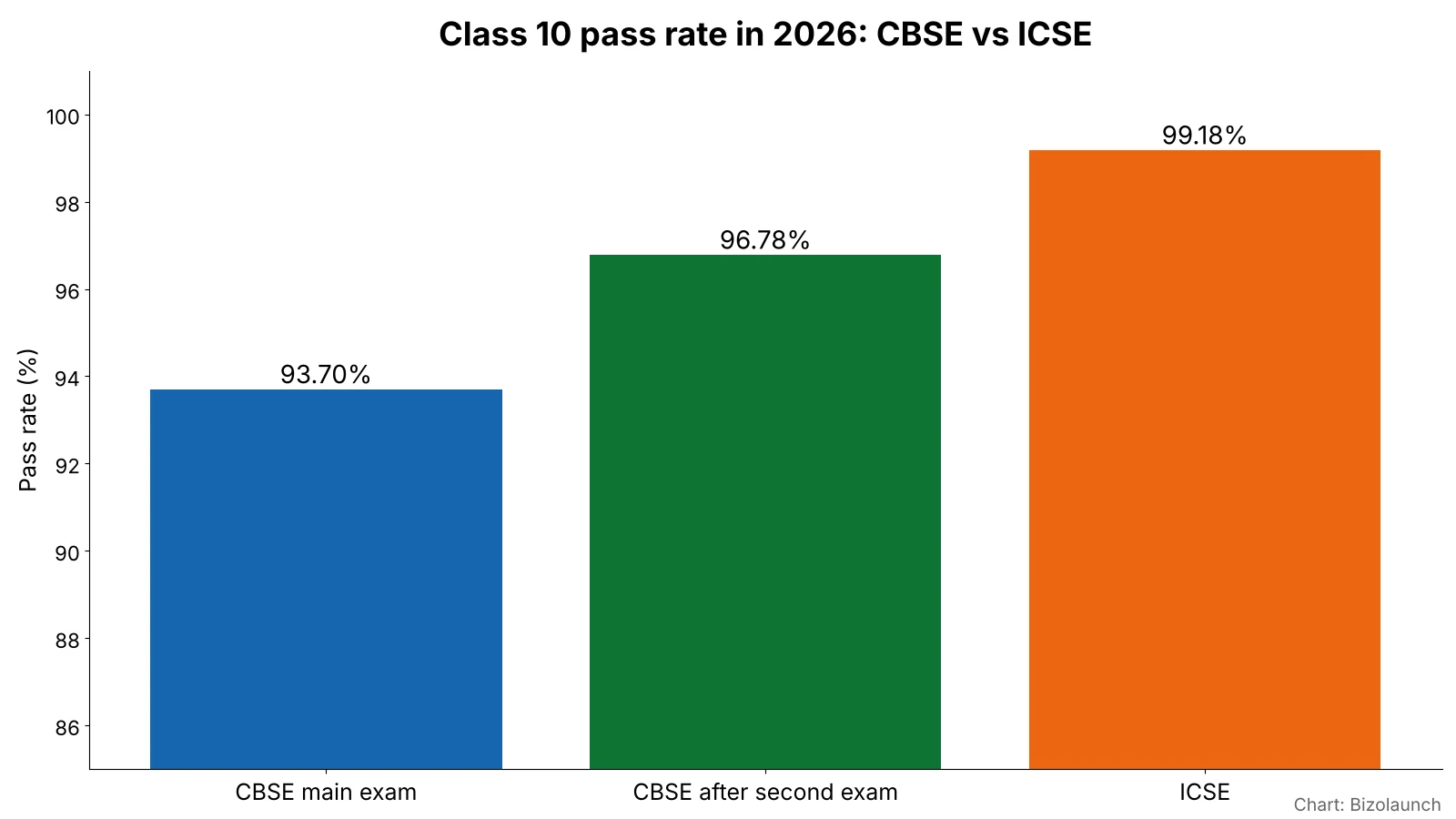
| 2026 Class 10 result | Students | Pass rate |
|---|---|---|
| CBSE main exam | 24,71,777 appeared | 93.70% |
| CBSE after second exam | 6,63,777 took the second exam | 96.78% overall |
| ICSE | 2,58,721 appeared | 99.18% |
The CBSE figures come from results reported by Morung Express and Outlook. The ICSE figures come from Deccan Herald.
However, do not read too much into the gap. CBSE has almost ten times as many Class 10 students, spread across far more kinds of schools. The two boards also set and mark different papers. A higher pass rate tells you the board’s students mostly clear its own exam. It does not tell you that one board is easier or better.
JEE, NEET and Other Entrance Exams
This is where many parents make the decision, so let’s be precise. JEE and NEET accept students from any recognised board, including CBSE, CISCE and state boards. No board is “required”.
Still, CBSE has a practical edge for these exams. Its Class 11 and 12 courses use NCERT books, and NCERT books are widely used in JEE and NEET preparation. So the school syllabus and the entrance exam study overlap. That is why many ICSE students switch to CBSE after Class 10.
On the other hand, ICSE students who stay for ISC are not at a disadvantage in the exam itself. They simply need to check that their own study material covers the entrance exam syllabus, which they would also do with coaching.
Moving Cities or Countries
Transfers are CBSE’s biggest strength. With about 30,000 affiliated schools in India and about 250 abroad, a CBSE school is easy to find in almost every town. Kendriya Vidyalayas, the central government schools that many transferable employees use, are CBSE schools.
ICSE schools are fewer, so they cluster in cities. A family that moves from a metro to a smaller town may not find one nearby. Therefore, if your job involves transfers, CBSE removes a real risk.
Families planning a move abroad have a different question. Many Gulf countries have large numbers of CBSE schools, and CBSE is building a global curriculum framework with plans to expand in Africa and the Middle East. ICSE has a smaller international footprint, with schools in 5 countries.
A Simple Way to Decide
Use your family’s situation, not the board’s reputation:
| If this describes your family | Lean towards |
|---|---|
| Parents with transferable jobs or likely moves within India | CBSE |
| Child is set on engineering or medicine and will take coaching | CBSE |
| Child reads a lot, writes well and enjoys languages | ICSE |
| Child has a real interest in art, cooking, fashion or performing arts | ICSE |
| You plan to live in the Gulf | CBSE |
| The best school near you, by teachers and results, is on one board | That school’s board |
The last row matters most. A child spends 30 or more hours a week at school. The quality of teachers, class size and the school’s attitude to homework and stress will shape your child far more than the board’s syllabus.
Questions to Ask Before You Choose a School
Before you pay an admission fee, ask the school these questions:
- Which board are you affiliated with, and since when? Ask for the affiliation number and check it on CBSE’s SARAS portal or the CISCE school locator.
- Do you offer Classes 11 and 12, and in which streams?
- How many students left after Class 10 last year, and why?
- What were your Class 10 and Class 12 results, subject by subject?
- How much homework do Class 1 to 5 students get each day?
- How do you handle the second board exam or improvement exam?
The answers tell you more than any board comparison. Then, once your child starts, a steady routine helps on either board. Our study timetable generator builds one in a minute.
Can You Switch Boards Later?
Yes. The most common switch happens after Class 10, when ICSE students move to CBSE or a state board for Classes 11 and 12. Moving between boards in the middle of a school stage is harder, especially in Class 9 or 10, because the syllabuses do not line up neatly.
So if you are unsure, choose a good school now and keep the Class 11 decision open. Your child’s interests at 15 will tell you much more than a guess at 3.