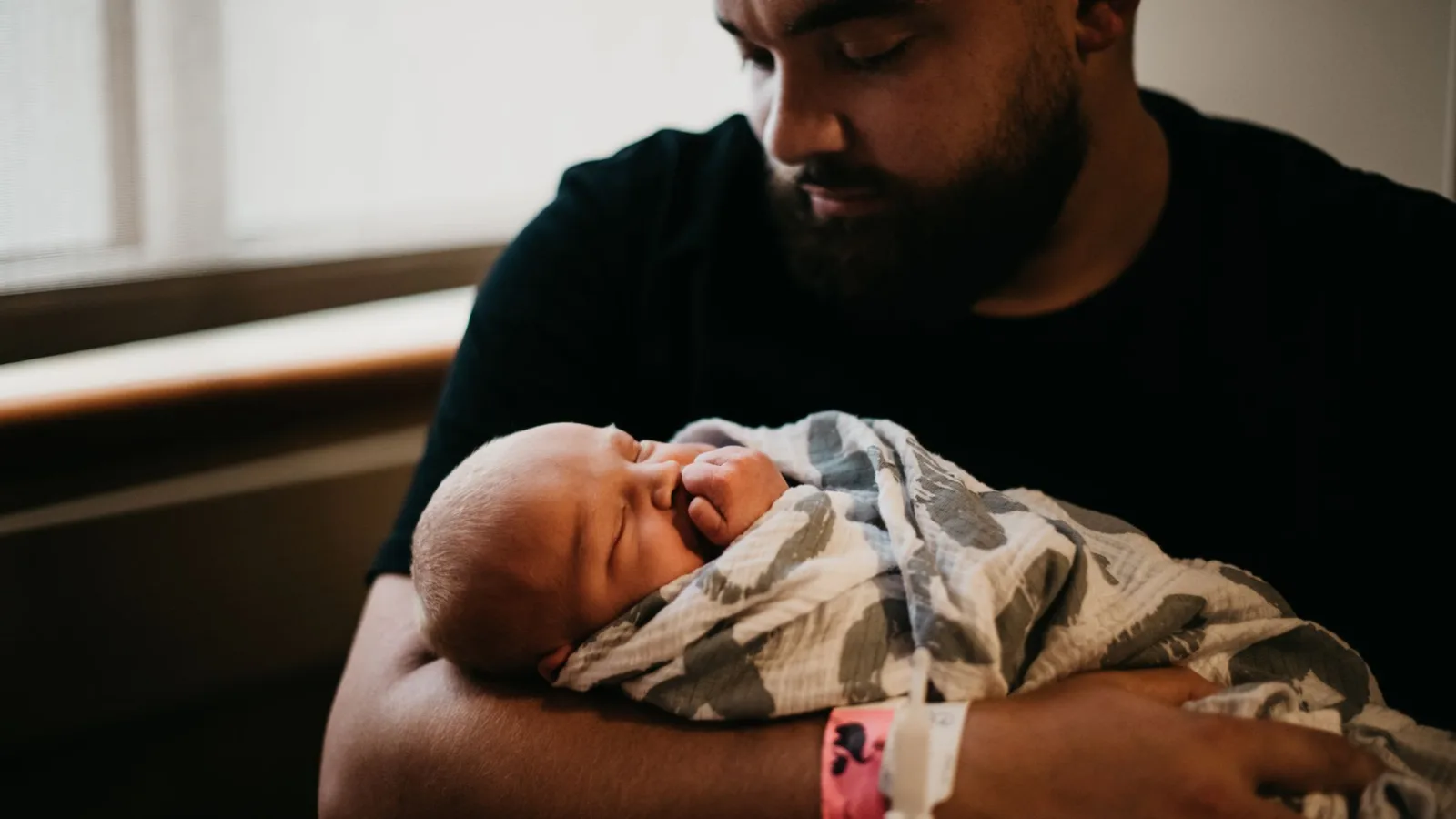
The gap between the most and least generous employers in America is close to a year of salary. Netflix has offered salaried staff up to a year of paid leave after a birth or adoption, Etsy gives every new parent 26 weeks, and Google gives birthing parents 24 weeks. Federal law guarantees none of it: the Family and Medical Leave Act protects your job for 12 weeks but does not require a single paid day.
That leaves a new parent’s income dependent on two things, the employer’s own policy and the state they work in. Below are verified policies at 21 well-known companies, the 13 jurisdictions that pay family leave benefits as of October 2026, and a method for putting a dollar value on leave when you compare job offers.
Netflix, Etsy and Salesforce Lead While FMLA Leave Stays Unpaid
- Among large US employers, the longest paid leave sits at Netflix (up to 52 weeks, per 2018 reporting), Etsy (26 weeks for all parents) and Salesforce (26 weeks for primary caregivers).
- Big tech often splits leave in two: Microsoft gives birthing parents 20 weeks (8 weeks of maternity disability plus 12 weeks of parental leave) and other parents 12 weeks.
- Amazon offers 20 weeks to birthing parents and 6 weeks to other parents, but only after a year of service and at least 30 scheduled hours a week.
- FMLA leave is unpaid. Twelve states and Washington, DC now pay family leave benefits, with Maryland following in 2028 and Virginia in late 2028.
- Price an offer’s leave in weeks of salary: at $150,000, every extra paid week is worth about $2,885.
Companies With Paid Parental Leave: 21 Policies Compared
Weeks are fully paid unless noted. “Birthing parent” figures often combine medical recovery leave (short-term disability) with bonding leave, so read the notes column before comparing one company with another. Policies apply to US employees unless stated, and the source and date for each figure are linked in the company name.
| Company | Birthing parent | Non-birthing parent | What to know |
|---|---|---|---|
| — | — | — | — |
| Netflix | Up to 52 weeks | Up to 52 weeks | Covers the first year after birth or adoption for salaried staff (Vox, 2018) |
| Etsy | 26 weeks | 26 weeks | Same leave for birth and adoption, regardless of gender |
| Salesforce | 26 weeks (primary caregiver) | 12 weeks (secondary caregiver) | Caregiver labels, not gender, decide the split (2021 policy) |
| 24 weeks | 16 weeks | Also 8 weeks of caregiving leave (Built In, June 2026) | |
| Microsoft | 20 weeks | 12 weeks | 8 weeks maternity disability plus 12 weeks parental leave; separate 12-week family caregiver leave, 4 weeks paid |
| Amazon | 20 weeks | 6 weeks | Includes 4 weeks before birth; needs 1 year of service and 30 scheduled hours a week; Leave Share lets a parent give 6 weeks to a partner without paid leave |
| Goldman Sachs | 20 weeks | 20 weeks | Gender-neutral since the 2019 expansion |
| Starbucks | 18 weeks | 12 weeks | Expansion for store employees announced in December 2024 |
| Wise | At least 18 weeks | At least 18 weeks | London staff get 8 extra weeks of maternity leave |
| Morgan Stanley | 16 weeks plus 6 to 8 weeks medical leave | 16 weeks | Medical leave after pregnancy sits on top of the 16 weeks |
| Klaviyo | 16 weeks plus 6 to 8 weeks medical recovery | 16 weeks | Covers birth, foster and adoptive parents at 100% pay |
| Vodafone | At least 16 weeks | At least 16 weeks | Global minimum across its markets |
| GitLab | 16 weeks | 16 weeks | Birth or adoption |
| Braze | 16 weeks plus medical leave | 16 weeks | Plus 10 paid days for a gradual return |
| Datadog | Up to 16 weeks | Up to 12 weeks | 12 weeks gender-neutral bonding leave plus 4 weeks for birthing parents |
| Comcast | 16 weeks (primary caregiver) | 4 weeks (secondary caregiver) | Primary/secondary labels |
| Liberty Mutual | 8 weeks plus 8 weeks short-term disability | 8 weeks | Parenting leave covers biological and adoptive parents |
| PwC | Up to 12 weeks | Up to 12 weeks | Same for all parents |
| General Motors | Up to 12 weeks | Up to 12 weeks | For a new child |
| Northwestern Mutual | 12 weeks | 12 weeks | Not split by parent type |
| Lowe’s | Up to 10 weeks maternity leave | 4 weeks parental leave | Maternity and parental leave are separate benefits |
Two patterns stand out. Finance and tech firms that compete for the same graduates have converged on equal leave for all parents, typically 16 to 20 weeks. Companies with large hourly workforces, such as Amazon and Lowe’s, give birthing parents far more than partners, because most of the birthing parent’s time is medical recovery that the company was already covering through disability insurance.
How Birthing and Non-Birthing Leave Are Built
When a company advertises “20 weeks of maternity leave,” it is usually stacking two benefits. The first is short-term disability for recovery from childbirth, typically 6 weeks for a vaginal delivery and 8 weeks for a cesarean. The second is bonding leave, which any parent can take. Microsoft’s policy shows the structure plainly: 8 weeks of maternity disability plus 12 weeks of parental leave equals 20 weeks for a birth mother, while a father or adoptive parent gets the 12 weeks of parental leave.
This matters for three reasons. Disability pay is sometimes less than 100% of salary. Bonding leave can often be split into blocks across the first year, while medical leave starts at birth. And “primary caregiver” policies, still used by Salesforce and Comcast, can leave a father who plans to be the main carer arguing with HR about the label. Gender-neutral policies such as Etsy’s, GitLab’s and Goldman’s remove that argument.
US Law on Parental Leave: FMLA Is Job Protection, Not Pay
The Family and Medical Leave Act gives eligible employees up to 12 workweeks of unpaid, job-protected leave in a 12-month period for the birth of a child, adoption or foster placement, among other reasons. Your employer must keep your group health coverage on the same terms during that time.
Eligibility is narrower than many new parents assume:
- Employer size: The employer must have 50 or more employees within 75 miles of your worksite. Private employers below that size are not covered.
- Length of service: You must have worked there for at least 12 months.
- Hours: You need at least 1,250 hours of work in the 12 months before the leave, roughly 24 hours a week.
- Shared limit: Leave for pregnancy complications before birth counts toward the same 12 weeks.
Company paid leave usually runs at the same time as FMLA rather than after it. So a 16-week company policy gives you 16 paid weeks, with FMLA protecting your job for 12 of them. Job protection beyond week 12 comes from the company’s own policy or a state law.
States With Paid Family Leave Programs in 2026
States fill the federal gap with insurance programs funded by payroll contributions. Benefits replace part of your wage, up to a weekly cap, and they can be stacked with an employer’s own leave if the company policy allows. OnPay’s 2026 state roundup and Epstein Becker Green’s 2026 legal update supply the dates and limits below, with California’s 8 weeks from the state’s Employment Development Department.
| State | Paid family (bonding) leave | Status as of October 2026 |
|---|---|---|
| — | — | — |
| California | Up to 8 weeks | Paying benefits |
| Colorado | Up to 12 weeks, plus 4 for pregnancy or childbirth complications | Paying since January 2024; extra 12 weeks of NICU leave from January 2026 |
| Connecticut | Up to 12 weeks in 12 months | Paying benefits |
| Delaware | Up to 12 weeks in 24 months | Claims accepted from January 1, 2026 |
| District of Columbia | Up to 12 weeks, plus 2 weeks for pregnancy | Paying benefits |
| Maine | Up to 12 weeks | Paying since May 1, 2026 |
| Massachusetts | Up to 12 weeks | Paying benefits |
| Minnesota | Up to 12 weeks family leave, 20 weeks combined with medical leave | Paying since January 1, 2026 |
| New Jersey | Up to 12 weeks | Paying benefits |
| New York | Up to 12 weeks | Paying benefits |
| Oregon | Up to 12 weeks in 12 months | Paying benefits |
| Washington | Up to 12 weeks | Paying benefits; job restoration extends to employers with 25 or more staff from 2026 |
| Maryland | Up to 12 weeks | Contributions start January 1, 2027; benefits expected January 3, 2028 |
| Virginia | Up to 12 weeks at about 80% of wages | Withholding starts April 2028; benefits December 1, 2028 |
Rhode Island also runs a paid caregiver program, Temporary Caregiver Insurance, through its state disability system. New Hampshire and Vermont have voluntary programs instead of mandates: New Hampshire’s plan pays 60% of the average weekly wage for up to 6 weeks a year.
The practical effect is that two employees at the same company can get very different leave. An employee in Washington state may qualify for state benefits in addition to company leave, while a colleague in Texas, which has no state program, relies entirely on the company policy.
How US Parental Leave Compares Internationally
Most rich countries treat paid leave as a public insurance benefit rather than a perk. The International Labour Organization’s Maternity Protection Convention (No. 183) sets a minimum of 14 weeks of maternity leave, paid at no less than two-thirds of previous earnings.
| Country | Birthing parent | Other parent | How it is paid |
|---|---|---|---|
| — | — | — | — |
| United States | No federal paid leave; 12 weeks unpaid under FMLA | Same | Employer policy or state insurance |
| United Kingdom | Up to 52 weeks of maternity leave, with Statutory Maternity Pay for up to 39 weeks | 1 or 2 weeks of paternity leave | First 6 weeks at 90% of average weekly earnings, then a flat statutory rate or 90%, whichever is lower |
| Canada | Up to 15 weeks of EI maternity benefits | Parental benefits shared: 40 weeks standard (one parent up to 35) or 69 weeks extended (one parent up to 61) | 55% of earnings on standard, 33% on extended, up to a cap |
| Sweden | 480 days of parental benefit per child, shared | 90 days reserved for each parent | Social insurance |
| India | 26 weeks of paid maternity leave for the first two children, 12 weeks from the third, under the Maternity Benefit (Amendment) Act, 2017 | No statutory paternity leave for private employees | Paid by the employer |
Multinationals tend to set a global floor that beats local law in some countries and matches it in others. Vodafone’s 16-week minimum for every employee, for example, adds paid leave for fathers and partners in markets where the law offers almost none, while making little difference in Sweden.
How to Evaluate Parental Leave in a Job Offer
A benefits page headline is the start of the conversation, not the answer. Ask HR, or read the plan document, for these details before you sign.
- Waiting period: Amazon requires a year of continuous service. If your due date is eight months away, a generous policy you cannot use is worth nothing to you.
- Pay level for each part: Is the short-term disability portion at 100% of salary, 60%, or capped? Is the bonding leave fully paid?
- Split by parent type: Check whether the non-birthing figure applies to adoptive, foster and surrogacy parents, and whether a “secondary caregiver” label can be changed.
- Use-by window and blocks: Most policies require the leave to be taken within 12 months of birth or placement. Ask whether it can be split into two or three blocks.
- Interaction with state benefits: In a paid-leave state, some employers top up the state benefit to 100% of salary, while others reduce their own payment by the state amount. Both are common.
- Return-to-work support: Phased returns such as Amazon’s Ramp Back program, or Braze’s 10 paid days for a gradual return, cost the company little and make the first weeks back far easier.
- Repayment clauses: Some employers ask you to repay leave pay if you resign within a set period after returning. Read the plan document for this.
Self-employed parents get no employer leave at all, and in most states no state benefit unless they opt in. If you are weighing a salaried offer against freelancing, price the unpaid weeks into your rate with the freelance hourly rate calculator.
Worked Example: Putting a Dollar Value on Parental Leave
Say a birthing parent who plans to take 20 weeks off has two offers. Offer A pays $140,000 a year with 20 weeks of paid leave. Offer B pays $150,000 with 12 weeks.
| Offer A | Offer B | |
|---|---|---|
| — | — | — |
| Salary | $140,000 | $150,000 |
| Weekly pay (salary divided by 52) | $2,692.31 | $2,884.62 |
| Paid leave weeks | 20 | 12 |
| Unpaid weeks to reach 20 weeks off | 0 | 8 |
| Pay lost to unpaid leave | $0 | $23,076.92 |
| First-year pay after leave | $140,000 | $126,923.08 |
On these assumptions Offer A leaves the family about $13,077 better off in the year of the birth, even though its salary is $10,000 lower. The gap closes from year two, and it shrinks if Offer B is in a state that pays family leave benefits for some of the unpaid weeks. Run your own figures with the Bizolaunch percentage calculator to see what share of salary a state benefit replaces.
For employers, the same arithmetic works the other way. A small business that cannot match Google’s 24 weeks can still offer a defined, paid block and coordinate it with the state program. Payroll systems now handle leave tracking and state contributions; the payroll software comparison for restaurants covers several that do.
Paid Parental Leave Questions Answered
Which Company Has the Best Paid Parental Leave?
Among large US employers, Netflix has offered salaried staff up to a year, while Etsy’s 26 weeks for every parent is among the most generous written policies. Salesforce gives primary caregivers 26 weeks.
Is Paid Parental Leave Required by Law in the US?
No federal law requires it. FMLA guarantees up to 12 weeks of unpaid, job-protected leave for eligible workers. Twelve states and Washington, DC pay family leave benefits through state insurance programs.
How Many Weeks of Paternity Leave Do Big Companies Offer?
It ranges widely. Goldman Sachs and Etsy give non-birthing parents the same 20 and 26 weeks as birthing parents, Google gives 16, Microsoft 12, and Amazon 6.
Does Company Parental Leave Run at the Same Time as FMLA?
Usually yes. Employers typically designate paid parental leave as FMLA leave, so both clocks run together. Your 12 weeks of FMLA job protection does not start after the paid leave ends.
Can You Get State Paid Family Leave and Company Leave Together?
Often, depending on the state and the employer’s policy. Some companies top up the state benefit to full salary; others subtract it from what they pay.
Employer Benefit Statements, Built In’s Ranking and DOL FMLA Rules
- US Department of Labor: Family and Medical Leave Act
- Microsoft US Benefits: Leave of absence
- Amazon: What 20 weeks of fully paid leave does for Amazon families (updated February 2025)
- Built In: Companies with the best maternity and parental leave policies (updated June 2026)
- Etsy: A step forward in parental leave at Etsy
- Salesforce: Parental leave for working dads (2021)
- HR Dive: Goldman Sachs bumps up paid parental leave to 20 weeks (2019)
- Bloomberg: Starbucks to expand baristas’ paid parental leave to 18 weeks (December 2024)
- Morgan Stanley: Perks and benefits
- Vodafone: Global policy offering 16 weeks paid parental leave to all employees
- Vox: Paid parental leave at tech companies (2018)
- OnPay: States with paid family leave in 2026
- Epstein Becker Green: 2026 family and medical leave law updates
- California EDD: About Paid Family Leave
- ILO: Maternity Protection Convention, 2000 (No. 183)
- GOV.UK: Maternity pay and leave
- GOV.UK: Paternity pay and leave
- Government of Canada: EI maternity and parental benefits
- Försäkringskassan (Swedish Social Insurance Agency)
- Ministry of Labour and Employment, India: Maternity Benefit (Amendment) Act, 2017