You can put your own name on a ready-made serum or moisturizer from a US lab without ordering thousands of units. For most first-time founders, RainShadow Labs in Oregon and Pravada in Florida are the strongest white label skincare manufacturers in the USA. Both pair large stock formula libraries with low entry points: RainShadow sells wholesale with no minimum order, and Pravada fills as few as 50 units per product. Next Beauty Labs is the fastest of the ten, Beauty Private Labels and DRHC Cosmetics need no minimum at all, and ALFA Manufacturing Group in Miami suits brands ready to order 2,500 units.
We checked every location, minimum, lead time and certification below on each manufacturer’s own website in October 2026. Labs whose terms we could not confirm at the source were left off the list. The regulation section draws only on FDA’s own pages.
White vs Private vs Custom Label, With Minimums and Lead Times
- White label means a stock formula with your label. Private label usually adds some say over scent, actives or packaging. Custom formulation means a new formula, with minimums in the thousands of units.
- Entry points vary widely. Beauty Private Labels and RainShadow’s wholesale side have no minimum, DRHC dropships with no minimum, and Pravada and Next Beauty Labs start at 50 units. Full custom work starts at 2,500 units at Pravada and 3,000 at FormuNova.
- Lead times for stock products run from 2 to 4 weeks at Next Beauty Labs and 4 to 6 weeks at FormuNova to 8 to 10 weeks at RainShadow after your label is approved.
- Under MoCRA, manufacturing facilities must register with FDA and renew every two years. The brand responsible for each product must list it, keep safety records and report serious adverse events within 15 business days.
- In our cost example, a three-product stock line needs 33 sales to recover $900 of inventory, while a full custom run needs about 358 sales to recover $10,000.
White Label vs Private Label vs Custom Formulation
Manufacturers use these terms loosely, and two labs can mean different things by “private label”. Ask exactly what you can change before you compare prices.
| Model | What you get | What you control | Example minimums | Upfront fees | Time to market |
|---|---|---|---|---|---|
| White label | A proven stock formula with your label | Brand name, label design | No minimum (Beauty Private Labels) to 140 units (FormuNova) | Usually none | Fastest; weeks |
| Private label (semi-custom) | A stock base adjusted for you | Scent, some actives, packaging choice | 250 units per SKU (Pravada); 500 (Next Beauty Labs) | $350 one-time fee at Pravada | About 8 to 12 weeks at Pravada |
| Custom formulation | A formula developed for your brand | Ingredients, texture, claims, packaging | 2,500 units (Pravada); 3,000 (FormuNova) | Quoted per project | Slowest; months |
White label is the right first step for most founders. It lets you test a niche, a price point and a brand story with real customers before you spend on development. The trade-off is that another brand may sell the same cream under a different name. Your edge has to come from positioning, packaging and marketing.
Private label sits in the middle. A tweak to fragrance or an added botanical gives you a product that feels like yours without the cost of a new formula. Custom formulation makes sense once you have sales data, a clear gap in the market and the cash to carry a few thousand units of stock.
White Label Skincare Manufacturers in the USA Compared
Each figure below comes from the lab’s own website as of October 2026. Terms change, so confirm them in writing before you place an order.
| Manufacturer | Location | Product range | Lowest minimum | Lead time | Certifications claimed |
|---|---|---|---|---|---|
| RainShadow Labs | St Helens, Oregon | 100+ stock skin, hair and body formulas | No minimum (wholesale); 10 gallons (stock private label) | About 8 to 10 weeks after label and packaging approval | FDA-registered, ISO-certified, GMP-compliant facility; cruelty-free |
| Pravada | Fort Myers, Florida | 300+ base formulas: skin, hair, bath and body, men’s | 50 units per product | 6 to 8 weeks for a stock launch | FDA-registered, GMP-certified, ISO 22716; cruelty-free |
| Next Beauty Labs | Boca Raton, Florida | Skincare: acne, anti-aging, pigment, cleansers, masks, body | 50 pieces (stock); 500 (semi-custom) | 2 to 4 weeks (stock); 4 to 6 weeks (semi-custom) | Ask for certificates |
| DRHC Cosmetics | Silicon Valley, California | Skin, makeup, hair, body, baby, men’s, spa | None (dropshipping); 12 units (wholesale and custom) | Ask for a quote | Leaping Bunny and PETA cruelty-free facility |
| Beauty Private Labels | Colfax, North Carolina | 200+ skincare formulas plus hair, body and more | No minimum | Weeks from order confirmation | GMP-certified, FDA-registered; cruelty-free |
| Wholesale Natural Body Care | US-based facility | Skin, hair, body, men’s and feminine care | Low minimums per formula | 3 to 5 business days for small orders | GMP-ISO certified facility; paraben-free, cruelty-free |
| FormuNova | Stone Mountain, Georgia | Skin, hair, wellness and pet care | 140 units | 4 to 6 weeks (private label) | FDA-registered, GMP-certified, NSF/ANSI 455-3 |
| Bellus Labs (S’Bellus) | Morris County area (3 locations) | 40+ house formulas: natural skincare, haircare, therapeutics, pet | 250 units | As little as 30 days on fast track | cGMP, ISO, FDA (company wording); cruelty-free |
| Private Label Labs | Farmington Hills, Michigan | Cleansers, serums, moisturizers, sunscreens, masks, eye and body care | Varies by product | Set once specs are final | cGMP; cruelty-free |
| ALFA Manufacturing Group | Miami, Florida | 1,000+ stock formulations, including skincare | 2,500 units | Ask for a quote | FDA-registered facility; ISO 22716 cGMP |
10 US Private and White Label Skincare Manufacturers, Reviewed
The order runs from the easiest places for a new brand to start to the labs that suit a brand ready to scale. Each review covers what the lab makes, how its minimums work in practice and who it fits best.
1. RainShadow Labs: Best Stock Library for Estheticians and Salons
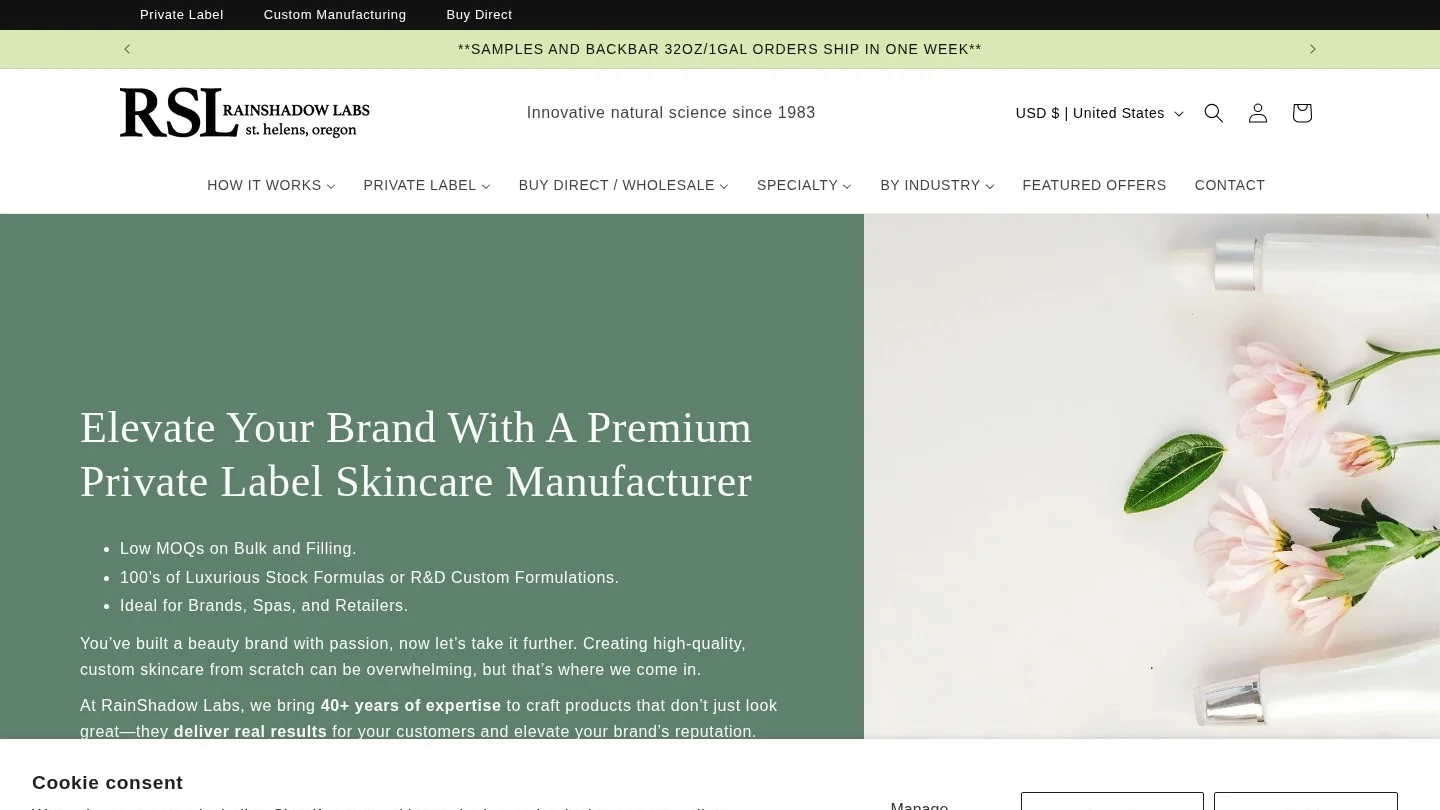
RainShadow Labs has made skincare in St Helens, Oregon, since 1983. It offers more than 100 stock formulas, from cleansers, toners and serums to moisturizers, masks, eye care and lip care. It runs dedicated programs for estheticians and salons, which tells you who it serves best.
There are three entry points. Buy Direct wholesale has no minimum order, stock private label starts at 10 gallons per formula, and custom formulas start at 25 gallons. Production takes about 8 to 10 weeks after your label and packaging are approved, and samples ship in about a week. The lab says it runs an FDA-registered, ISO-certified and GMP-compliant facility, and that its products are never tested on animals.
Gallon minimums confuse many first-time buyers. A gallon is 128 fluid ounces, so 10 gallons fills roughly 1,280 one-ounce bottles before any loss in filling, or about 640 two-ounce bottles. Ask RainShadow to quote your order in finished units.
2. Pravada: Best for a Clear Path From Stock to Custom
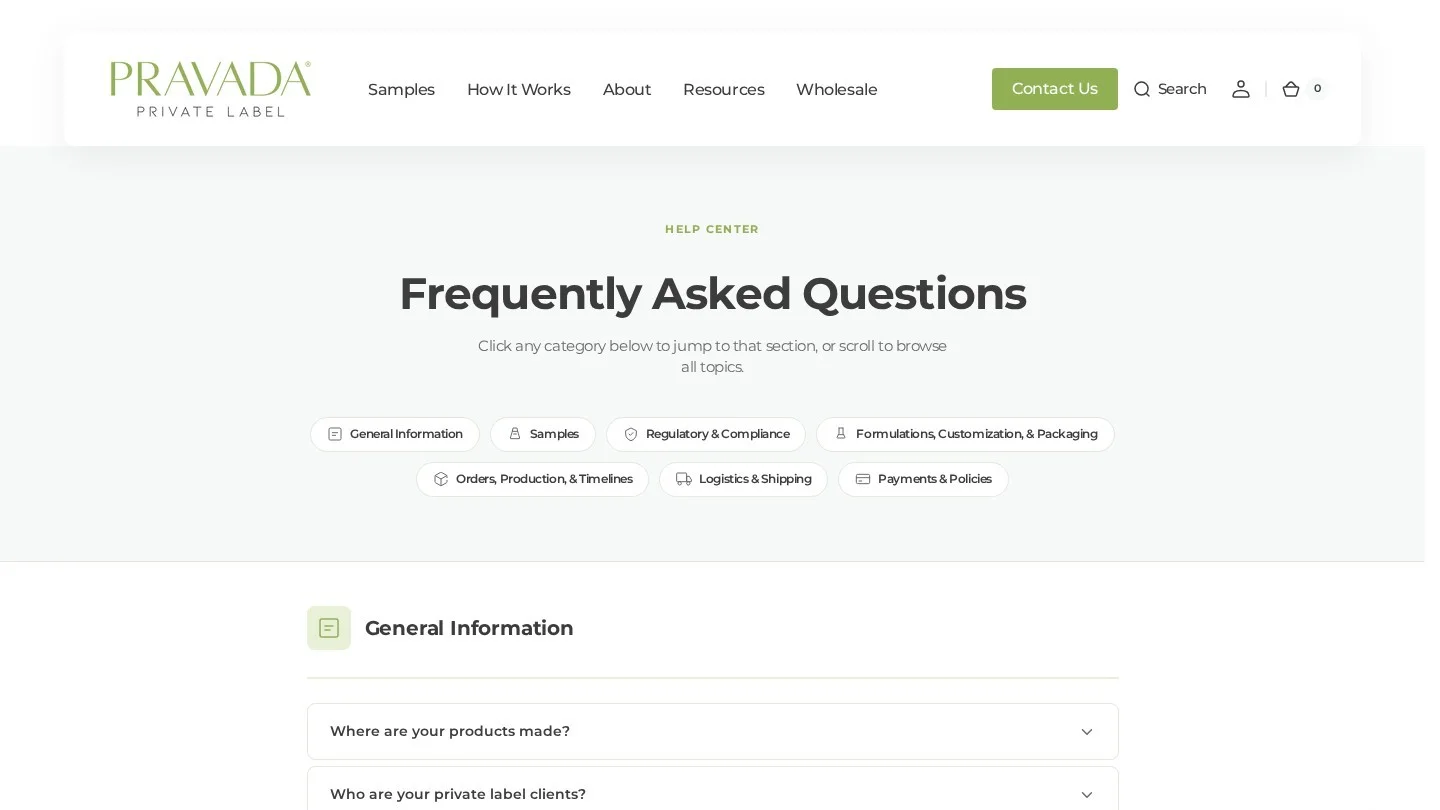
Pravada makes private label skincare, haircare and bath and body products in Fort Myers, Florida. It works from more than 300 base formulas, including a men’s line. Stock orders start at 50 units per product, a standard launch takes 6 to 8 weeks, and reorders take about 3 to 6 weeks once the deposit is paid.
What sets Pravada apart is its upgrade ladder. Its semi-custom program lets you adjust a stock formula at 250 units per SKU, with a one-time $350 fee that covers formula review and a lab sample. That takes about 8 to 12 weeks. Full custom formulas start at 2,500 units.
Pravada lists its facilities as FDA-registered and GMP-certified, cites ISO 22716 certification, and says it is cruelty-free. It also offers MoCRA registration help, label design for $450 and finished prototypes for $60 each. This lab suits founders who expect to grow into their own formulas within a year or two.
3. Next Beauty Labs: Fastest Turnaround on Stock Formulas
Next Beauty Labs makes its products in-house in Boca Raton, Florida, and focuses only on skincare. Its range covers acne treatments, age-defying products, antioxidants, pigment correction, cleansers, exfoliators, masks, moisturizers, toners and body care. It offers turnkey private label service that covers formulation, packaging, branding and regulatory support.
Stock formulas start at 50 pieces and are ready in 2 to 4 weeks, one of the shortest production times on this list. Semi-custom work starts at 500 pieces and takes 4 to 6 weeks. That speed suits a brand with a launch date to hit, such as a holiday season or a trade show.
4. DRHC Cosmetics: Best for Selling Before You Hold Stock
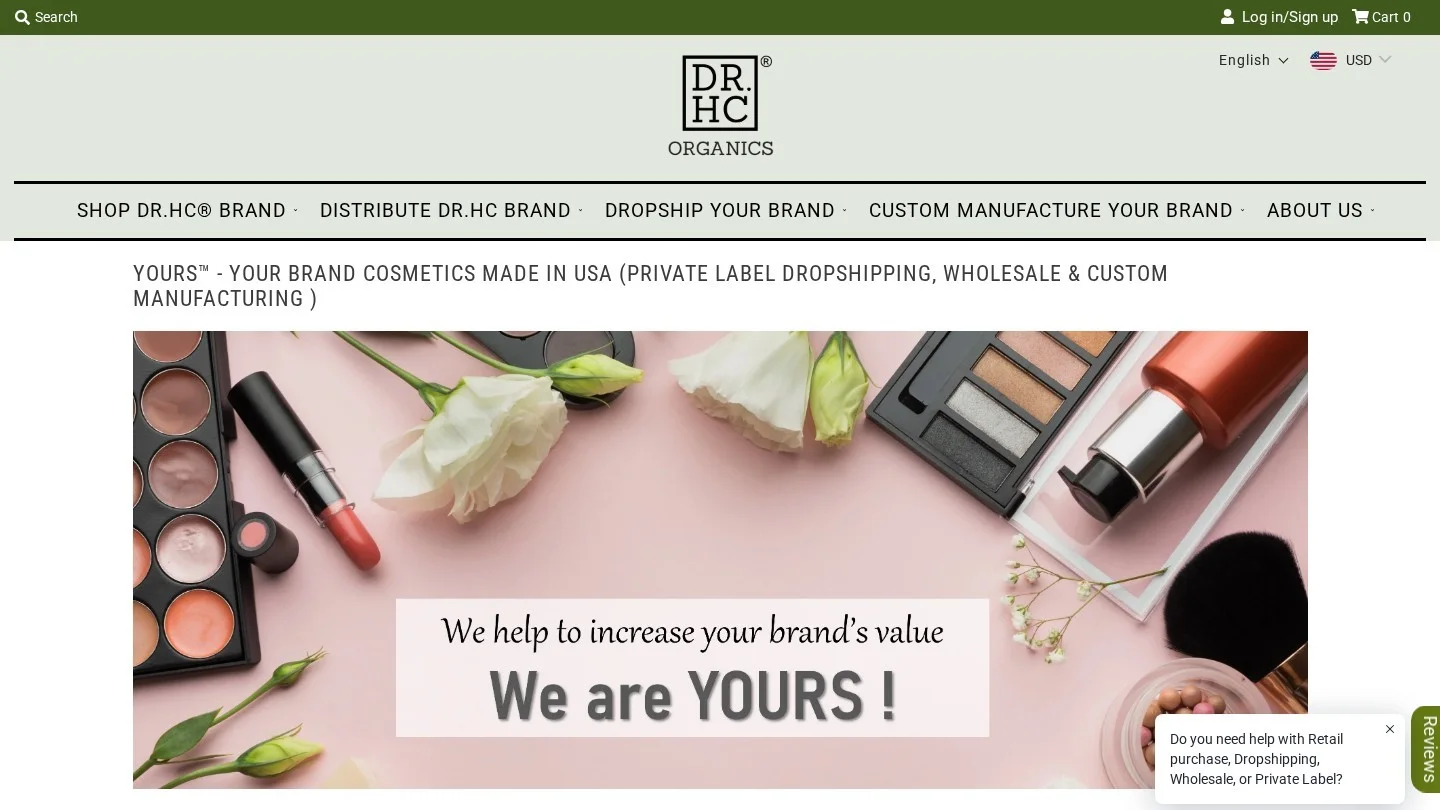
DRHC Cosmetics is a cosmetic lab and manufacturer in Silicon Valley, California. Its range spans skincare, makeup, hair and body care, bath, baby, feminine, men’s and spa products, including cleansers, serums, moisturizers and sun care. Its YOURS program offers private label dropshipping with no minimum, plus wholesale and custom manufacturing from 12 units.
Dropshipping is rare for a manufacturer. It lets a new brand take orders before buying any stock, though you give up the lower unit price of bulk buying. DRHC says its facility is certified cruelty-free by Leaping Bunny and PETA, a useful proof point if your brand leans on that claim.
5. Beauty Private Labels: Best No-Minimum Catalog for Startups
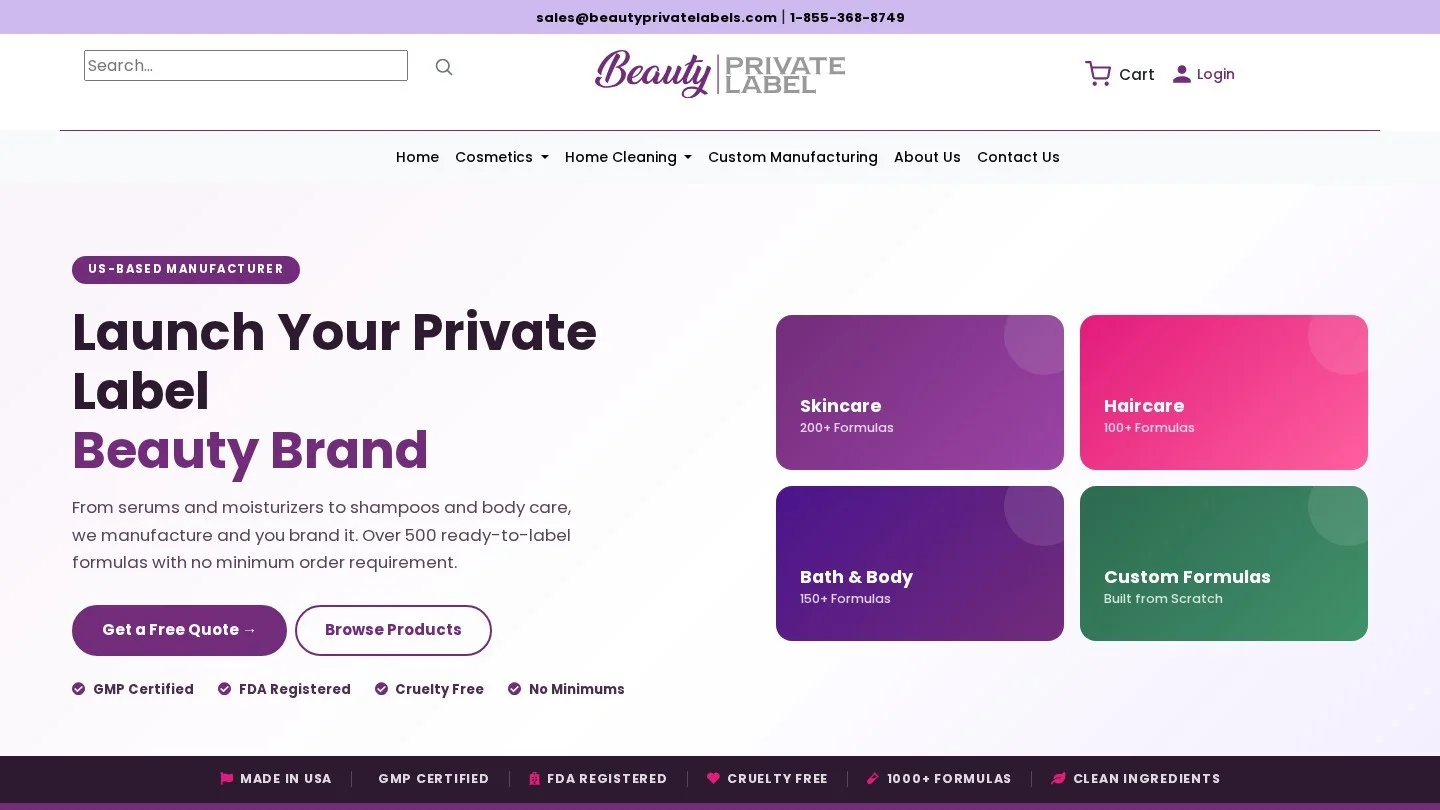
Beauty Private Labels is a US-based manufacturer in Colfax, North Carolina. Its catalog lists more than 200 skincare formulas across 16 product lines, including cleansers, face creams, serums, toners, eye creams, masques and healing clays. Products are filled, labeled and shipped from its own facility.
The headline term is no minimum order quantity, which makes it one of the cheapest ways to test a full regimen. The company says its facility is GMP-certified and FDA-registered and that its products are cruelty-free. It also offers custom manufacturing once you outgrow stock products.
6. Wholesale Natural Body Care: Best for Small Test Orders Across Many Categories
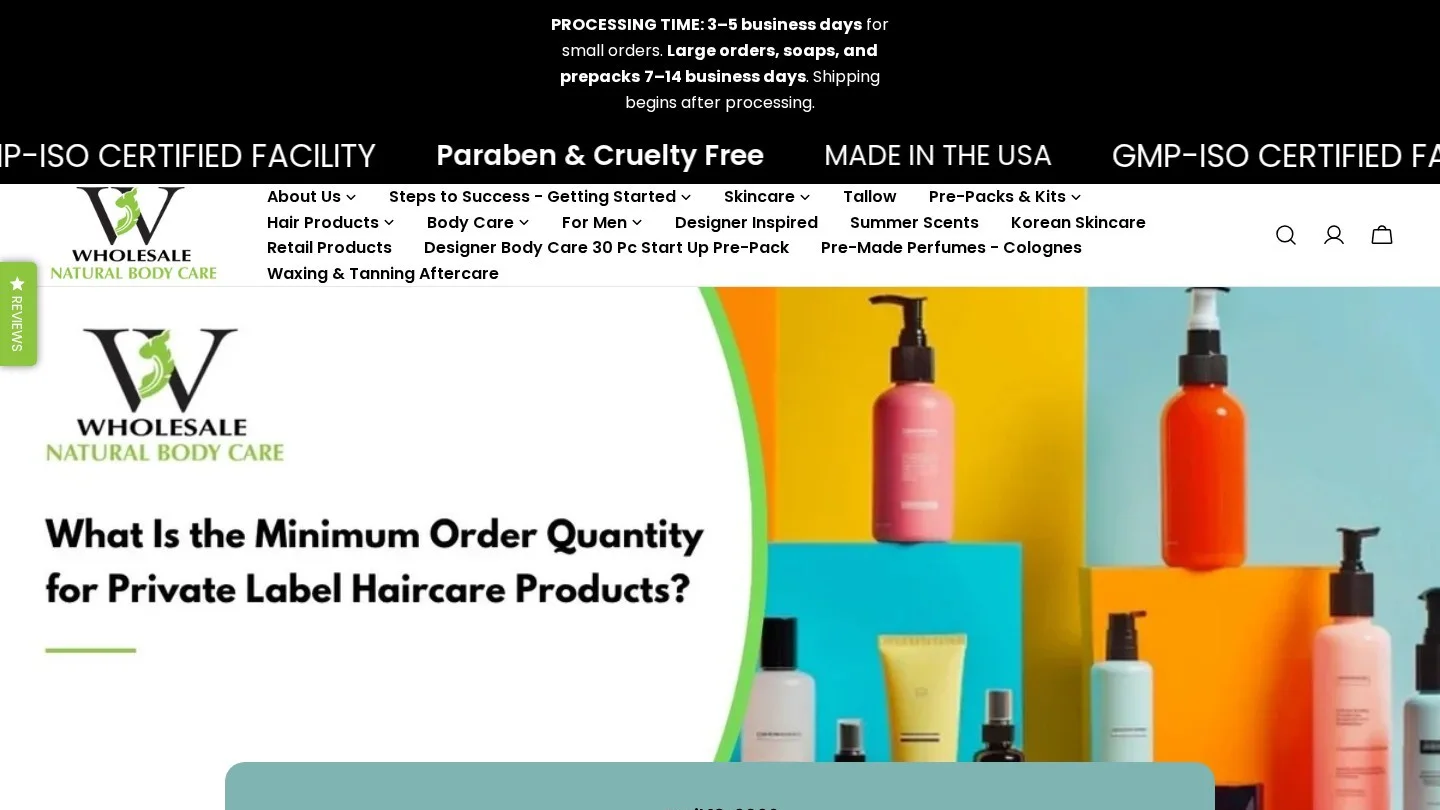
Wholesale Natural Body Care makes its products in what it describes as a GMP-ISO certified, US-based facility. Skincare covers acne, brightening and anti-aging products, face oils, serums and toners. The catalog also spans haircare, body wash, scrubs, soaps, men’s products and feminine care.
Every formula ships with a low minimum order. Small orders are processed in 3 to 5 business days, while large orders, soaps and kits take 7 to 14 business days. Products are paraben-free and cruelty-free, and you can request a certificate of analysis (COA) and safety data sheet for any formula. Get exact minimums in writing, since the site does not list a number.
7. FormuNova: Best Published Path From Stock to Full Custom
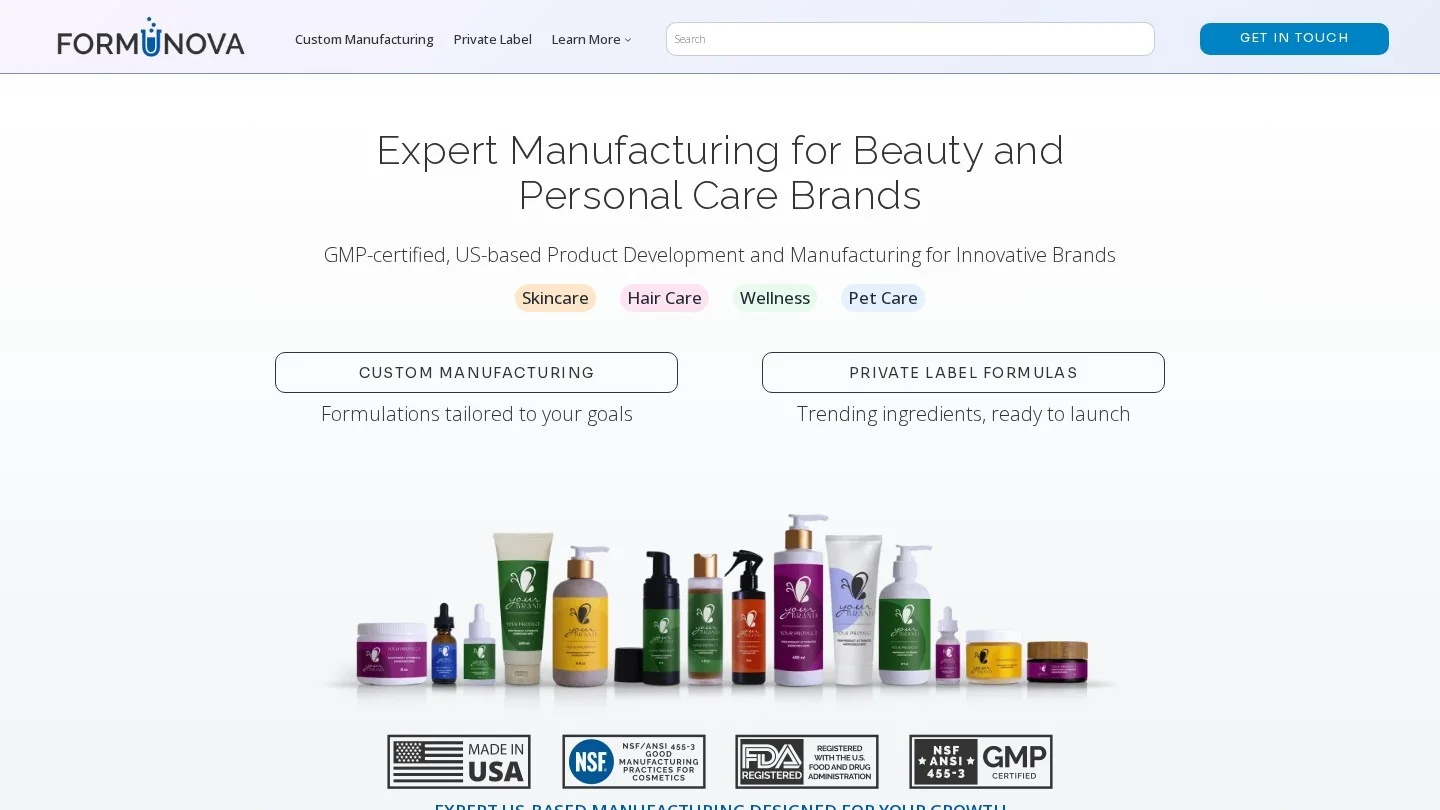
FormuNova manufactures in Stone Mountain, Georgia, just outside Atlanta. It makes skin, hair, wellness and pet care products. Its private label launch starts at 140 units, custom packaging on its market-ready formulas starts at 500 units, and full custom development starts at 3,000 units.
Lead times are 4 to 6 weeks for private label and 6 to 12 weeks for custom work. The company says its facilities are FDA-registered, GMP-certified and certified to NSF/ANSI 455-3, a GMP standard for cosmetics. Few labs publish every tier this clearly, which makes FormuNova easy to budget for.
8. Bellus Labs (S’Bellus): Best for a Fast Launch at 250 Units
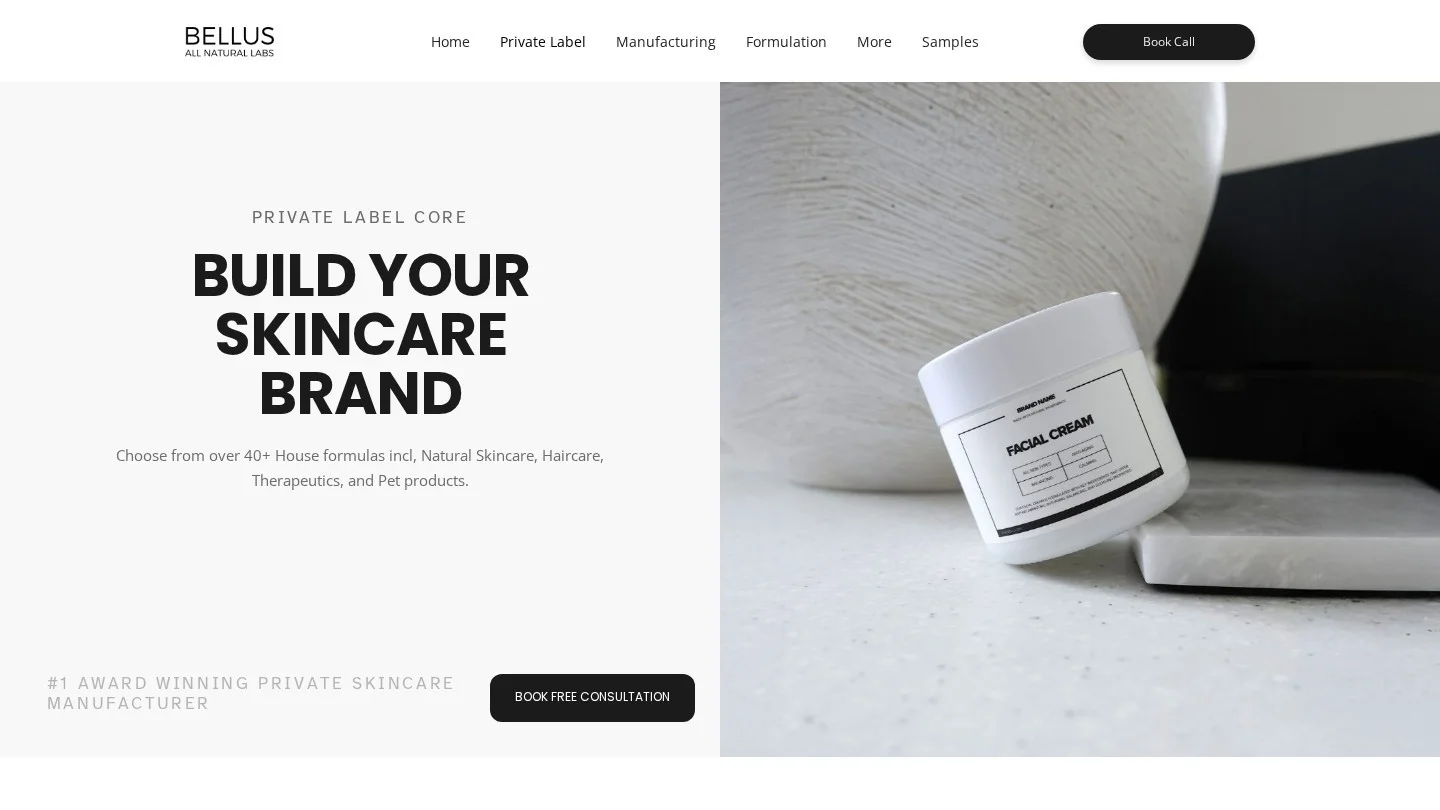
Bellus Labs, which also trades as S’Bellus, is a family-run US manufacturer founded in 2015 with three locations in the Morris County area. It offers more than 40 house formulas across natural skincare, haircare, therapeutic and pet products. You can sell a formula as it is or add optional “boosts”.
Its private label program has two tiers, both with a 250-unit minimum. Core is meant for products that retail at $30 to $65, and Luxe for products that retail at $80 to $140. The lab says a product can launch in as little as 30 days on its fast track.
The company says its labs follow cGMP, ISO, FDA, CDC and OSHA standards, and it lists cruelty-free and vegan options. Its site also uses the phrase “FDA certified production”. FDA registers cosmetic facilities rather than approving them, so ask for the facility’s FEI number before you sign. That check applies to every lab on this list.
9. Private Label Labs: Best for Sunscreen and Full Regimens From the Midwest
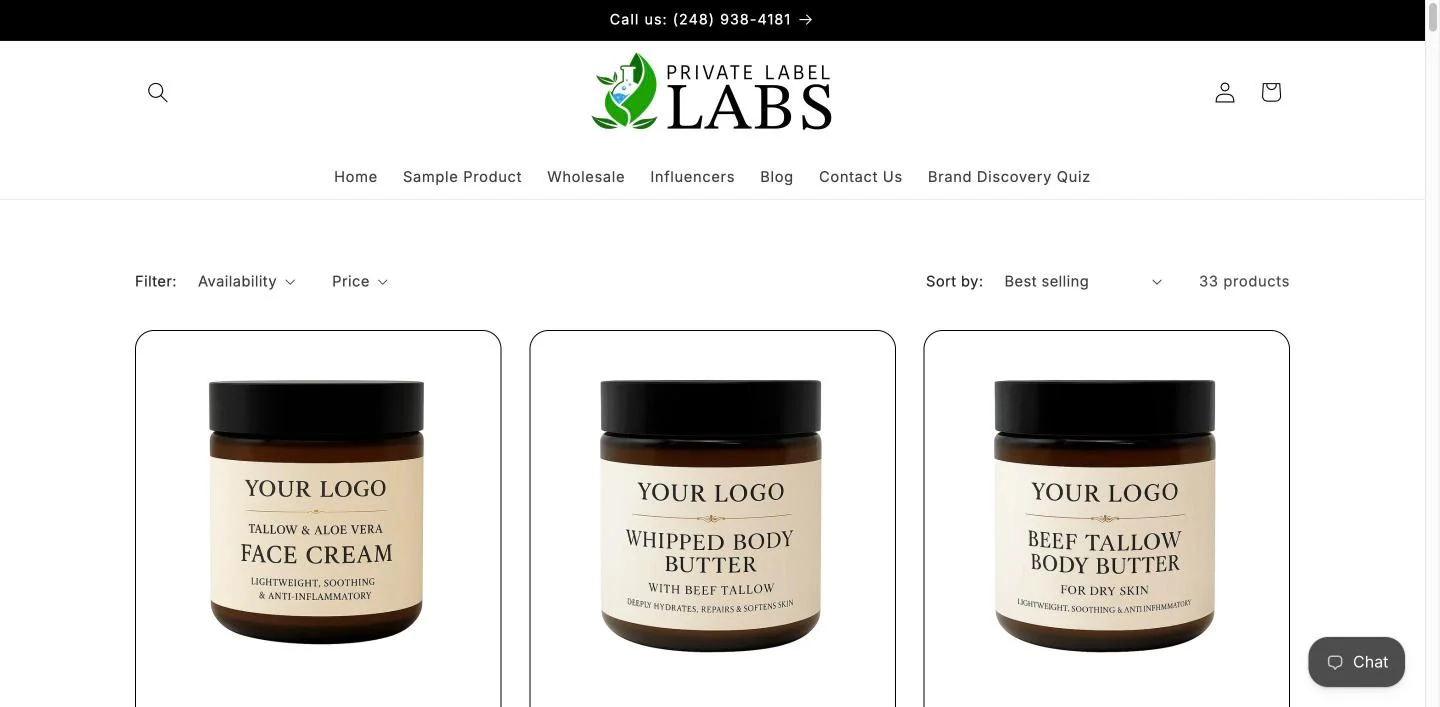
Private Label Labs is based in Farmington Hills, Michigan, and makes its products at a Michigan manufacturing operation. Its skincare range covers cleansers, toners, serums, moisturizers, sunscreens, face masks, face oils, eye care, exfoliators and body care. That breadth lets you build a full regimen, sun care included, from one supplier.
Minimums vary by product, formula, packaging and customization, and the company sets a timeline once your specs are final. It follows cGMP standards and labels its products cruelty-free. If you want organic claims, it can review USDA Organic options formula by formula during discovery.
10. ALFA Manufacturing Group: Best Large Catalog for Brands Ready to Scale

ALFA Manufacturing Group makes products in Miami, Florida, from a library of more than 1,000 stock formulations, with skincare as one of its catalog categories. Minimums start at 2,500 units. Choosing stock packaging rather than custom packaging lowers the minimum and shortens production.
The company says it runs an FDA-registered facility certified to ISO 22716 cGMP, the international good manufacturing standard for cosmetics. That combination matters if you plan to sell to retailers that audit their vendors. ALFA is a second-stage partner for a brand whose stock products already sell steadily.
Which Skincare Lab Fits Your Stage of Business
The right lab depends less on which one is “best” and more on how much cash you can tie up and how sure you are of demand. Four common situations show how the choice plays out.
You are testing an idea with under $1,000. Start with a no-minimum source such as Beauty Private Labels, RainShadow’s wholesale side or DRHC’s dropshipping. Buy or list two or three products, sell them to your first customers, and watch which one they reorder.
You run a spa, salon or esthetics practice. RainShadow’s esthetician and salon programs fit this case well, because you can stock a back-bar size and a retail size of the same formula. Pravada also works if you want a men’s line or matching hair products.
You have a proven product and want it to feel like yours. Pravada’s semi-custom tier is the clearest next step, at $350 and 250 units. Next Beauty Labs and Bellus Labs are the options if speed matters more.
You sell more than a thousand units a quarter. At this point a custom formula can pay off. Get quotes from Pravada’s custom program, FormuNova’s full custom tier and ALFA, then compare unit cost, formula ownership and reorder lead time.
FDA Rules for White Label Skincare Brands Under MoCRA
The Modernization of Cosmetics Regulation Act of 2022 (MoCRA) added new duties for cosmetics makers and brands, enforced by FDA. Some fall on your manufacturer. Others fall on whoever is the “responsible person” for each product, a role your brand may hold. Agree in writing who handles what. FDA’s MoCRA page was last updated on October 29, 2026.
| MoCRA requirement | Who handles it | What it involves |
|---|---|---|
| Facility registration | Manufacturer or processor | Register each facility with FDA and renew every two years |
| Product listing | Responsible person | List each product with its ingredients, update annually, include the facility’s FEI number |
| Serious adverse event reports | Responsible person | Report to FDA within 15 business days, with a copy of the label |
| Safety substantiation | Responsible person | Keep records showing the product is safe; no specific tests required |
| Good manufacturing practice | Manufacturer | FDA must set GMP rules; a draft guidance has been published |
| Mandatory recall | FDA power | FDA can order a recall if a product may cause serious harm and the firm refuses |
Registration and listing are filed through FDA’s Cosmetics Direct portal. The facility owner or operator must get an FEI number before registering, and you need that number from your manufacturer to list your products, according to FDA’s final guidance of December 18, 2023. FDA began enforcing registration and listing on July 1, 2024, after a six-month compliance delay.
Small businesses get some relief. MoCRA exempts certain small businesses from the GMP, registration and listing duties. The exemption does not cover products that regularly touch the eye’s mucous membrane, products that are injected or meant for internal use, or products meant to change appearance for more than 24 hours. A small brand that lists without its own FEI number can give its name and address instead.
Two more points matter for skincare. FDA states that animal testing is not a requirement for marketing a cosmetic, which helps cruelty-free brands. And fragrance allergen labeling is coming, since MoCRA directs FDA to set those rules by regulation. Ask your manufacturer how it will handle both.
Products that make drug claims, such as sun protection, follow drug rules instead. FDA’s registration and listing guidance treats facilities and products subject to drug requirements separately from MoCRA’s cosmetic rules. If you want an SPF moisturizer, ask any lab on this list whether it makes OTC drug products before you go further.
A practical rule: treat “FDA-registered” on a lab’s website as proof that it has made a required facility filing. It does not replace your own listing, safety records and adverse event process.
How to Launch a Private Label Skincare Line, Step by Step
- Pick a narrow customer and two or three products. A cleanser, serum and moisturizer for one skin concern is easier to explain and reorder than a 12-piece range.
- Choose the model. Start with white label stock formulas unless you already have sales data. Note the step-up costs, such as Pravada’s $350 semi-custom fee.
- Shortlist three labs and order samples. Compare texture, scent and packaging. Ask each for minimums in finished units, lead time from label approval, and reorder terms.
- Collect documents. Request the facility’s FEI number, any GMP or ISO 22716 certificate, the full ingredient list and the safety data that supports each formula.
- Design labels and packaging. Have the lab or a regulatory adviser review your label before printing. Choose recyclable outer packaging that fits the product’s weight.
- File your product listings. Use Cosmetics Direct with the manufacturer’s FEI number, unless your products and sales qualify for the small business exemption.
- Set up safety and complaint handling. Create an inbox for customer reactions, a log, and a process to report serious adverse events to FDA within 15 business days.
- Price, launch and plan reorders. With an 8 to 10 week lead time at a lab like RainShadow, reorder when stock covers about three months of sales.
For shipping boxes and mailers, see our guide to sustainable packaging suppliers for small business. If you still need a brand name, try our free business name generator before you design labels.
What a White Label Skincare Launch Costs: A Worked Example
The minimums and the $350 fee below are Pravada’s published terms. The per-unit prices are our assumptions for illustration only, because labs quote unit costs by formula, size and packaging. Swap in your own quotes. We assume a retail price of $28 per product.
| Path | Order | Upfront fee | Assumed unit cost | Total cash out | Cost per unit | Sales at $28 to recover cash |
|---|---|---|---|---|---|---|
| Stock white label, 3 SKUs | 50 units x 3 = 150 | $0 | $6.00 | $900 | $6.00 | 33 |
| Semi-custom, 1 SKU | 250 units | $350 | $5.00 | $1,600 | $6.40 | 58 |
| Full custom, 1 SKU | 2,500 units | Not included | $4.00 | $10,000 | $4.00 | 358 |
The custom formula has the lowest unit cost, but it needs about 358 sales just to earn back the cash, before any development fee, marketing, shipping and platform fees. The stock line gets there in 33 sales and gives you three products to test. That gap is why most founders should prove demand with white label first.
Plug your real numbers into our break-even calculator, and use the percentage calculator to check your gross margin. At $28 retail and a $6 unit cost, gross margin is about 79 percent before shipping and fees. Budget for the costs around the product, too: label printing, outer boxes, product photos, a website and liability insurance.
Questions to Ask a Skincare Manufacturer Before You Sign
- What is the minimum in finished units? Gallon or batch minimums need converting into bottles of your chosen size.
- Who owns the formula? With stock formulas, the lab does. With custom work, ask whether you can move the formula to another lab later.
- Is the formula exclusive? Stock products are usually sold to many brands. Ask whether any changes can make yours unique.
- Which MoCRA filings will you make for me? Get the FEI number and agree who handles listing and adverse event reports.
- What happens on a failed batch? Ask about testing, remakes, and who pays if a batch fails quality checks.
- What are the reorder terms? Reorder minimums and lead times decide how much cash sits in stock.
If you plan to sell through boutiques and spas, our guide to wholesale suppliers for boutiques explains the opening order and payment terms retailers expect. More founder guides are in our Startups section.
MoCRA Registration, Lowest Minimums and Production Time
What Is the Difference Between White Label and Private Label Skincare?
White label is a stock formula sold to many brands, with only your label added. Private label usually lets you adjust parts of the formula, scent or packaging, so the product is more your own. Custom formulation creates a new product from scratch.
How Much Does It Cost to Start a White Label Skincare Line?
Inventory can start at a few hundred dollars. Pravada fills 50 units per product, so three products cost about $900 at an assumed $6 unit cost. Labels, packaging, a website and insurance come on top. Pravada, for example, charges $450 for label design.
Do I Need to Register My Private Label Skincare Brand With FDA?
Under MoCRA, the manufacturer must register its facility, and the responsible person must list each product, keep safety records and report serious adverse events within 15 business days. Certain small businesses are exempt from registration and listing, with exceptions such as eye-area products.
Which Private Label Skincare Manufacturer Has the Lowest Minimum?
Beauty Private Labels has no minimum order, DRHC Cosmetics dropships with no minimum, and RainShadow’s Buy Direct wholesale option has none either. DRHC wholesale starts at 12 units, while Pravada and Next Beauty Labs start at 50 units per product.
How Long Does Private Label Skincare Production Take?
Plan on 1 to 3 months. Next Beauty Labs quotes 2 to 4 weeks for stock formulas, FormuNova 4 to 6 weeks, Pravada 6 to 8 weeks and RainShadow about 8 to 10 weeks after label approval. Custom work takes longer, such as 6 to 12 weeks at FormuNova.
FDA MoCRA Guidance and Manufacturer Minimum Order Terms
- FDA: Modernization of Cosmetics Regulation Act of 2022 (MoCRA)
- FDA: Final guidance on registration and listing of cosmetic product facilities and products
- FDA: Compliance policy for cosmetic facility registration and product listing
- RainShadow Labs: Private label skincare manufacturer
- RainShadow Labs: Private label for estheticians
- RainShadow Labs: Full-service private label for salons
- Pravada: Frequently asked questions
- Pravada: How semi-custom works
- Bellus Labs: About
- Bellus Labs: Private label products
- Wholesale Natural Body Care: Minimum order quantities for private label products
- Next Beauty Labs: Private label skincare manufacturer
- DRHC Cosmetics: YOURS private label program
- Beauty Private Labels: Private label beauty manufacturer
- FormuNova: Private label and custom manufacturing
- Private Label Labs: USA skincare manufacturer
- ALFA Manufacturing Group: Private label