A new boutique can stock its first rack for about $300 at wholesale, pay for it 60 days later and send back what does not sell. That combination of low opening minimums, net-60 terms and free first-order returns comes from the marketplaces, with Faire the strongest all-round pick for a small clothing or gift shop. FashionGo is the deeper well for trend-led women’s apparel, JOOR is how you reach established fashion labels, and buying direct from makers such as Bloomingville or Bella+Canvas pays off once you know what sells.
We checked each supplier’s own terms pages and app listings in October 2026 and kept only the sources whose minimums, payment terms or buyer requirements we could confirm. Our focus is the US independent shop, with notes where a platform serves buyers in Canada, the UK, Europe or Australia.
Faire’s Net-60 Terms, Resale Certificates and Keystone Margins
- Start on a marketplace. Faire offers 60-day terms to eligible retailers and free returns on your first order with each brand, which caps the cost of a bad buy.
- Have your seller’s permit ready before you register. FashionGo verifies it, Bloomingville will not activate an account without a resale certificate, and The Folklore asks every US retailer for one.
- Price at keystone (double the wholesale cost), but judge the buy on landed cost and markdowns. Our $303 test order earns a 45.4% margin at full price and 33.4% after realistic markdowns.
- Prepacks lock you into a size ratio. Read the run (for example 1S-2M-2L-1XL) before you add to cart, and remember Faire will not take back single pieces from a prepack.
- Tundra closed in 2023 and Shopify’s Handshake marketplace is listed as discontinued, so older “best supplier” lists that still recommend them are out of date.
Wholesale Marketplaces vs Buying Direct From Brands
There are two ways a small boutique buys stock, and most successful shops end up using both.
A wholesale marketplace puts hundreds or thousands of vendors behind one login and one checkout. The platform sets the buyer rules (payment terms, returns, sometimes shipping), while each brand sets its own opening order minimum and prices. The appeal for a new shop is risk: you can test five brands with a few hundred dollars, often on credit. The trade-off is that the marketplace takes a commission from the brand, so some vendors keep their best prices or exclusives for direct accounts.
Buying direct means opening an account with a single brand or wholesaler through its own site, a sales rep or a trade show booth. Minimums are usually higher and terms are stricter for a new account, but you get a relationship: early access to new collections, reorder priority and, in time, credit terms negotiated on your own history. Bloomingville, for example, asks for a $500 opening order and a $150 reorder, according to its US wholesale FAQ.
A sensible sequence for a first-year boutique: buy wide on a marketplace while you learn your customer, then move your three or four best-selling lines to direct accounts once you are reordering them every month.
Wholesale Suppliers for Boutiques Compared
Terms as published on each supplier’s own pages, data as of October 2026. “Brand-set” means each vendor on the platform chooses its own minimum.
| Supplier | Type | Best for | Opening minimum | Payment terms | Returns or shipping perk | Resale ID needed |
|---|---|---|---|---|---|---|
| Faire | Marketplace | Gifts, home, apparel, accessories | Brand-set; filters for $100 or less and no minimum | 60 days for eligible retailers | Free returns on first order with each brand | Account verified after first order |
| FashionGo | Marketplace | Trend women’s apparel from LA vendors | Vendor-set | Card at checkout | Consolidated shipping across vendors | Yes, seller’s permit verified |
| Orange Shine | Marketplace | Trend apparel and accessories from 700+ vendors | Low quantity minimums | Pre-authorised at checkout | Flat-rate consolidated shipping from $22 at $100 | Yes, seller’s permit |
| JOOR | Ordering platform | Established fashion labels, seasonal pre-orders | Brand-set | JOOR Pay or brand terms | Digital trade shows via JOOR Passport | Set by each brand |
| Creoate | Marketplace (UK-based) | UK and European gift and lifestyle brands | Brand-set, low minimums | 60 days for eligible permanent stores | 60-day free returns on all orders | Business ID requested |
| Ankorstore | Marketplace (Europe) | Independent European brands | €100 | Defer 30, 60 or 90 days | Free first-order shipping from most brands | Free retailer sign-up |
| Tasha Apparel | Direct (LA apparel wholesaler) | Prepacked trend womenswear, quick top-ups | None | Paid at order; bank transfers within 48 hours | Free US shipping at $300; same-day dispatch before noon PT | Seller’s permit for California shops |
| Bloomingville | Direct (home and gift) | Home decor, textiles, gift tables | $500; $150 reorders | Card | Freight capped at 10% to 15% on carrier shipments over $1,500 | Yes |
| Creative Co-op | Direct (home and gift) | Seasonal home decor, gift tables | $500; $150 reorders | Prepaid; net 30 with approved credit | Claims within 10 days of delivery | Yes, plus city or county licence |
| Bella+Canvas | Direct (blank apparel) | Own-label tees, sweatshirts | None stated | Card | Free UPS Ground at $200 (continental US) | Only for tax-free wholesale account |
| Barefoot Books | Direct (children’s books, gifts) | Kids’ corners, gift shops | None for online orders | Credit terms on request | Free US shipping at $100 net | Yes, certificate uploaded |
| Kiyonna (via Faire) | Brand on a marketplace | US-made plus-size womenswear | Brand-set on Faire | 60 days via Faire | Free returns on opening order | Faire verification |
Faire, FashionGo, JOOR and Nine More Suppliers Reviewed
1. Faire: The Lowest-Risk Place to Start
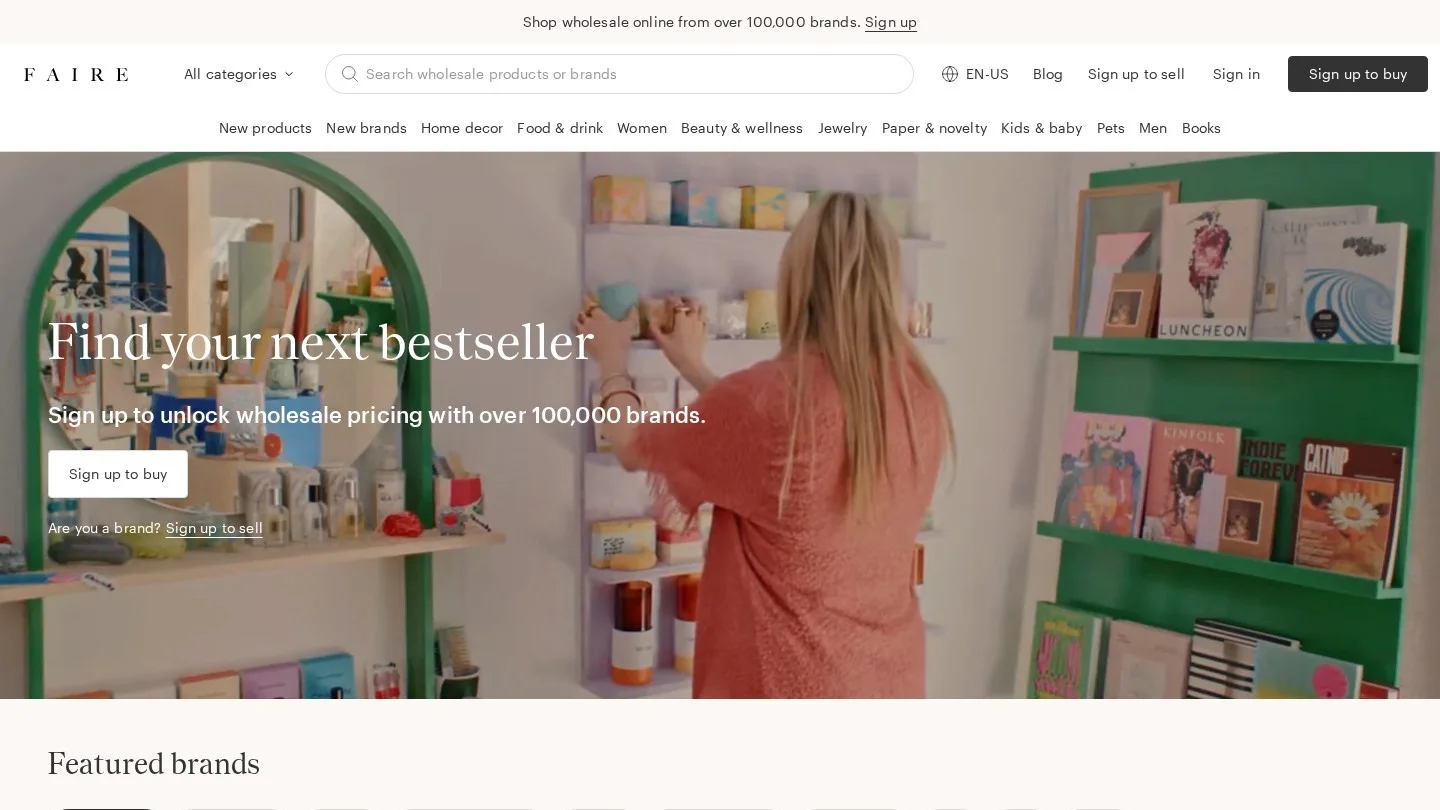
Faire is the default first stop for gift-led boutiques and a strong one for apparel and accessories. Each brand sets its own opening and reorder minimums, and Faire’s buying guide shows filters for brands with a $100-or-less minimum or no minimum at all. Eligible retailers get 60-day payment terms.
The returns policy is what makes Faire forgiving for a new buyer. According to Faire’s retailer FAQ, free returns apply only to your first order with a brand, the window is typically 60 days, and Faire pays return shipping. The fine print matters: original shipping and import fees are not refunded, customised items and testers cannot go back, and you cannot return part of a prepack.
Two sign-up offers are worth timing. If a brand sends you its Faire Direct link, your first order with that brand is 50% off and comes with a year of free shipping from that brand, per Faire’s new retailer offers page. Selected new retailers who join without a referral may instead get a welcome offer of 50% off the first order, up to a cap. Both expire seven days after you open the account, so have your first cart planned before you register. Faire’s referral terms add that you must still meet the referring brand’s opening minimum.
Faire’s returns policy covers retailers in the US, Canada, the UK, the EU, Australia and New Zealand. UK and European shops can pay for the Insider membership, priced at £14.99 a month in the UK and €19.99 in Europe after a three-month trial, which adds free shipping from thousands of brands with no order minimum.
2. FashionGo: Volume Women’s Apparel From Los Angeles

If your racks lean towards trend-led womenswear at accessible prices, FashionGo is where much of that stock is listed. Registration is free, and its app listing from developer NHN Global promises “thousands of new styles” daily. Expect to prove you are a business: the company’s own reply to a reviewer says it must verify a state seller’s permit before an account can buy.
The practical features suit a one-person buying team. You can check out carts from several vendors in a single payment, combine orders into one shipment through consolidated shipping, and use Style Match+ to search by photo when a customer shows you something she saw online. Each vendor sets its own minimum, and most apparel arrives in prepacks, so check the size ratio on every listing.
One change for online-only boutiques: FashionGo’s dropshipping app is not currently available on the Shopify App Store, so plan on holding inventory rather than drop shipping through that route.
3. Orange Shine: Low Minimums and Flat-Rate Consolidated Shipping
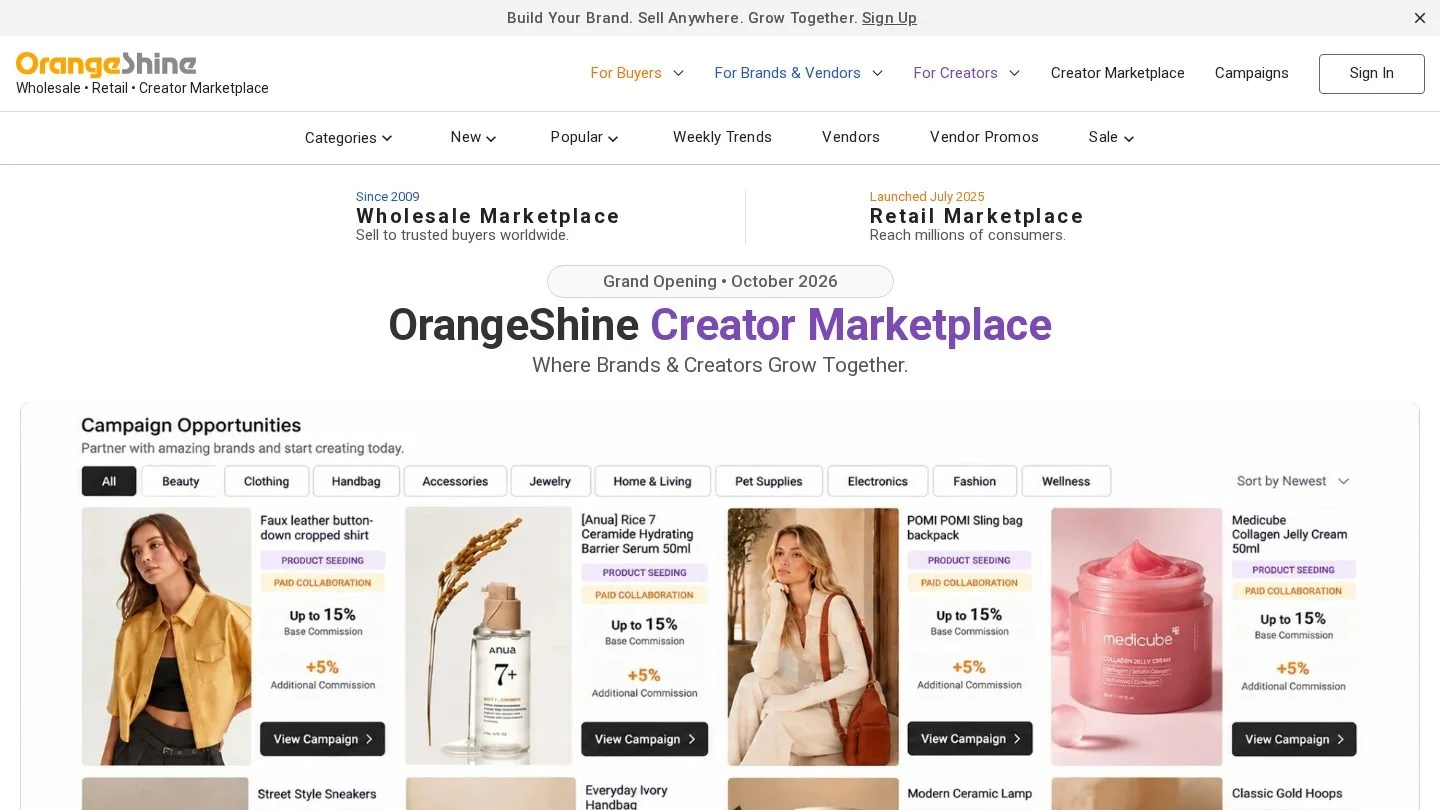
Orange Shine covers much the same ground as FashionGo, trend womenswear and accessories at prices that leave room for keystone, but it is the friendlier of the two for a very small first order. Its buyer guide says a seller’s permit is all you need to register, lists more than 700 vendors and advertises low quantity minimums with no fees to the buyer.
Shipping is where the platform earns its place. Vendors that use Orange Shine’s consolidated fulfilment ship together under one flat-rate table: $22 on a $100 to $199.99 order, $29 up to $399.99, $47 for $600 to $999.99, and free once the order passes $5,000. The $100 floor counts only participating vendors and ignores pre-orders, the rates apply to ground service in the 48 contiguous states, and vendors who ship their own parcels set their own charges. Read the fulfilment label on each listing before you build a cart around the flat fee.
4. JOOR: Where Established Fashion Labels Take Orders
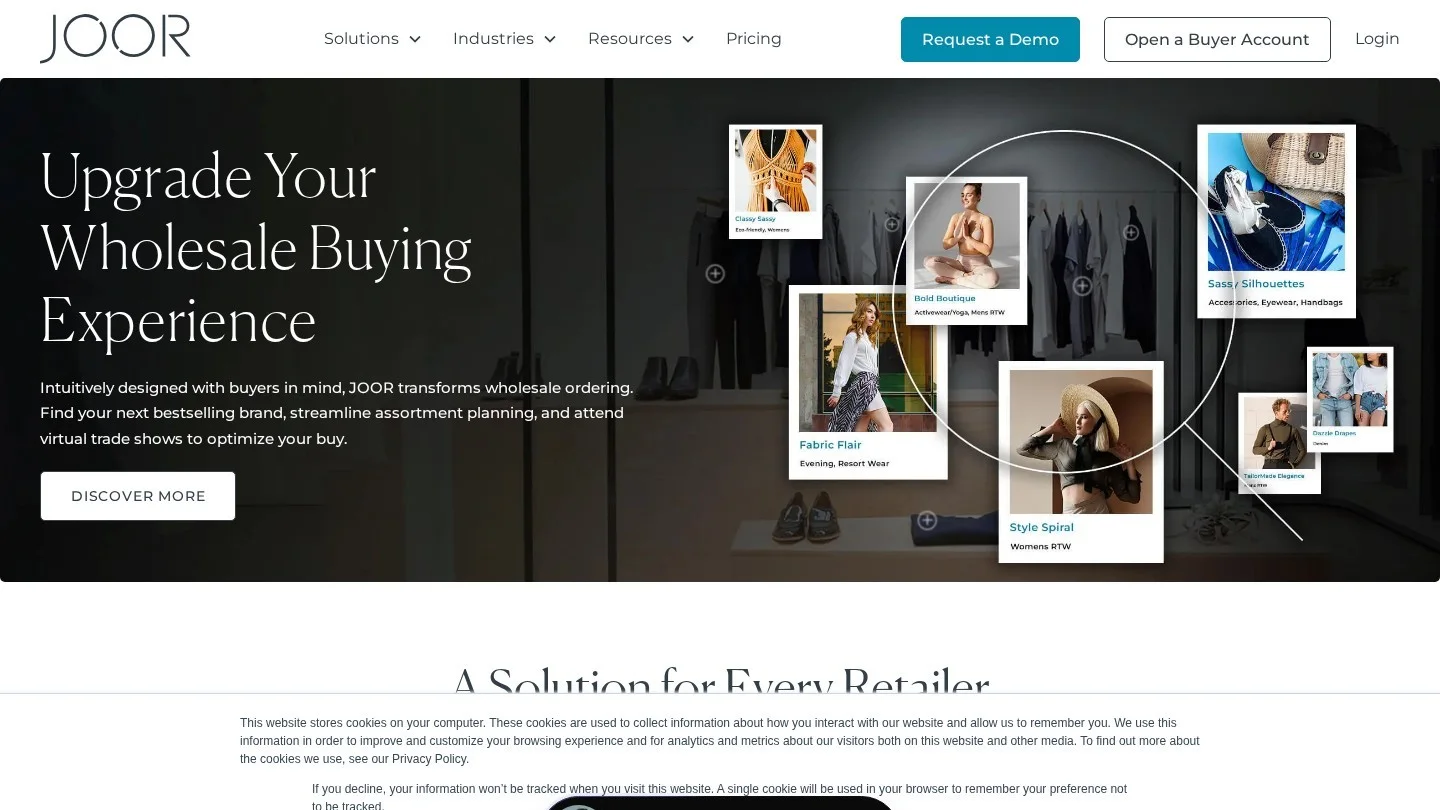
JOOR is a different animal from the open marketplaces. Brands use it to run seasonal wholesale, so you see linesheets, virtual showrooms and pre-order windows rather than an endless feed of in-stock items. According to JOOR’s retailer page, the JOOR Lite tier is free for retailers and gives access to more than 14,000 brands across 53 categories, with reordering from past orders, a global brand directory and digital trade shows through JOOR Passport.
JOOR Pay lets you pay brand partners inside the platform, but terms, minimums and approval are set brand by brand. Be ready to show store photos, a website and your current brand mix when you request access. Use JOOR once you have six months of sales history and want names that will not appear in the boutique down the street.
5. Creoate: A Faire Alternative for UK and European Stock
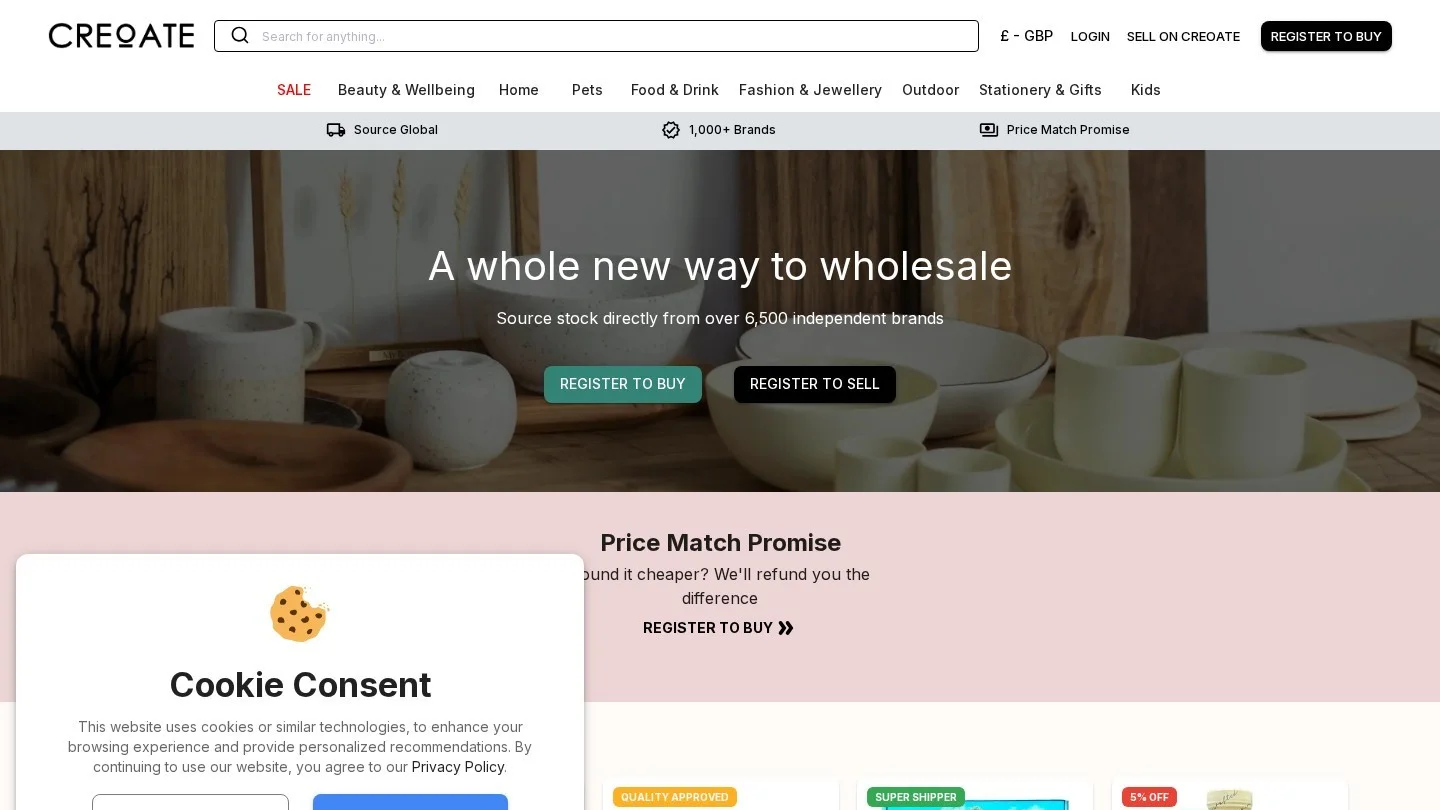
Creoate is a marketplace registered in England and Wales, and it competes on generous returns: its net-60 guide advertises 60-day free returns on all orders, not only the first one. Sixty-day payment terms are offered at the company’s discretion to permanent bricks-and-mortar retailers, defined in its eligibility rules as registered commercial premises used mainly for retail. Online shops and pop-ups are assessed case by case and earn bigger limits as they trade.
For a UK boutique this is a natural second account alongside Faire. US shops should treat it as a source for European-made gifts and check delivery terms at checkout.
6. Ankorstore: Up to 90 Days to Pay for European Brands
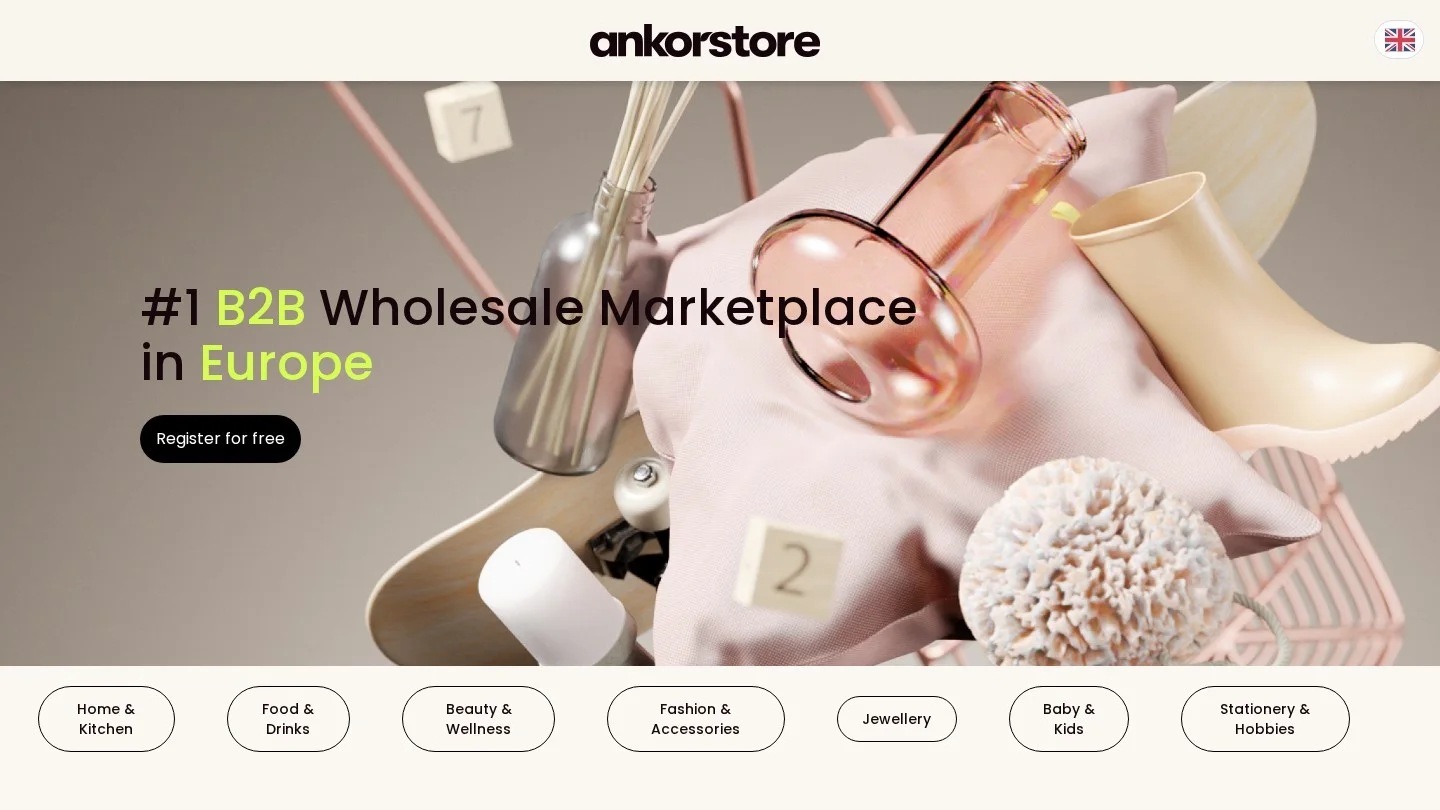
Ankorstore is the larger of the two European-born marketplaces on this list. Its retailer page claims around 30,000 brands and more than 300,000 independent retailers, and lets buyers defer payment for 30, 60 or 90 days. The company’s own retailer guide sets the minimum order at €100, says first orders ship free from most brands, and reserves the 90-day term for members of its paid Ankorstore Plus tier, which also brings free shipping from most brands.
For a shop in Paris, Berlin or Dublin, Ankorstore and Creoate together cover most independent European labels, and it pays to compare the same brand on both before ordering. A US boutique will find the range tempting, but the selling point is European stock for European shops.
7. Tasha Apparel: No-Minimum Prepacks Shipped From Los Angeles
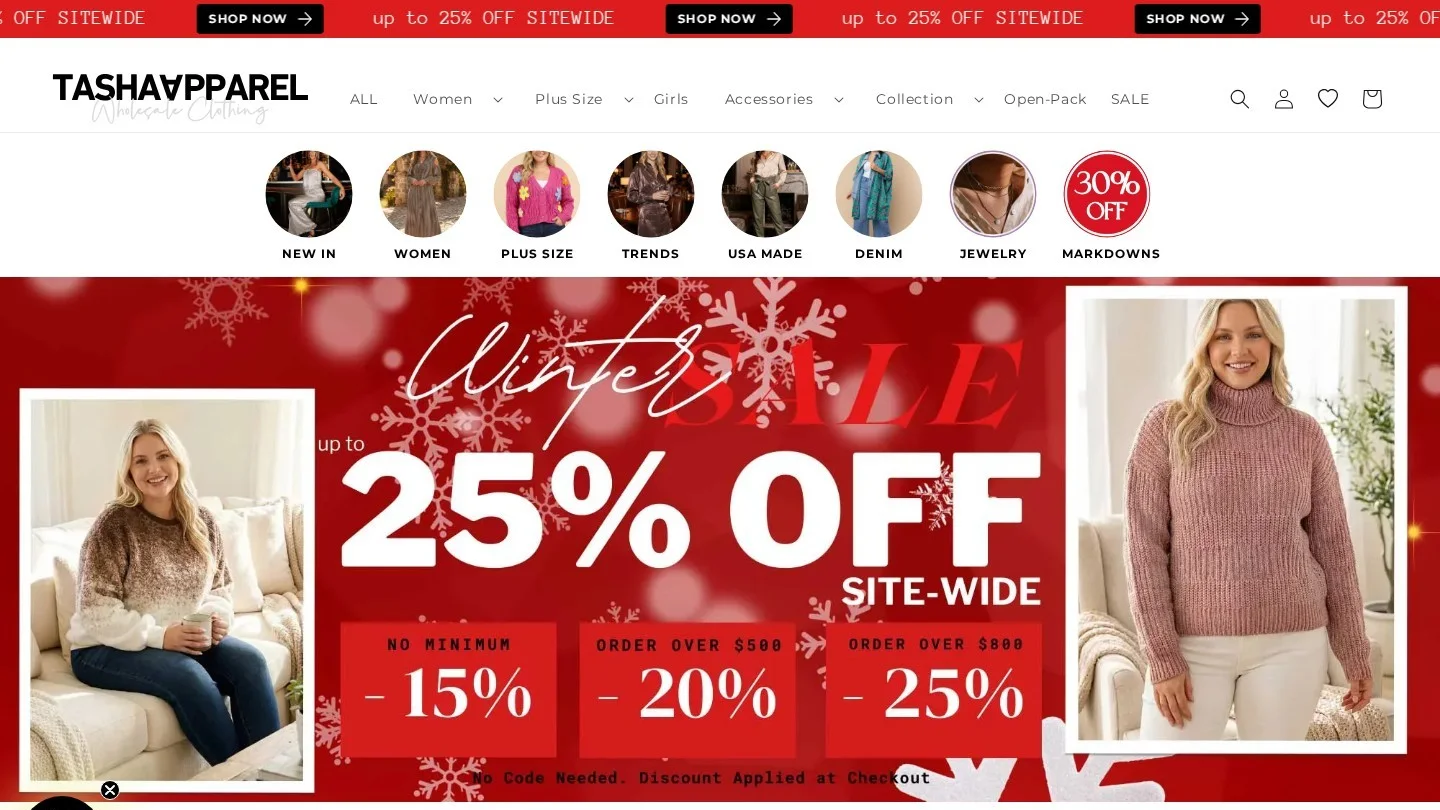
Not every apparel source is a marketplace. Tasha Apparel is a single Los Angeles wholesaler with a showroom where local buyers can collect orders, and its order policy is about as simple as wholesale gets: no minimum order, and an account that activates the moment you sign up. California shops must supply a valid seller’s permit before anything ships.
Most styles come in prepacks of six with a full size ratio, and sample orders are not offered, so your first buy is a pack, not a single garment. Orders of $300 or more ship free (clearance excluded); smaller ones pay a flat $9.95 by FedEx Ground within the US. Order before noon Pacific time and the company says it ships the same day, which makes it a handy top-up supplier when a bestseller runs out mid-season. If you pay by bank transfer, the money has to land within 48 hours or the order is cancelled. Shops that want to avoid the prepack problem can look at the separate open-pack collection.
8. Bloomingville: Home and Gift Stock Bought Direct
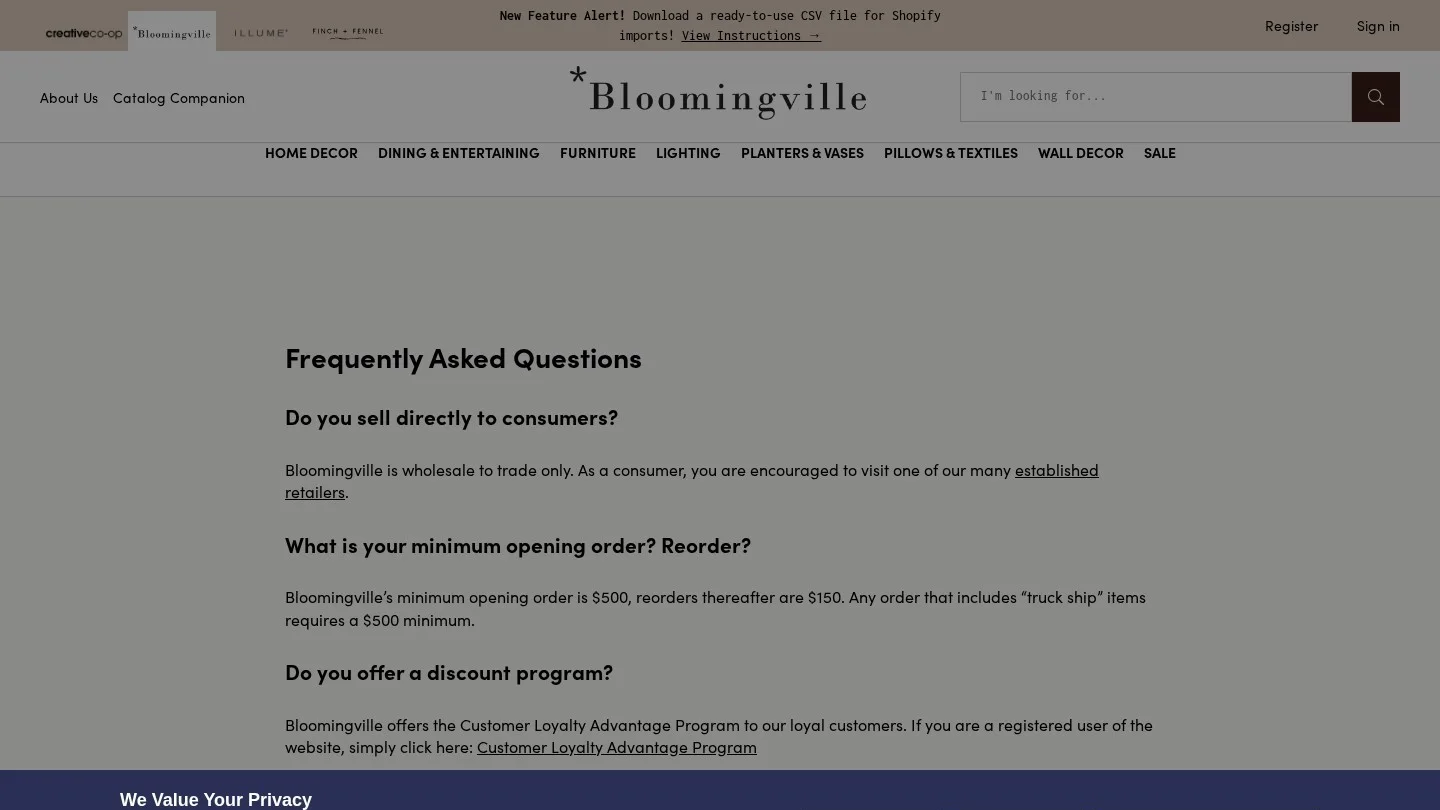
Clothing boutiques that add a gift table or a home corner often find their margins there, and Bloomingville is a well-organised direct supplier for it. Its wholesale FAQ sets out the rules plainly: trade only, a $500 opening order, $150 reorders, and a resale certificate to activate web registration. Shops in Alaska, Delaware, Montana, New Hampshire and Oregon, which have no state sales tax, supply a federal tax ID instead.
- Lead times: in-stock orders usually ship two to three business days after processing, stretching to five to ten in January and from July to October.
- Freight: orders ship FOB Memphis, Tennessee. On carrier shipments, freight is capped at 15% of the invoice from $1,500, 12.5% from $3,500 and 10% from $5,000.
- Cancel date: every order needs one, and the company suggests at least 120 days out. Set it earlier on seasonal goods so late stock does not land after the season.
9. Creative Co-op: Seasonal Home Decor on Net-30 Credit
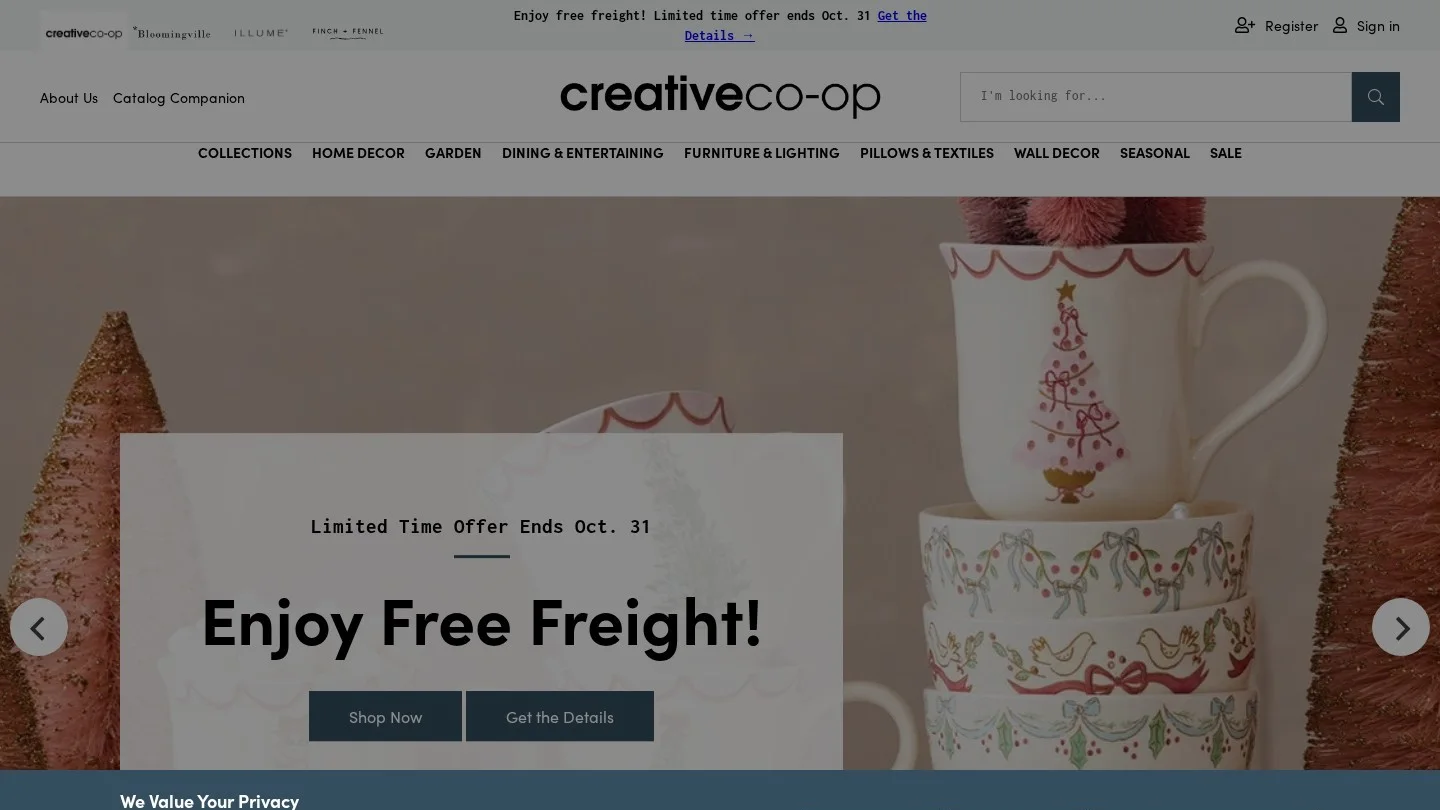
Creative Co-op is a natural companion to Bloomingville for a boutique’s gift and home corner, and its opening rules match almost exactly: a $500 first order and $150 reorders, according to the company’s terms and conditions. Paperwork is stricter. Every account needs a city or county privilege licence as well as a state tax certificate, and the company reviews each new account and can decline a reseller.
Payment is in advance by card as standard, with net 30 available once credit is approved, and late balances carry a 1.5% monthly charge. Two rules deserve attention before you sign. Retailers may not list Creative Co-op products on any third-party website, so a boutique that sells through Etsy or Amazon should keep these pieces in the shop and on its own site. And shortages or damage must be reported within 10 days of delivery; approved returns can carry a 15% restocking fee plus freight, so count every carton the day it arrives.
10. Bella+Canvas: Blanks for Your Own Label
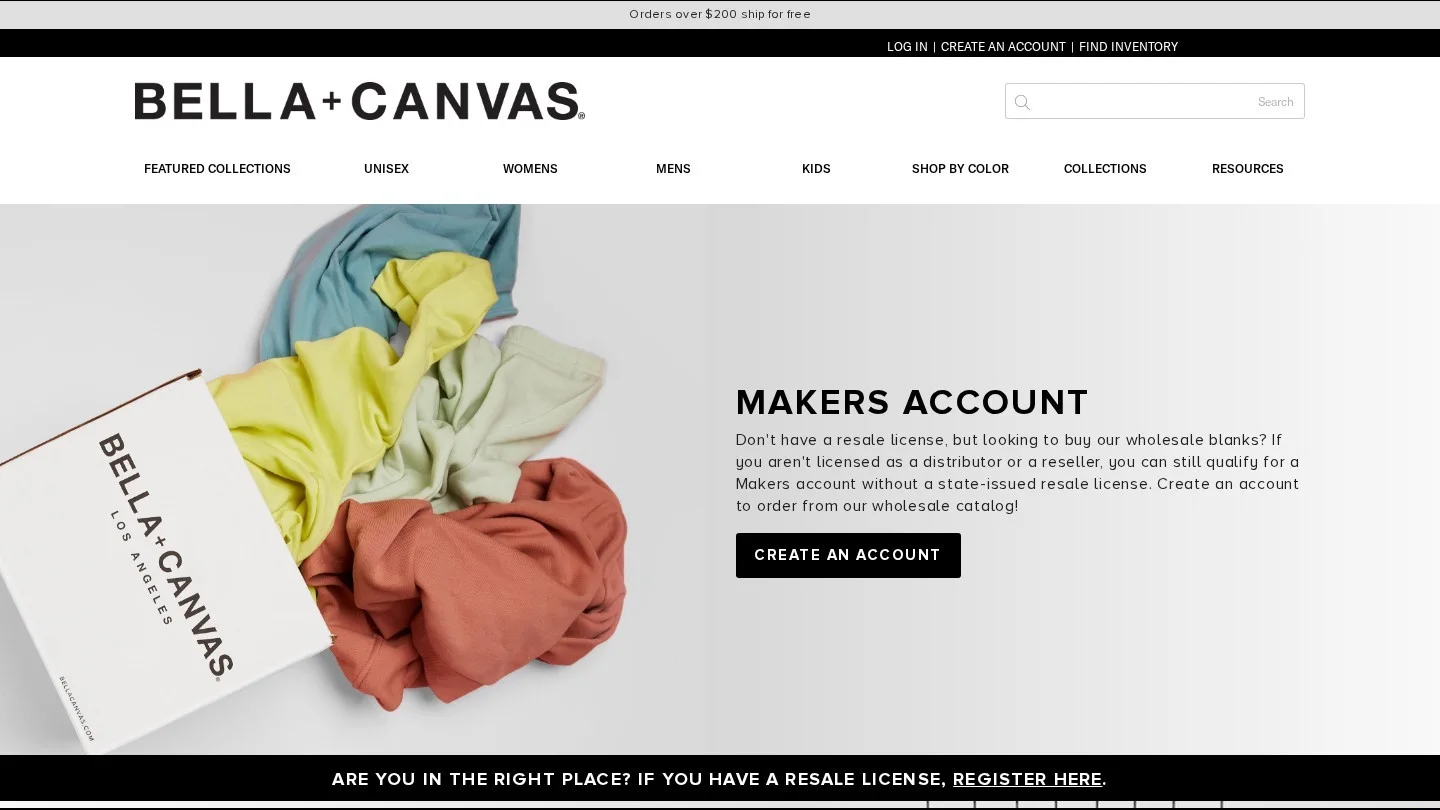
Printed tees and sweatshirts with your town, team or slogan are one of the few categories where a boutique controls both design and margin. Bella+Canvas makes the blanks many decorators use, and its Makers account is open to buyers without a state resale licence. There is no stated minimum, orders are processed within one business day, and spending $200 or more earns free UPS Ground shipping within the continental US.
The catch is tax. Sales tax is waived only for licensed resellers, commercial screen printers and promotional product distributors. Once you have a resale licence, you can upgrade by emailing the documents, and the company says processing takes two to three business days.
11. Barefoot Books: Children’s Gifts With No Online Minimum
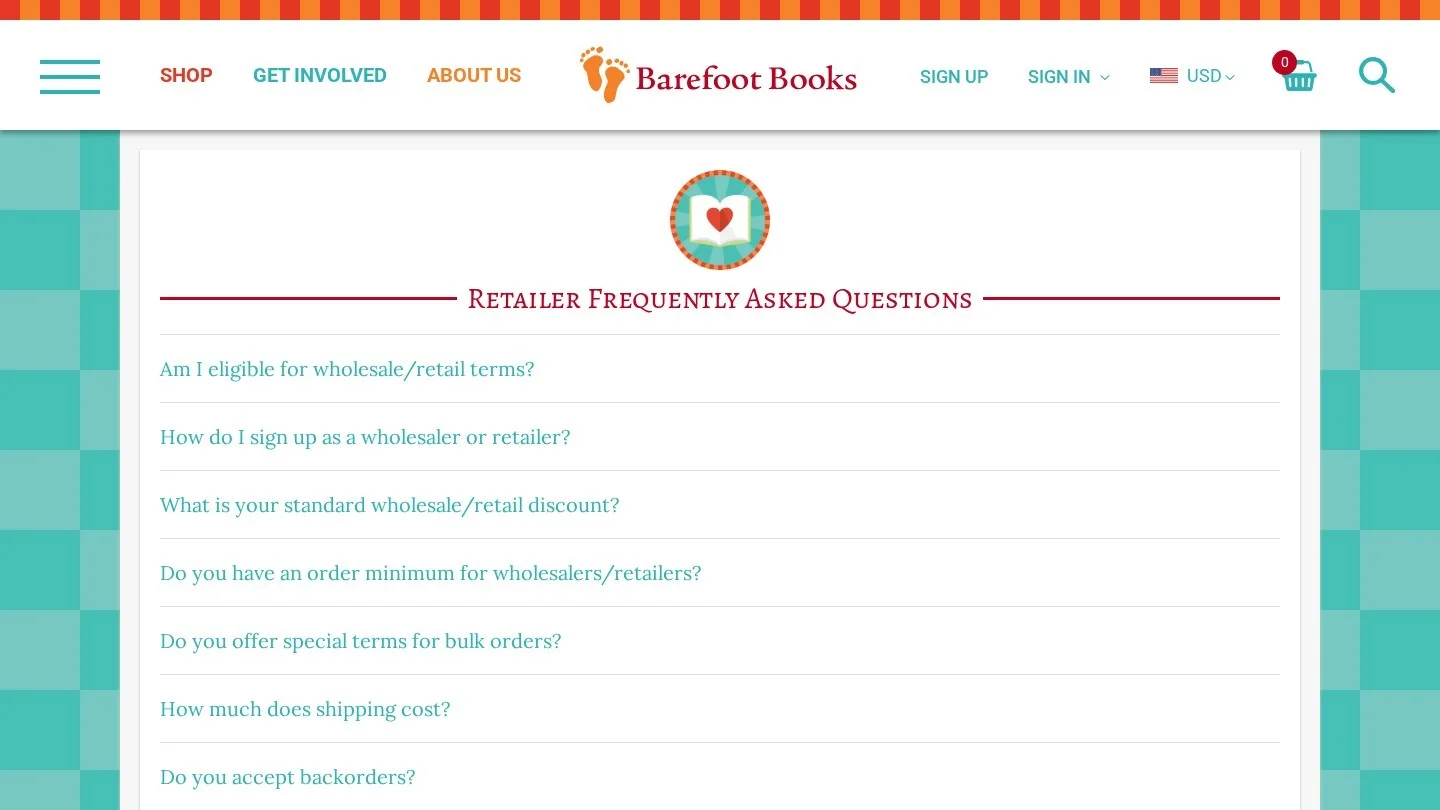
Gift boutiques and kidswear shops do well with a small book and puzzle display near the till. Barefoot Books makes that easy to test: its retailer FAQ lists no minimum on online wholesale orders and 50% off MSRP, which is keystone pricing by another name. Shipping is free on US orders of $100 net or more and $14.99 below that; Canadian shops get free shipping at $150 CAD. You upload a reseller certificate with the account application, and credit terms are arranged by email.
12. Kiyonna: US-Made Plus-Size Womenswear on Faire
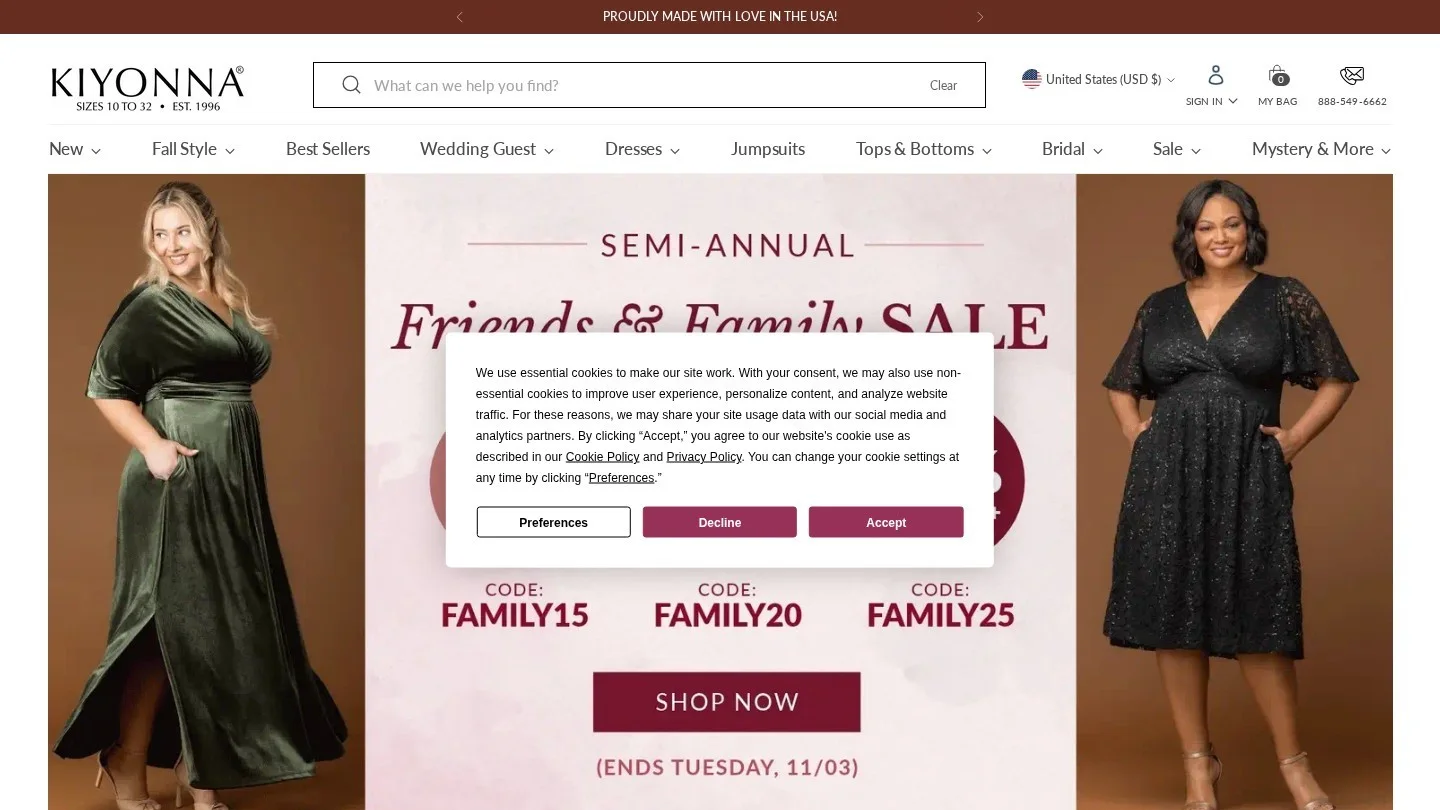
Size-inclusive stock is one of the clearest ways a small boutique can beat chain stores, and many maker-direct brands now sell wholesale through Faire storefronts rather than their own portals. Kiyonna is a good example. Founded in 1996, the plus-size label makes its collection in the US within 60 miles of its Anaheim, California headquarters, according to its Faire brand page, which also lists 60-day payment terms and free returns on opening orders. Wholesale prices are visible once you have a retailer account.
Resale Certificates and Seller’s Permits Before Your First Order
Most legitimate wholesale suppliers sell to the trade only, and in the US the trade proves itself with a state sales tax registration. The names vary by state (seller’s permit, sales tax licence, resale certificate), which confuses many first-time owners. The Folklore’s help centre lists these variants and asks every US retailer to provide one at sign-up; Canadian retailers give a federal business number instead.
- The permit: register with your state’s revenue department where you will sell. This is what FashionGo and others verify.
- The certificate: a form you hand each supplier so it does not charge you sales tax on goods you will resell. You collect the tax from your customer instead.
- Buying from out-of-state vendors: the Multistate Tax Commission’s uniform resale certificate is accepted by the states listed on it, but the commission says it cannot guarantee any state will accept it and states may change policy without notice. Use only the version on the MTC site, revised 14 October 2022.
- Drop shipping: the same MTC guidance warns that when a seller ships straight to your customer and you are not registered to collect tax in that state, the seller may owe the tax. Expect vendors to ask questions before they agree to drop ship.
Faire works slightly differently: it verifies your account against its retailer eligibility guidelines after the first order and may ask for more business details at that point.
Prepacks, Size Runs and Opening Order Minimums
Apparel wholesalers rarely sell one dress in one size. They sell a prepack: a fixed bundle of one style and colour across a size run, written as a ratio such as 1S-2M-2L-1XL (six pieces) or 2S-2M-2L. The ratio is the vendor’s guess at a typical customer, not yours. A boutique whose shoppers skew towards XL will sit on smalls from every pack.
- Compare ratios before price: two similar tops at the same cost can carry very different risk if one comes 2S-2M-2L and the other 1M-2L-2XL-1XXL.
- Remember the return rule: on Faire, partial or single items from a prepack cannot be returned, so a prepack is all or nothing.
- Separate the two minimums: the opening order minimum applies to your first purchase; reorder minimums are usually lower (Bloomingville drops from $500 to $150).
- Use minimums as a filter: a low opening minimum lets you test a brand with one prepack of each of two styles instead of committing to a full collection.
Keystone Markup on a $303 Opening Order, Worked in Python
Keystone means a retail price of twice the wholesale cost, which is a 100% markup and a 50% margin on paper. Barefoot Books’ 50% off MSRP is keystone from the supplier’s side. The paper margin shrinks once you add inbound freight and markdowns, so we modelled a small first apparel order: three prepacks of six pieces, $28 of freight shared across the order by value, and a sell-through of 70% at full price, 20% at 40% off and 10% left on the rail.
order = [
    ("Midi dress, prepack 1S-2M-2L-1XL", 6, 22.00),
    ("Ribbed tee, prepack 2S-2M-2L", 6, 9.50),
    ("Wide-leg trouser, prepack 1S-2M-2L-1XL", 6, 19.00),
]
freight = 28.00  # inbound shipping on the whole order

wholesale_total = sum(u * c for _, u, c in order)
retail_total = landed_total = 0
for item, u, c in order:
    landed = c + freight * c / wholesale_total   # freight split by value
    keystone = c * 2
    retail_total += keystone * u
    landed_total += landed * u
    print(f"{item}: landed ${landed:.2f}, keystone ${keystone:.2f}, "
          f"margin {(keystone - landed) / keystone:.1%}")

full = 0.70 * retail_total            # sold at full price
marked = 0.20 * retail_total * 0.60   # sold at 40% off
revenue = full + marked               # 10% never sells
profit = revenue - landed_total
print(f"Wholesale ${wholesale_total:.2f}, retail value ${retail_total:.2f}")
print(f"Revenue ${revenue:.2f}, gross profit ${profit:.2f}, "
f"margin {profit / revenue:.1%}")| Line | Wholesale per unit | Landed per unit | Keystone retail | Margin at full price |
|---|---|---|---|---|
| Midi dress (6) | $22.00 | $24.03 | $44.00 | 45.4% |
| Ribbed tee (6) | $9.50 | $10.38 | $19.00 | 45.4% |
| Wide-leg trouser (6) | $19.00 | $20.76 | $38.00 | 45.4% |
| Order total (18 units) | $303.00 | $331.00 | $606.00 retail value | 45.4% |
With markdowns and leftovers, the order brings in $496.92 and leaves $165.92 of gross profit after paying for every unit, a 33.4% margin on revenue. That gap between 50% on paper and roughly a third in the till is the case for pricing trend pieces you expect to mark down a little above keystone, while branded goods with a printed MSRP stay at straight keystone. To test your own ratios, our percentage calculator handles markup and margin, and the break-even calculator shows how many units must sell to cover rent and wages.
How Net-60 Terms and Free First-Order Returns Change the Maths
Run the same order through a marketplace with 60-day terms and the cash picture flips. If 70% of the stock sells at full price within two months, the shop has taken $424.20 before the $303 invoice is due. The supplier, in effect, funds your first season.
Discounts compound this. Had the six dresses ($132 at wholesale) come through a brand’s Faire Direct link, the 50% referral discount would cut that line to $66 and add a year of free shipping from the brand. Free first-order returns then limit the downside on a brand that does not sell, although you lose the original shipping and any import fees, and you must return whole prepacks.
Terms are not free money. Treat the due date as fixed, and remember that Faire says its return window varies with account history and order activity. Use net-60 to test, not to overbuy.
How to Place Your First Wholesale Order
- Register the business and get a seller’s permit: pick a name (our business name generator helps with a shortlist), register with your state and keep a PDF of the permit ready to upload.
- Write an opening budget by category: for example 60% apparel, 25% accessories and 15% gifts, with a cap per brand so one vendor cannot eat the budget.
- Build your profile before you sign up: a website or Instagram page, store photos or a mock-up, and a business address. Creoate, for one, asks for links to your website and social accounts when it sets your payment limit.
- Collect referral links: if a brand you want sells on Faire, ask it for a Faire Direct link before you create your account, then fill your cart within the seven-day offer window.
- Check each listing for minimums, prepack ratios and ship dates: mix in-stock items for opening day with a small pre-order for the next season.
- Set cancel dates on pre-orders: anything that arrives after its season becomes markdown stock on day one.
- Inspect on arrival: count every pack against the invoice, check sizes and quality, and log any problem with the supplier within its claims window.
- Track sell-through weekly: by week six you will know which brands deserve a reorder and which first orders to return while the free window is still open.
Trade Shows Where Boutique Buyers Meet Vendors in 2027
Online marketplaces show photos. Trade shows let you feel fabric, check stitching and meet the rep who will hold stock for you. The table uses AIMS360’s apparel trade show calendar, last checked by the publisher in September 2026; confirm with the organiser before booking travel.
| Show | 2027 dates | Venue | Good for |
|---|---|---|---|
| LA Market Week (January) | 11 to 13 January | California Market Center, Los Angeles | Contemporary and trend apparel, LA showrooms |
| Dallas Apparel and Accessories Market | 19 to 22 January | Dallas Market Center | Southern and Western boutique apparel |
| Atlanta Apparel | 2 to 5 February | AmericasMart, Atlanta | Women’s and children’s apparel, accessories |
| MAGIC Las Vegas | 16 to 18 February | Las Vegas Convention Center | Large multi-category fashion sourcing |
LA Market Week returns in March, August and October, and Atlanta Apparel in April, June, August and October, per the same calendar. If you cannot travel, JOOR Passport runs digital trade shows for the brands on its platform.
Marketplaces That Closed, and How to Vet a New Vendor
Wholesale platforms come and go. Tundra shut down in June 2023, and Shopify’s Handshake wholesale marketplace is listed as discontinued. Any supplier list still sending you to them has not been updated.
Before paying a vendor you found through social media or a search ad, check a few things:
- Trade-only rules: a real wholesaler asks for your resale certificate. One that will sell “wholesale” to anyone is usually a retailer with a discount code.
- Published terms: look for written minimums, shipping origin, lead times and a claims policy, the way Bloomingville sets out FOB point, ship times and cancel dates.
- Payment method: pay by card or through a marketplace for a first order, never by wire or payment app to an individual.
- A sample order: buy one prepack first and check fit, fabric weight and labelling before committing to a full delivery.
More guides for new shop owners sit in our Startups section.
Wholesale Supplier FAQs for Boutique Owners
Where Do Small Boutiques Buy Their Clothes?
Mostly from online wholesale marketplaces such as Faire, FashionGo and Orange Shine (Ankorstore and Creoate in Europe), from LA wholesalers such as Tasha Apparel, from brand accounts on JOOR, and from vendors met at markets like LA Market Week, Atlanta Apparel and MAGIC.
Do I Need a Resale Certificate to Buy Wholesale?
For most US trade-only suppliers, yes. FashionGo and Orange Shine ask for a state seller’s permit, Creative Co-op adds a city or county licence, and Bloomingville needs a resale certificate before you can order. Bella+Canvas’ Makers account is an exception, but you pay sales tax on purchases without one.
What Is a Good Markup for Boutique Clothing?
Keystone, or double the wholesale cost, is the usual starting point. After freight and markdowns our example order kept a 33.4% margin, so trend pieces likely to be marked down can justify a higher ticket.
How Long Are Faire’s Payment Terms?
Sixty days for eligible retailers, including those who join through a brand’s Faire Direct link. Faire adds that return windows, typically 60 days, can vary with account history and order activity.
Can a Boutique Drop Ship Wholesale Clothing?
Some vendors allow it, but FashionGo’s Shopify dropshipping app is currently unavailable, and drop shipping raises sales tax questions for the vendor. Most new boutiques get better margins holding a small inventory.
Faire’s Retailer Guides, FashionGo, JOOR and Creoate Terms
- Faire: Retailer FAQ and returns policy
- Faire: Retailer guide to buying on Faire
- Faire: Offers for new retailers
- Faire: Faire Direct referral offer
- Faire: Insider programme (UK and Europe)
- Faire: Kiyonna brand page
- FashionGo Wholesale app listing (NHN Global)
- Shopify App Store: FashionGo Dropshipping
- JOOR: Retailers
- Creoate: A guide to net-60 wholesale
- Creoate: Who is eligible for 60-day terms
- Bloomingville US: Wholesale FAQs
- Bella+Canvas: Makers account
- Barefoot Books: Retailer FAQs
- Orange Shine: Guide for buyers
- Orange Shine: Flat-rate shipping policy
- Ankorstore: Wholesale marketplace for retailers
- Ankorstore: How independent retailers benefit
- Tasha Apparel: Order policy
- Creative Co-op: Terms and conditions
- The Folklore: Resale certificate requirements
- Multistate Tax Commission: Uniform resale certificate FAQ
- AIMS360: Apparel trade shows calendar
- Resolve: Tundra shut down
- TrustRadius: Handshake by Shopify (discontinued)