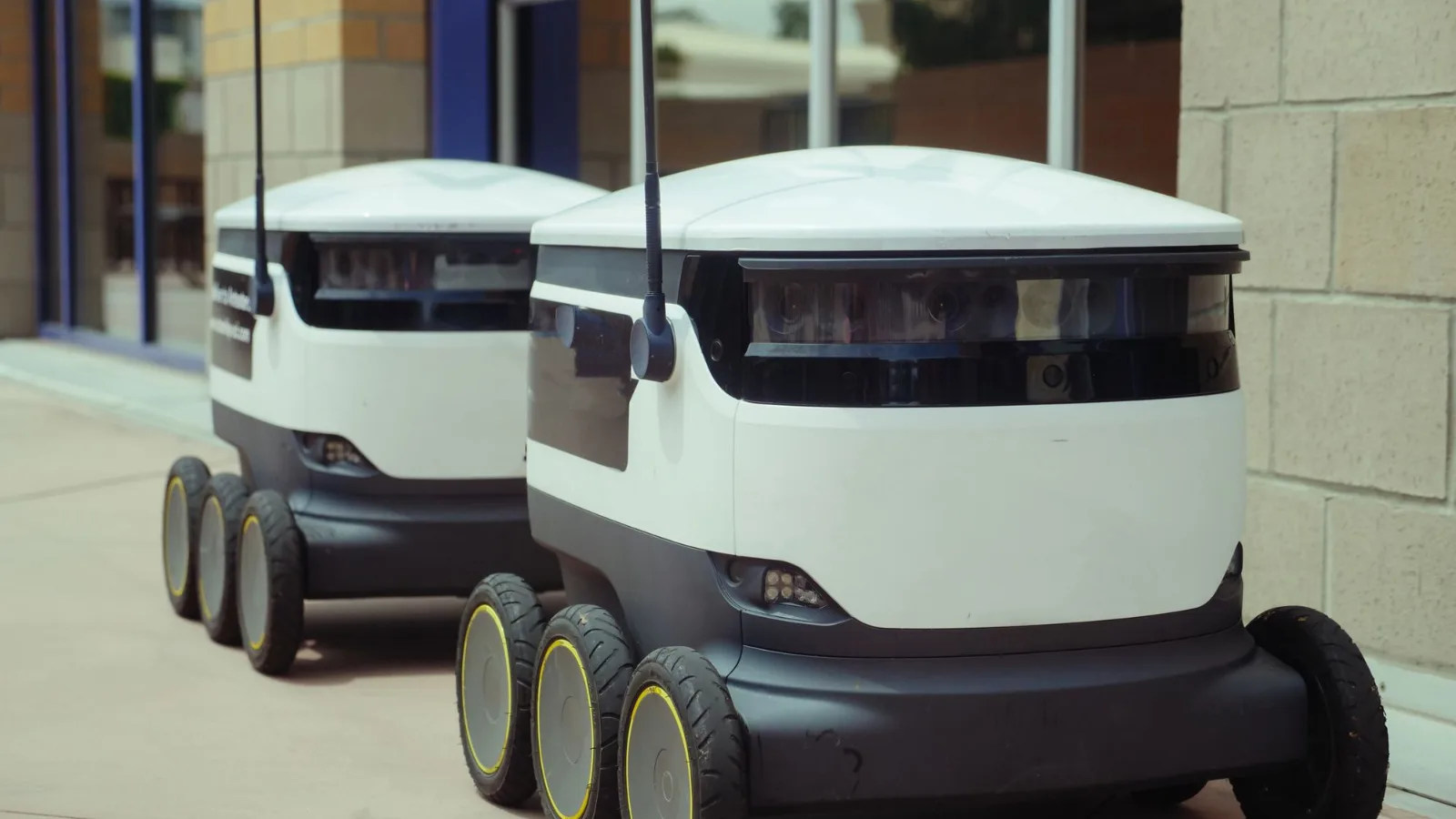
To start a robot cleaning business, you register a janitorial company the usual way, then buy or rent commercial floor-cleaning robots and sell scheduled floor care to offices, stores, schools and warehouses. A commercial cleaning robot costs about $13,000 to $54,000 to buy from a US dealer, or roughly $370 to $980 a month on a 36-month robots-as-a-service plan. Your first jobs are mapping each client’s floors, setting cleaning routes and coming back to empty tanks, swap brushes and handle what the robot cannot.
Robots change the cost structure of a cleaning company more than its paperwork. We set out the licenses that still apply, compare dealer prices for real machines, convert each robot’s monthly cost into janitor hours using federal wage data, and work through a four-client example so you can see what you would need to charge.

How a Robot Cleaning Company Makes Money
The model is simple. You sign a monthly floor-care contract with a building, place one robot on site, and the robot cleans hard floors and carpets on a schedule, usually at night. A technician, often the owner at first, visits to refill and drain water tanks, check the robot’s logs, clean brushes and squeegees, and spot-clean the corners and stairs the robot skips.
Most clients still need people for restrooms, kitchens, dusting and trash. That makes the most practical setup a hybrid one: robots take the large open floors, and a small crew handles the detail work. If you are new to the cleaning trade in general, our guides to starting a cleaning business in the UK and starting a pressure washing business in Florida cover the client-finding and quoting basics that carry over.
Registrations and Licenses a Robot Cleaning Business Needs
A robot does not change the legal category of the work. You are still a janitorial service provider, so the rules for cleaning companies in your state and city apply. California publishes one of the clearest checklists, and its points are a good template for other states too.
- Business structure: Sole owners can operate under their own name, but corporations, LLCs and partnerships file with the Secretary of State, according to California’s janitorial business quick start guide.
- Local business license: Cities, or counties for unincorporated areas, require a business license or business tax registration, plus zoning approval if you work from home or rent a unit.
- Fictitious business name: File a DBA with the county if your trading name does not include your surname.
- Employer setup: Once you hire, you need workers’ compensation insurance, an Injury and Illness Prevention Plan, a federal EIN and registration with California’s EDD within 15 days of paying more than $100 in wages.
- Janitorial registration in California: Every janitorial employer with one or more employees and one or more janitorial workers must register with the Labor Commissioner and renew every year, according to the Department of Industrial Relations. The same rules require sexual harassment prevention training for janitorial staff every two years.
- Insurance and bonding: California lists general liability insurance and bonds as recommended rather than required, but many commercial clients ask for proof of both, and a robot working in someone else’s building makes liability cover more important, not less.
Robots add one more area to plan for: data. Cleaning robots map buildings and carry cameras and sensors, and many connect to the cloud. Clients will ask where maps are stored and who can see them, so put answers in writing before your first contract. Our small business cybersecurity checklist covers the basics of securing connected devices and accounts.
Commercial Cleaning Robots and Their Dealer Prices
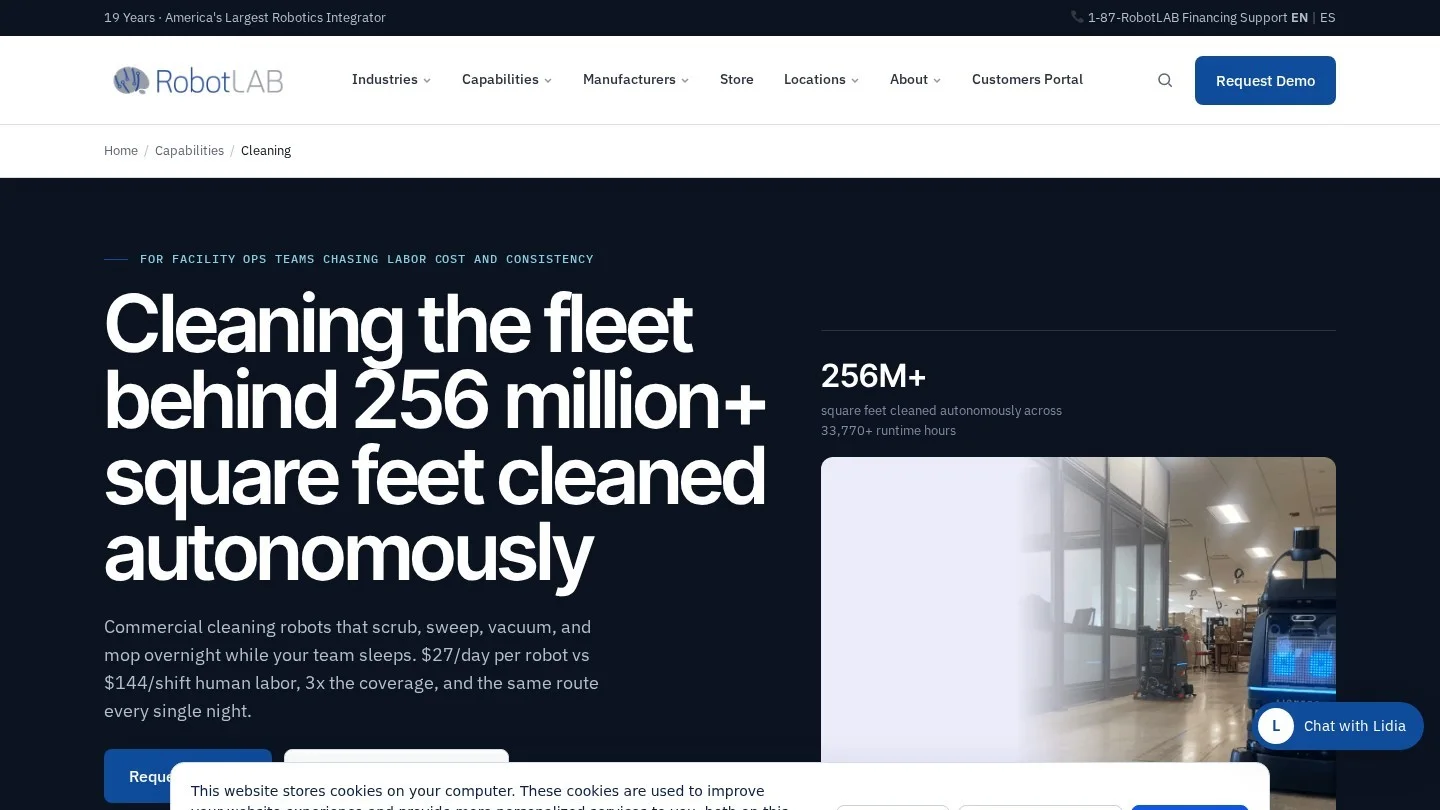
Most robot makers sell through dealers and quote prices on request. RobotLAB, a large US robotics dealer, publishes both purchase and monthly prices for many machines, so we used its cleaning robot catalog. These are dealer prices, not maker list prices, and they may change.
| Robot | Type | Purchase price | 36-month robots-as-a-service price |
|---|---|---|---|
| Pudu SH1 | Handheld scrubber-dryer for people | From $3,800 | $105 a month |
| LionsBot R3 Vac | Robot vacuum | $13,000 | $369 a month |
| Pudu MT1 Vac | Robot vacuum | From $20,000 | $559 a month |
| Pudu CC1 Pro | 4-in-1 sweep, scrub, vacuum and dust mop | From $24,000 | $669 a month |
| SoftBank Whiz | Robot vacuum | $25,000 | $699 a month |
| CenoBots S5 | Sweeper and vacuum, up to 27,000 sq ft an hour | From $25,000 | $699 a month |
| Gausium Phantas 1.3 | Multi-function cleaner with workstation | From $29,600 | $829 a month |
| Pudu BG1 series | Large scrubber-dryer | From $36,999 | $1,029 a month |
| Gausium Scrubber 50 Pro | Scrubber, sweeper and dust mop | From $53,600 | $979 a month |
One thing in this table surprised us. For most models, 36 monthly payments add up to almost exactly the purchase price: $669 x 36 is $24,084 for the CC1 Pro, against $24,000 to buy. The Gausium Scrubber 50 Pro is the exception, where 36 payments total $35,244, about 66% of its purchase price. Ask the dealer what each plan includes, such as maintenance, software, parts and a buyout option, because that decides which route is better value.
What One Robot Can Clean in a Night
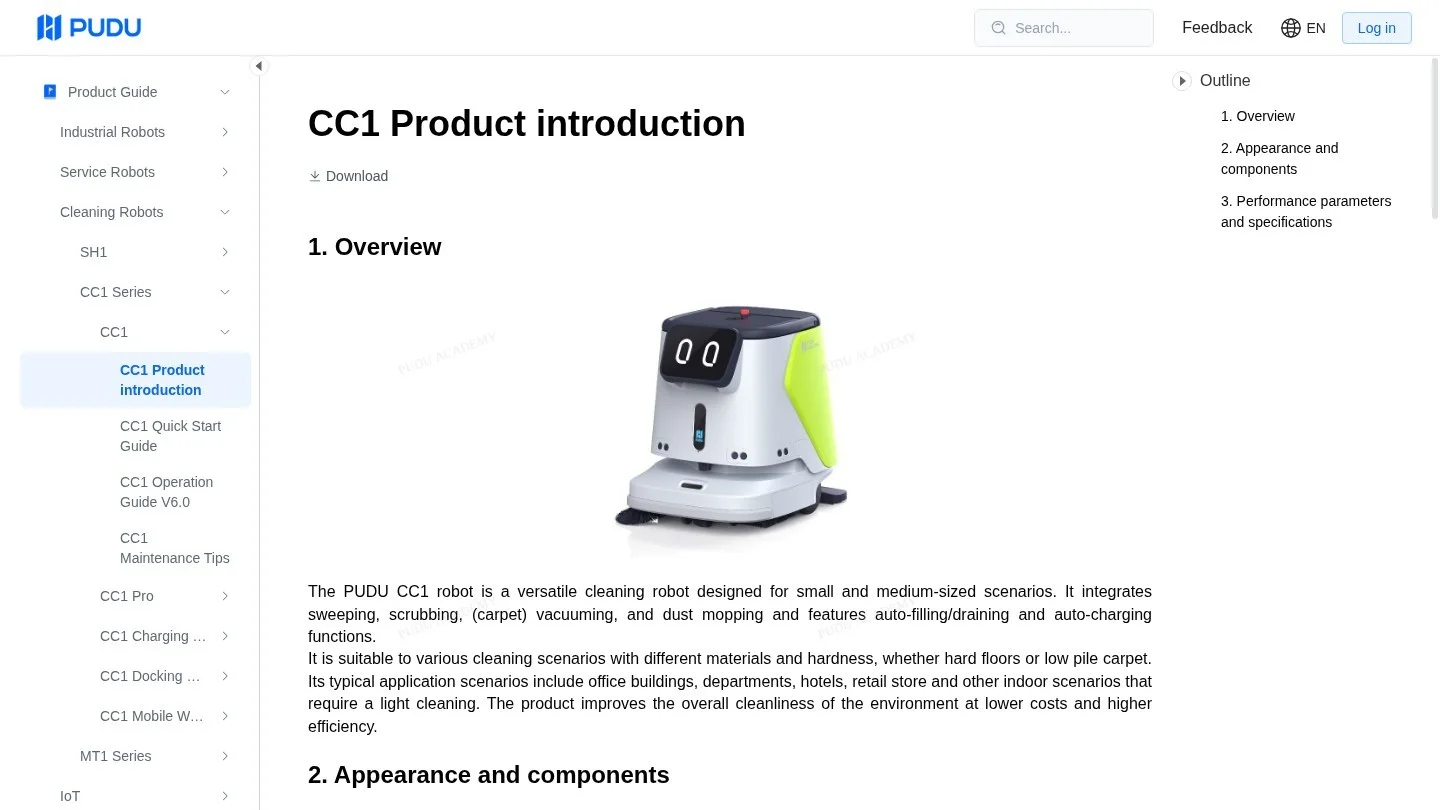
Capacity decides how many robots you need. Pudu’s own CC1 specification page lists a cleaning rate of 700 to 1,000 square meters an hour, five hours of scrubbing or vacuuming per charge on the low setting, 15-liter clean and dirty water tanks, a 63 cm squeegee, a weight of 75 kg and a charging time under three hours.
We used those figures for a typical office client. A 30,000 sq ft office has about 2,787 square meters of floor. At 700 to 1,000 square meters an hour, one CC1 needs about 2.8 to 4 hours to cover it, which fits inside a single five-hour charge. In practice, furniture, doorways and tank refills slow a robot down, so the clean area per hour on site will be lower than the rated figure. Even so, one robot per mid-size office per night is a sensible planning rule.
| Input | Figure | Source or method |
|---|---|---|
| Floor area of example office | 30,000 sq ft = about 2,787 m² | 1 sq ft = 0.0929 m² |
| CC1 cleaning rate | 700 to 1,000 m² an hour | Pudu specification |
| Time to clean the office | About 2.8 to 4.0 hours | 2,787 / 1,000 and 2,787 / 700 |
| Runtime per charge | 5 hours scrubbing or vacuuming | Pudu specification |
Robot Costs Measured in Janitor Hours
Clients compare your price with what they pay people, so it helps to put robot costs in the same terms. The BLS Occupational Employment and Wage Statistics for May 2023 put the mean hourly wage for janitors and cleaners at $17.43, and $16.14 within the services-to-buildings industry. We divided each robot’s monthly price by $17.43.
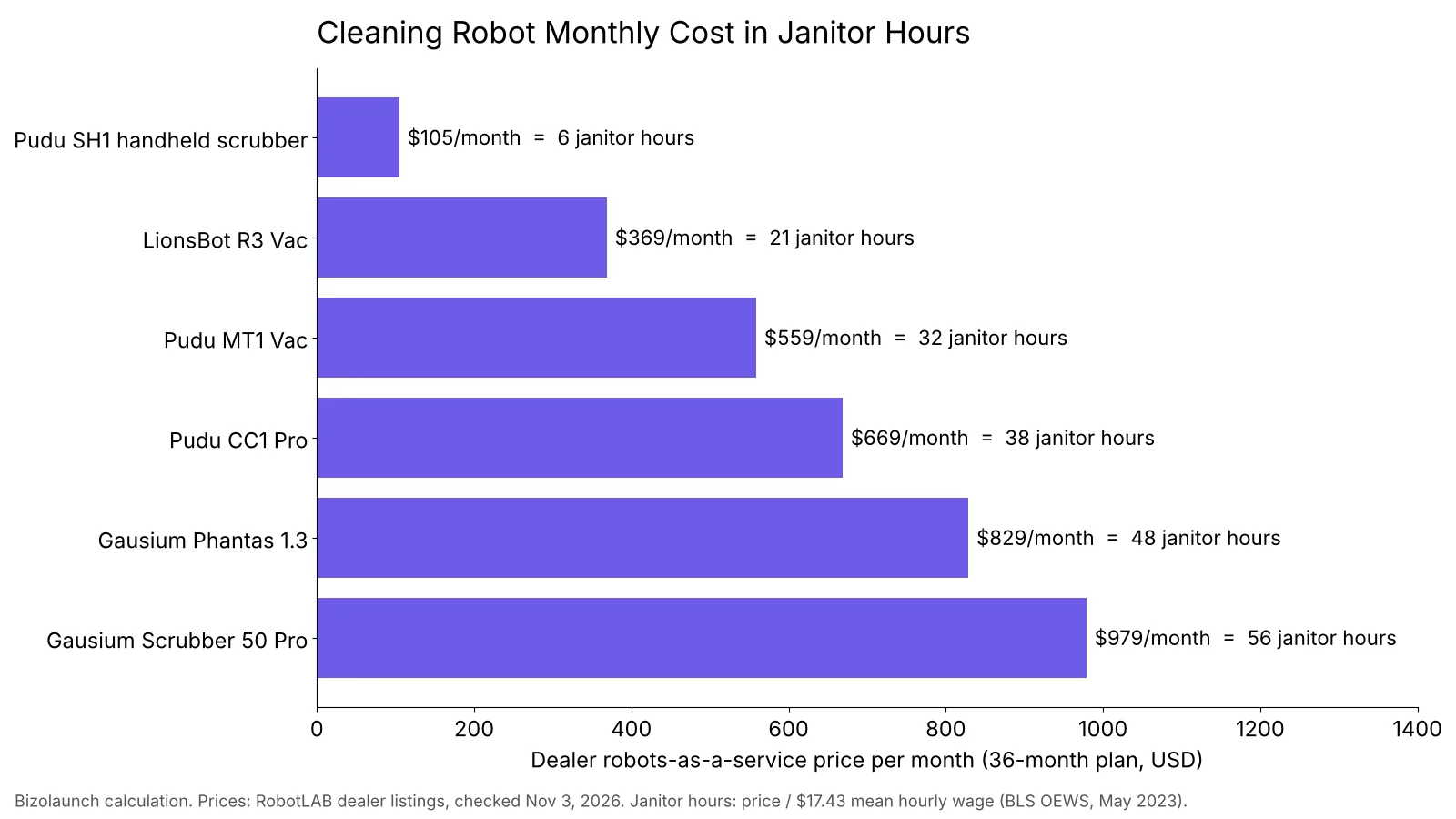
A Pudu CC1 Pro at $669 a month costs the same as about 38 hours of a janitor’s wages, before payroll taxes and benefits. If that robot cleans a large floor every night of the month, it does far more than 38 hours of floor work, which is the core of the business case. The wage figure excludes employer costs, so the true labor comparison is higher than these hours suggest.
A Worked Example: Four Office Clients
To see what a small robot cleaning company might charge, we built a simple monthly budget for a founder serving four office clients. Robot prices and wages are sourced; the visit time, number of service nights and margin are our assumptions, and you should replace them with your own once you have quotes.
| Line | Figure | Basis |
|---|---|---|
| Robots | 4 x Pudu CC1 Pro at $669 a month = $2,676 | RobotLAB dealer price |
| Technician time | 1.5 hours per site per night x 4 sites x 22 nights = 132 hours | Our assumption |
| Technician cost | 132 hours x $17.43 = $2,301 | BLS mean janitor wage |
| Total monthly cost | $4,977 | Sum |
| Cost per client | About $1,244 a month | $4,977 / 4 |
| Price per client at a 30% margin | About $1,778 a month | $1,244 / (1 – 0.30), our assumption |
This budget leaves out insurance, a vehicle, fuel, cleaning chemicals, software and your own salary if you are the technician, so treat it as a floor, not a full quote. It still shows the shape of the business. Robot costs are fixed per site, and the technician’s time is the line you can improve with good routing. Grouping clients in the same area, so one visit covers two buildings, lowers the cost per client fast. Plug your own numbers into our break-even calculator to see how many clients you need before the company pays you a wage.

Buying Versus Renting Cleaning Robots
Renting through robots-as-a-service keeps cash in the bank while you win your first contracts, and it lets you hand a robot back if a client leaves. Buying makes sense once contracts are long and steady, especially with current tax rules. The One Big Beautiful Bill Act permanently restored 100% bonus depreciation for qualifying property acquired and placed in service after January 19, 2025, and set the Section 179 expensing limit at $2.5 million with a $4 million phase-out threshold, according to BDO’s tax summary. A cleaning robot used in the business is equipment, so ask your accountant whether you can deduct the full cost in the year you buy it.
- Rent first if: you have fewer than three signed clients, your contracts are shorter than a year, or you want maintenance bundled in.
- Buy if: your contracts run for years, your accountant confirms the deduction, and you can handle repairs or have a dealer service plan.
- Mix both if: you own robots for anchor clients and rent extras for seasonal or trial contracts.
Matching Robot Types to Client Floors
The dealer catalog covers several kinds of machine, and choosing the wrong one is an expensive early mistake. The floor decides the robot, not the other way round.
- Carpeted offices: A robot vacuum such as the LionsBot R3 Vac or Pudu MT1 Vac is the cheapest way to cover large carpeted areas every night, at $369 to $559 a month on the dealer’s plans.
- Mixed hard floor and carpet: A 4-in-1 machine such as the Pudu CC1 Pro sweeps, scrubs, vacuums and dust mops, which suits offices with lobbies, kitchens and carpeted work areas on the same floor.
- Large hard floors in stores and schools: Dedicated scrubber-dryers such as the Gausium Scrubber 50 Pro or Pudu BG1 series carry bigger tanks for long corridors and sales floors, at $979 to $1,029 a month.
- Warehouses and car parks: Sweepers such as the CenoBots S5, rated at up to 27,000 sq ft an hour, handle dust and debris across very large areas.
- Detail work by your crew: A handheld scrubber such as the Pudu SH1, at $105 a month, speeds up the corners, restrooms and small rooms that robots cannot reach.
Selling Robot Floor Care to Facility Managers
Facility managers buy reliability first and novelty second, so the pitch should focus on results they can check. Offer a nightly cleaning report from the robot’s app, a fixed monthly price, a named person who responds when something goes wrong, and a clear backup plan for nights when a robot is down for repair. A short pilot with measured results does more than any brochure, because it turns your claims into numbers the manager can show to their own boss. For the first calls, our collection of sales call script examples can be adapted to open the conversation and book that pilot.
Steps to Launch a Robot Cleaning Business
- Choose a niche. Offices, retail stores, schools, gyms and warehouses all have large hard floors. Pick one so your sales pitch, robot choice and schedule stay simple.
- Name and register the company. Our business name generator can help with a shortlist, then file your entity, local license and DBA.
- Get insured. Arrange general liability, workers’ compensation once you hire, and a bond if clients ask for one.
- Pick one robot model to start. Fewer models means fewer spare parts, one app and faster troubleshooting. A 4-in-1 unit like the CC1 Pro covers most office floors.
- Run a free pilot. Offer one client a two-week trial, measure the area cleaned each night and collect a written reference.
- Write a clear service agreement. Set out what the robot cleans, what your crew cleans, nightly schedules, data handling and what happens if the robot is down.
- Bill on a schedule. Monthly floor-care contracts are easy to invoice; our free invoice generator handles the paperwork.
- Add robots as you add clients. Grow one robot per site at a time, and route technician visits so each trip covers more than one building.
Questions About Running a Robot Cleaning Company
Do You Need a Special License to Operate Cleaning Robots?
Robots fall under the same rules as any janitorial company in your area. In California, that includes registering with the Labor Commissioner as a janitorial service provider once you employ janitorial workers, and renewing every year.
How Much Floor Can One Cleaning Robot Cover?
Pudu rates its CC1 at 700 to 1,000 square meters an hour, which is roughly 7,500 to 10,800 sq ft. Dealer listings show larger sweepers, such as the CenoBots S5, rated at up to 27,000 sq ft an hour.
Can Cleaning Robots Replace Janitors Completely?
No. Today’s commercial robots focus on floors. Restrooms, kitchens, dusting and trash still need people, which is why most robot cleaning companies sell a hybrid service.
Is It Better to Lease or Buy a Cleaning Robot?
Leasing suits a new company with few contracts, and buying suits long contracts and owners who can use the 100% bonus depreciation rules. On RobotLAB’s listings, most 36-month plans total about the same as the purchase price, so the decision often comes down to what the plan includes.
Could Humanoid Robots Do Full Cleaning in Future?
General-purpose humanoids are on sale, but they are priced for early adopters. Our look at what humanoid robots cost shows the current range, from small learning robots to full-size machines.