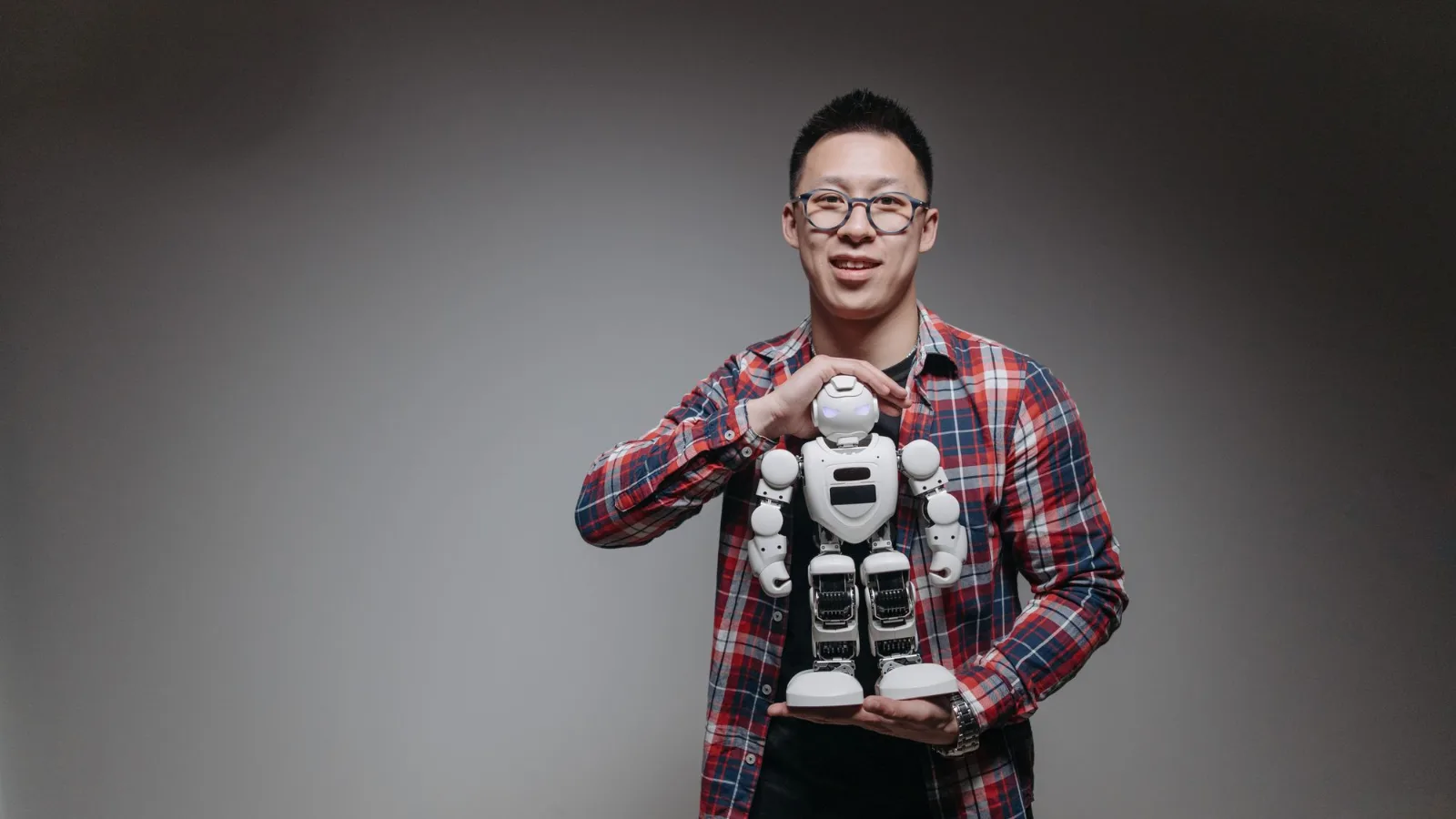
A humanoid robot you can actually order costs between about $4,900 and $90,000 in late 2026, depending on its size and what it is built to do. At the low end, Unitree’s four-foot R1 lists from $4,900. The first full-size humanoid sold to households, 1X’s NEO, costs $20,000 to buy or $499 a month to subscribe. Full-size research and industrial machines such as Unitree’s H1 start at $90,000, and most factory humanoids are sold only through private enterprise contracts.
Prices in this market move fast and are easy to misquote, so we only used figures that a maker published or announced, each with its date. We then did some math of our own: how much Unitree’s prices have fallen since launch, when buying a NEO beats subscribing, what Unitree’s IPO filing implies about the cost of building one, and how a home robot’s price compares with paying for help.
Humanoid Robot Prices Published by Makers
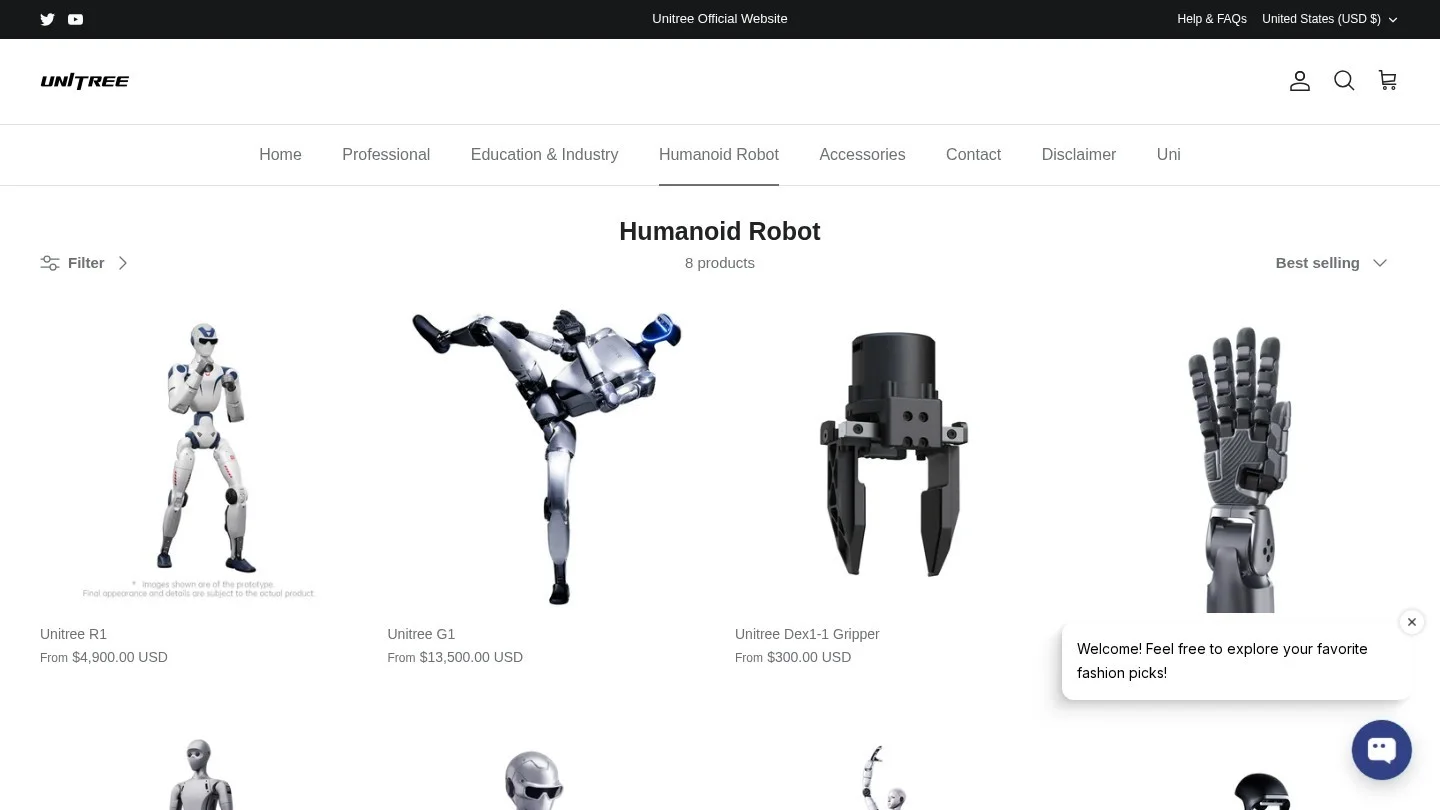
This table lists every humanoid for which we found a maker-published or maker-announced price. Unitree’s current store prices come from a public price tracker that records them from the Unitree store, so we show both the launch figure and the late-2026 figure.
| Robot | Maker | Height and weight | Price | Date of price | Who it is for |
|---|---|---|---|---|---|
| R1 | Unitree (China) | About 4 ft, about 55 lb | $5,900 at launch; from $4,900 in late 2026 | July 2025; Oct 31, 2026 | Hobbyists, students, developers |
| G1 (base) | Unitree | 1.27 m, 35 kg | $16,000 at launch; from $13,500 in late 2026 | May 2024; Oct 31, 2026 | Researchers and developers |
| NEO | 1X (US and Norway) | 66 lb | $20,000 Early Access, or $499 a month | Oct 2025 | Households, US first |
| H2 | Unitree | Full size | $29,900 | Oct 31, 2026 | Research and commercial pilots |
| H1 / H1-2 | Unitree | About 1.8 m, 47 kg | From $90,000 | May 2024; still $90,000 in Oct 2026 | Research labs |
Sources: Unitree R1 launch price from Engadget, July 26, 2025; G1 and H1 launch prices and specs from heise’s report on the G1 unveiling; late-2026 Unitree prices from the HumanoidApplications price tracker, which lists the Unitree store as its source; NEO price and specs from 1X’s NEO page.
Many other humanoids are not sold at a public price. The same tracker lists Agility Robotics’ Digit as robots-as-a-service, and Apptronik’s Apollo, AgiBot’s A2, NEURA’s 4NE-1 and UBTech’s Walker S series as enterprise or government contracts. Figure 03 and Tesla’s Optimus are not on open sale. For those, the cost comes from a negotiated quote, usually bundled with software, support and a pilot program.
How Much Unitree’s Humanoid Prices Have Dropped
Unitree is the clearest case of falling prices, because it has sold the same models long enough to compare. We took each launch price and the late-2026 store price and worked out the change.
| Model | Launch price | Late-2026 price | Change |
|---|---|---|---|
| R1 | $5,900 (July 2025) | $4,900 | Down $1,000, or 16.9% |
| G1 base | $16,000 (May 2024) | $13,500 | Down $2,500, or 15.6% |
| H1 | $90,000 (May 2024) | $90,000 | No change |
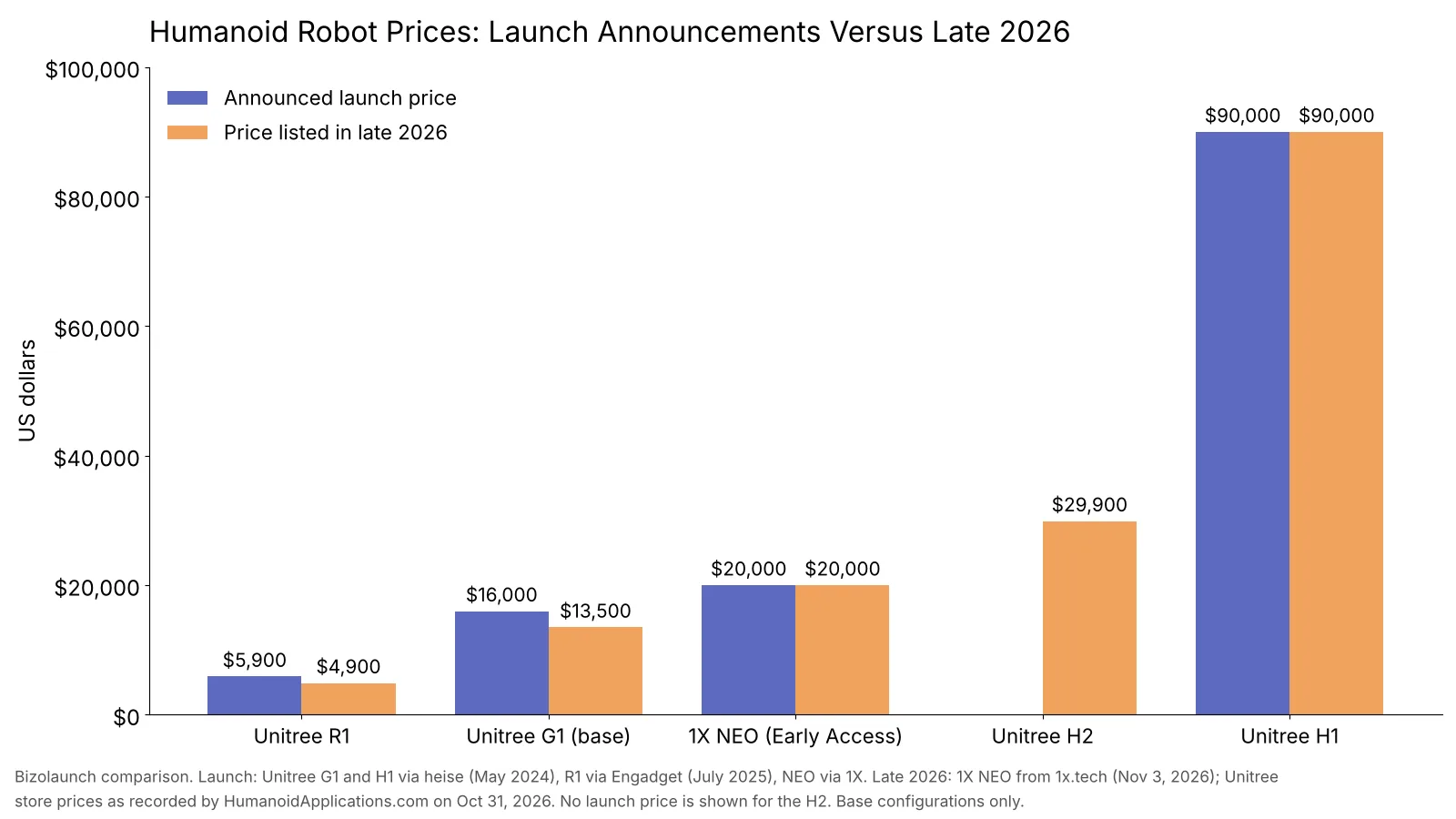
The pattern is clear. Small and mid-size robots made in volume are getting cheaper by roughly 15% to 17% over one to two years, while the full-size research robot has held its price. If you want to check a percentage like this yourself, our percentage calculator does the work. Keep in mind that a store’s base price is not the whole bill. Developer and education editions with extra sensors, compute and hands cost more, often several times the base price.
Buying a 1X NEO Versus Paying $499 a Month
NEO is the first full-size humanoid aimed at ordinary homes. 1X says the robot weighs 66 lb, can lift more than 150 lb, can carry 55 lb and has a noise rating of 22 dB. First orders ship to US homes in 2026, with other markets from 2027. Buyers who pay $20,000 get Early Access and priority delivery, while the $499 subscription ships later.
Supply will shape how quickly prices move. A report citing The Next Web says 1X builds NEO in a 58,000 sq ft plant in Hayward, California, with capacity for 10,000 robots in its first year and a target of more than 100,000 a year by the end of 2027. The company also claimed its first-year capacity sold out within five days of preorders opening in October 2025. Strong early demand is one reason not to expect a quick discount on the $20,000 price.
We compared the two on total cash paid over time. The subscription costs $5,988 a year. Divide the $20,000 purchase price by $499 and the subscription catches up with the purchase price after about 40 months, or just over three years and four months.
| Time owned | Total paid on subscription | Total paid to buy | Cheaper option |
|---|---|---|---|
| 1 year | $5,988 | $20,000 | Subscription by $14,012 |
| 3 years | $17,964 | $20,000 | Subscription by $2,036 |
| 40 months | $19,960 | $20,000 | Roughly even |
| 5 years | $29,940 | $20,000 | Purchase by $9,940 |
For a first-generation product, the subscription has a real advantage beyond cash. Early robots improve through software and hardware revisions, and renting lets you move to a newer model without being stuck with an old one. If you plan to keep NEO for five years and are confident it will do useful work, buying is cheaper. If you would finance the purchase anyway, compare the loan’s monthly payment with $499, using the method in our EMI calculation guide.
What Each Humanoid Price Tier Gets You
Under $10,000: Small Robots for Learning
Robots like the Unitree R1 are about four feet tall and weigh around 55 lb. Engadget reported that the R1 ships with a multimodal AI model, a four-microphone array, Wi-Fi 6 and Bluetooth 5.2. These robots can walk, balance, dance and do flips, which makes them great for teaching, coding and demos. They are not built to carry groceries or do chores.
$13,000 to $30,000: Mid-Size Developer Robots and the First Home Humanoid
The Unitree G1 is 1.27 m tall, weighs 35 kg with its battery and has up to 43 degrees of freedom, according to heise. Its 9,000 mAh swappable battery gives roughly two hours of runtime. Labs and startups use it to train walking, grasping and AI control software. NEO sits in the same price band but is designed for a different job: moving around a home, carrying things and learning household tasks.
$90,000 and Up: Full-Size Research Robots
Unitree’s H1 stands about 1.8 m tall and weighs 47 kg. At $90,000 and up, it costs more than five times the G1, and the price buys a human-sized frame that can work at human-height shelves, tables and doors. Universities and corporate research groups are the usual buyers.
Quote Only: Factory and Warehouse Humanoids
Industrial humanoids from Agility, Apptronik, Figure, UBTech and others are sold through contracts. These deals usually cover a pilot, integration with existing systems, safety reviews, software updates and on-site support, so the total cost depends on how many robots a site deploys and for how long. For the wider industry picture, our robotics and automation news page follows new deployments as they are announced.
Where the Money Goes Inside a Humanoid Robot
Unitree’s planned listing on Shanghai’s STAR Market gave the first public look at the economics of a high-volume humanoid maker. According to Caixin’s report on the IPO filing, Unitree earned 1.2 billion yuan in revenue in the first nine months of 2025. Humanoid robots made up 51.5% of that revenue, up from 1.9% in 2023, and earned a gross margin of 62.9%. The company had turned its first profit in 2024, with net income of 94.5 million yuan.
We ran two quick calculations on those numbers. First, 51.5% of 1.2 billion yuan means humanoids brought in about 618 million yuan in nine months. Second, a 62.9% gross margin means direct production cost was about 37.1% of the selling price on average. Applied to the G1’s original $16,000 price, that would imply roughly $5,936 in direct costs, and about $5,009 at the current $13,500 price. That is an illustration using a segment average, not Unitree’s actual cost for any one model.
| Calculation | Input | Result |
|---|---|---|
| Humanoid revenue, 9 months of 2025 | 1.2 billion yuan x 51.5% | About 618 million yuan |
| Direct cost share of price | 100% minus 62.9% gross margin | 37.1% |
| Implied direct cost, G1 at $16,000 | $16,000 x 37.1% | About $5,936 |
| Implied direct cost, G1 at $13,500 | $13,500 x 37.1% | About $5,009 |
The lesson for buyers is that there is room for prices to keep falling. A healthy margin like this, combined with rising volume, is exactly what allowed Unitree to cut its store prices. It also explains why cheaper rivals keep appearing. For founders tracking the space, our list of new startups to watch covers some of the younger robotics names.
Costs Beyond the Sticker Price
The base price is where budgeting starts, not where it ends. These are the cost lines buyers most often miss.
- Developer editions: Research and education versions add compute, sensors, dexterous hands and software access, and can cost several times the base model.
- Shipping, duties and setup: Robots built in China and sold abroad may carry import duties and freight costs on top of the store price.
- Batteries and charging: Swappable packs, like the G1’s 9,000 mAh battery, let a robot run longer than its two-hour charge, but spares cost extra.
- Repairs and spare parts: Falls happen during training. Budget for joint, hand and cover replacements.
- Software and connectivity: Home robots that learn new skills rely on cloud software, and subscriptions may bundle this in.
- Insurance and safety: A 30 kg to 47 kg machine moving near people needs a safety plan at work and may need coverage review at home.
- Privacy rules: A home or office robot carries cameras and microphones. Businesses should cover it in their AI and data rules, as described in our guide to an AI acceptable use policy for small businesses.
A Home Humanoid Against the Cost of Paid Help
People often ask whether a $20,000 robot is cheaper than a cleaner. We can frame the question with two federal data sets, while being clear that today’s robots cannot yet do everything a person can.
The BLS Occupational Employment and Wage Statistics for May 2023 put the mean wage for maids and housekeeping cleaners at $16.66 an hour. At that rate, $20,000 equals about 1,200 hours of paid cleaning, and one year of NEO’s subscription ($5,988) equals about 359 hours. The BLS American Time Use Survey for 2025 found that people aged 15 and over spent an average of 0.33 hours a day on interior cleaning and 0.17 hours on laundry. That adds up to about 182.5 hours a year per person, worth about $3,040 at the housekeeper wage.
| Comparison | Figure | How we got it |
|---|---|---|
| Paid cleaning hours equal to NEO’s price | About 1,200 hours | $20,000 / $16.66 |
| Paid cleaning hours equal to one year of subscription | About 359 hours | $5,988 / $16.66 |
| Time one person spends on cleaning and laundry a year | About 182.5 hours | (0.33 + 0.17) x 365 |
| Value of that time at the housekeeper wage | About $3,040 | 182.5 x $16.66 |
On these numbers, the subscription costs about twice the paid-help value of one adult’s yearly cleaning and laundry time. The case improves in larger households, where the hours add up, and as robots learn more tasks. For now, a humanoid is an early-adopter purchase. If you want robots that already handle specific chores well for far less money, our guide to the best home robots for household tasks covers vacuums, pool cleaners and more, and our guide on starting a robot cleaning business looks at commercial machines.
Choosing a Humanoid for a Business Pilot
Businesses tend to overspend on humanoids when they start with the robot instead of the task. A short, structured pilot keeps the cost in proportion to what you can learn from it.
- Write down one task. Pick a single job, such as moving totes between two stations or greeting visitors, and measure how long it takes people today.
- Match the robot to the task. A small robot like the R1 suits demos and education, a G1-class robot suits research and software work, and lifting or carrying jobs need a full-size or industrial machine.
- Price the full package. Ask for the developer edition, spare batteries, shipping, setup and support in writing, since these can exceed the base price.
- Compare buying with renting. Use the same three-year window for both options so the totals are comparable.
- Plan for safety and data. Set the space the robot works in, train staff, and decide what its cameras may record and who can view it.
- Set a stop date. Agree in advance what result would justify a second robot, and end the pilot if it does not appear.
A pilot run this way turns a $5,000 to $90,000 purchase into a measured test. Even if the robot does not earn its keep yet, the team learns what the next generation must do better, and at the current pace of price cuts that next generation may arrive within a year or two.
Humanoid Robot Price Questions Buyers Ask
What Is the Cheapest Humanoid Robot You Can Buy?
Among makers with published prices, the Unitree R1 is the lowest at from $4,900 in late 2026, down from $5,900 at its July 2025 launch. It is a small robot for learning and demos rather than housework.
How Much Is Tesla’s Optimus?
Tesla has not opened orders for Optimus, so there is no price a customer can pay. Price trackers cite a company target of $20,000 to $30,000, which should be read as a goal, not a list price.
Can I Rent a Humanoid Robot Instead of Buying One?
Yes. 1X offers NEO at $499 a month, and several industrial makers lease robots as a service. Renting suits buyers who want to test a robot before committing or who expect newer models soon.
Why Are Some Humanoids $90,000 or More?
Full-size robots need stronger motors, larger batteries, more sensors and a sturdier frame, and they sell in much smaller numbers. Research buyers also pay for open software access and support, which raises the price.
Will Humanoid Robot Prices Keep Falling?
Unitree cut its R1 and G1 prices by about 15% to 17% within one to two years, and its filing shows a gross margin near 63% on humanoids. Both point to more room for cuts as volumes grow, although no maker has promised specific future prices.