Choose One Writing Method and Keep It for a Month
The simplest way to write a book is to set a small daily word count and hit it every day. Stephen King asks beginners for 1,000 words a day, with one day off each week. At that pace, an 80,000-word first draft takes about 14 weeks. The nine other methods on this page work the same way. Each one gives you a fixed job for today, so you stop waiting for a free month.
We researched how ten well-known writers actually got their books done. So we went back to their craft books, essays, interviews and memoirs. Then we turned each habit into a method you can copy this week. We also did our own math on how long each pace takes. As a result, every method comes with a real writer, a named source and a number you can plan around.
Ten Book-Writing Habits in One Glance
- Fastest proven pace: King writes about 2,000 words a day. At that rate, an 80,000-word draft takes seven weeks of six-day writing.
- Smallest daily task: Anthony Trollope asked himself for 250 words every 15 minutes, which is 1,000 words an hour.
- Best cure for a blank page: Anne Lamott’s bad first draft. She says nearly every good writer produces one.
- Best plan for plotters: Randy Ingermanson’s Snowflake Method grows a book from one sentence in ten steps.
- Best trick for tomorrow: Ernest Hemingway stopped work while he still knew what came next.
Compare the Ten Methods Before You Pick One
We compiled this table from each writer’s own book, essay or interview. The daily commitment column shows what each writer describes, or our own reading of the method. For example, Trollope’s 250 words per quarter hour add up to 1,000 words an hour. So a 1,000-word day takes him about one hour.
| Method | Writer behind it | Where the writer explains it | Daily commitment | Works best when |
|---|---|---|---|---|
| Daily word count | Stephen King | On Writing (2000) | 1,000 to 2,000 words | You can protect the same slot every day |
| Bad first draft | Anne Lamott | Bird by Bird (1994) | Any length | Perfectionism keeps you rewriting page one |
| Snowflake outline | Randy Ingermanson | The Snowflake Method article and books | Planning weeks before drafting | You like to know the ending first |
| Discovery writing | Brandon Sanderson’s lectures; King | Sanderson’s BYU writing class; On Writing | Any length | Characters drive your ideas |
| Timed sprints | Anthony Trollope | An Autobiography | 15-minute blocks | You get distracted easily |
| Voice dictation | Henry James | Theodora Bosanquet’s Henry James at Work | Talking time plus cleanup | You talk faster than you type |
| Write the ending first | John Irving | Time video feature (2012) | One session for the last line | Your drafts wander off course |
| Stop while you know the next step | Ernest Hemingway | Esquire, October 1935 | Shorter sessions | You dread each morning’s restart |
| Fixed early hours | Haruki Murakami; Toni Morrison | Paris Review interviews (2004; Fall 1993) | The same slot daily; Murakami gives 5 to 6 hours | Your evenings are already full |
| Publish chapter by chapter | Andy Weir | The Martian’s online start | One chapter per release | You want readers and deadlines now |
1. Set a Daily Word Quota the Way Stephen King Does
Pick a number of words and write that many every day. In On Writing, King says he aims for ten pages a day, which he puts at about 2,000 words. But he does not ask that of new writers. Instead, he suggests 1,000 words a day, six days a week.
King also puts a time limit on the first draft. He says it should take no more than three months, about the length of a season. In fact, 90 days at his pace comes to roughly 180,000 words. So most first books would fit inside that window with room to spare.
To make this work, count words at the end of each session and write the number in a log. In Google Docs, open Tools, then Word count, and tick “Display word count while typing.” After that, the running total sits in the bottom left corner. You can also paste a session into our free word counter if you draft in another app.
2. Give Yourself Permission to Write a Bad First Draft
Write the first draft fast and expect it to be poor. Anne Lamott makes this case in Bird by Bird, in a chapter with a ruder title than ours. “All good writers write them,” she says of bad first drafts. She argues that the messy draft is what makes a good second draft possible.
Lamott shares her own process from her years as a food critic. First, she poured a rough review onto the page, often twice as long as it needed to be. The next day, she cut it hard with a colored pen and found a better opening. She also passes on a friend’s three-stage model. The down draft gets it down, the up draft fixes it up, and the “dental draft” checks every tooth.
For days when the whole book feels too big, Lamott keeps a one-inch picture frame on her desk. It reminds her to write only what fits in that small frame, such as one paragraph or one scene. The book’s title comes from her father’s advice to her brother. He was ten, with a bird report due the next day, and their father told him to take it bird by bird.
3. Grow a Snowflake Outline From a Single Sentence
Write your whole story in one sentence before you write a chapter. That is step one of the Snowflake Method, created by novelist Randy Ingermanson. He suggests keeping the sentence to about 25 words or fewer. Next, you grow it into a five-sentence paragraph. One sentence sets up the story, three cover the acts, and the last one gives the ending.
The method has ten steps in total. After the paragraph, you write a short summary for each main character. Then you add backstory and a detailed character sheet. By step eight, you list every scene in one line each, often in a spreadsheet. For a novel, Ingermanson says that list often runs to about 100 scenes. As a result, you sit down to draft with a full map.
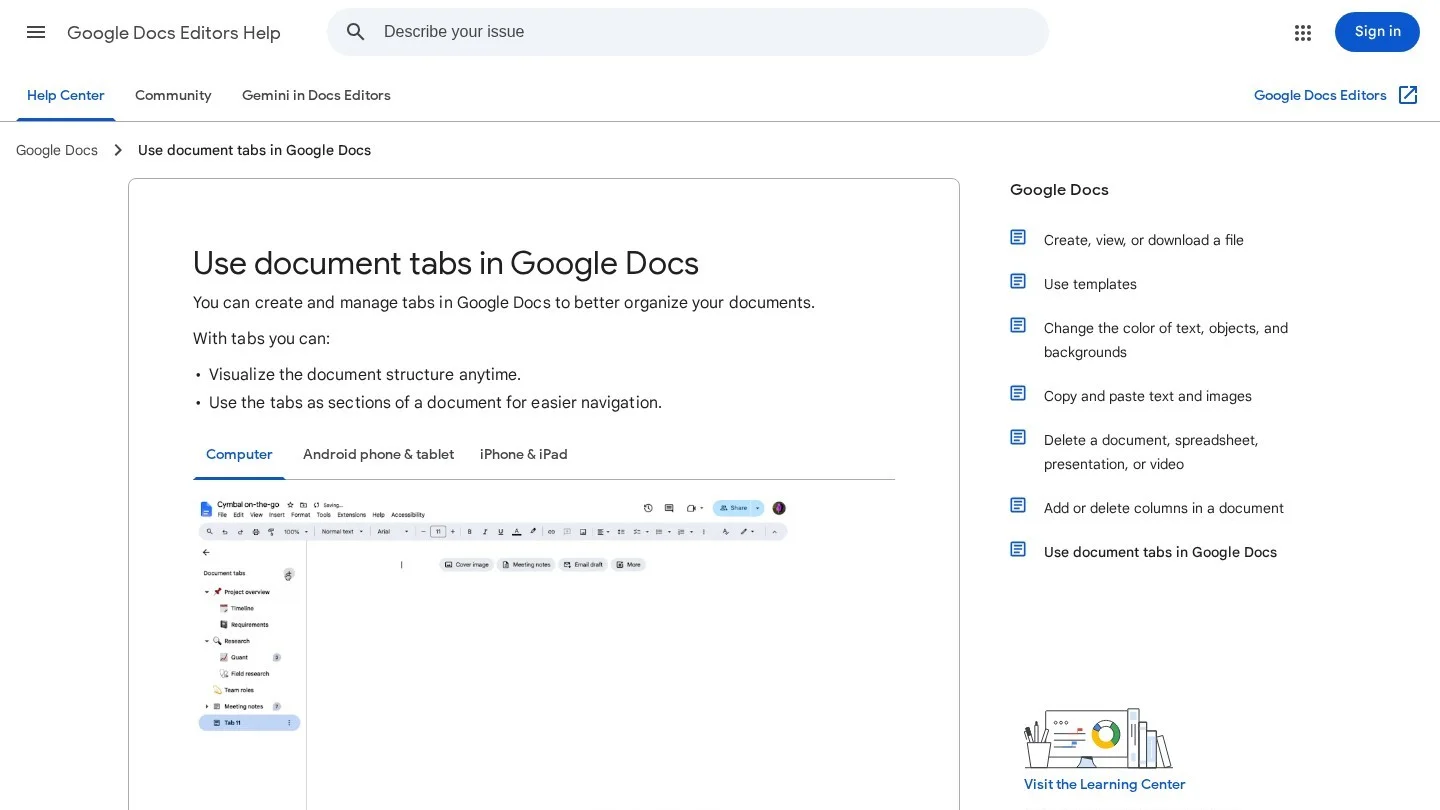
You do not need special software for this. For instance, Google Docs now lets you split one file into tabs, and you can nest them up to three levels deep. So one tab can hold the sentence, a second the characters and a third the scene list. If you plan the book with a co-author, a shared note-taking app built for teams does the same job.
4. Discover the Story While You Draft It
Put two or three characters in a tight spot and write to find out what they do. This is discovery writing, and King is its best-known fan. In On Writing, he says story comes first, and he has little use for plotting. Fantasy author Brandon Sanderson takes the other side. He outlines heavily because his books have so many moving parts.
Still, Sanderson does not call either side wrong. In the first lecture of his writing class at Brigham Young University, he said most writers are hybrids. They plan some parts, like an architect, and grow others, like a gardener. The mix also shifts from book to book. He adds a warning for discovery writers. If you share pages too early, feedback can pull the story off course before you have found it.
So try a test. Write three chapters without an outline. If you finish them excited, keep going. However, if you stall by chapter two, switch to the snowflake steps for the middle of the book. Sanderson also tells students to keep what works and drop what does not.
5. Race the Clock in 15-Minute Writing Sprints
Set a timer for 15 minutes and give yourself a word target for that block. The Victorian novelist Anthony Trollope did exactly this while he held a full-time job at the Post Office. In An Autobiography, he says he wrote with his watch in front of him. He asked himself for “250 words every quarter of an hour.” Then, he says, the words came as steadily as the watch ticked.
Trollope thought three hours a day was as much as anyone ought to write. Even then, he spent the first half hour rereading the previous day’s work. So his real drafting time was about two and a half hours. At 1,000 words an hour, that gave him roughly 2,500 new words a day.
You do not need his stamina. For example, two sprints before work give you 500 words. That pace finishes an 80,000-word draft in 27 weeks of six-day writing. Also, keep the phone in another room during a sprint, because one notification can eat half the block.
6. Dictate Your Chapters Out Loud
Talk your first draft and fix the text later. Henry James wrote his late novels this way. His secretary, Theodora Bosanquet, says in Henry James at Work that he began dictating in the 1890s. He spoke while a typist worked a Remington typewriter, and he found its clicking a spur to keep going. Bosanquet also noticed that his style grew more like free, flowing talk.
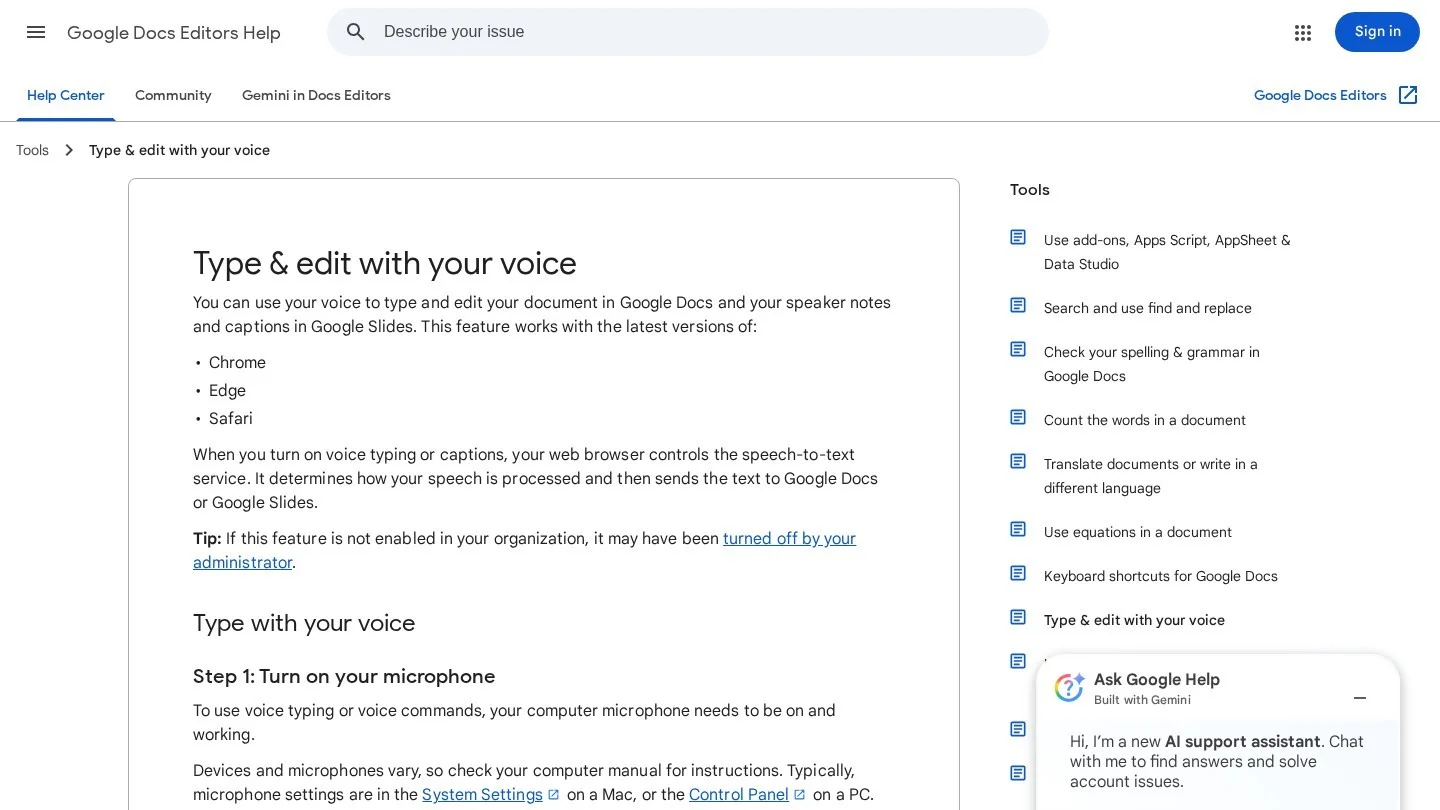
Today, the typist is built into your laptop. In Google Docs, open Tools, then Voice typing, and click the microphone. Say “period,” “comma” or “new paragraph” to add punctuation. These commands work in English only. In Microsoft Word, go to Home, then Dictate. Word’s dictation needs a Microsoft 365 subscription and an internet connection.

Mac users can turn on Dictation under System Settings, then Keyboard. Apple says you can dictate text of any length without a timeout. But Dictation stops after 30 seconds of silence, so keep notes nearby for pauses. Some writers record voice memos on a walk. To turn that audio into text, try the apps in our guide to AI tools for meeting notes.

7. Draft the Last Sentence Before the First
Write your book’s final sentence now, then write toward it. John Irving has worked this way for decades. In a 2012 video feature for Time, he explained that he writes the last sentence of a novel first. After that, every chapter has to earn its way to that line.
This method fixes the sagging middle that sinks many first drafts. Because you know where the road ends, each scene either moves toward it or gets cut. For a nonfiction book, the same idea works with your closing argument. First write the one paragraph you want readers to remember. Then plan each chapter as a step toward it.
8. Stop Each Session While You Still Know What Comes Next
End your writing day in the middle of a scene you understand. Hemingway gave this advice in “Monologue to the Maestro,” a letter-style piece for Esquire in October 1935. He told young writers to stop while the work was going well and they knew what would happen next. Do that every day, he said, and you will never get stuck.
Many writers push this further and stop mid-sentence. Then the next session opens with a small job, which is to finish that sentence. Before you close the file, also jot two lines about the next scene. As a result, tomorrow’s first ten minutes cost you almost nothing.
9. Guard the Same Early Hours Every Day
Pick one block of time and give it to the book every single day. Haruki Murakami told the Paris Review in 2004 that when he writes a novel, he gets up at about 4 a.m. Then he works for five or six hours. In the afternoon he runs 10 kilometers, swims 1,500 meters or does both. After that he reads, listens to music and goes to bed at 9 p.m.
Murakami keeps this up for six months to a year, with no change. He says the repetition itself puts his mind in a deeper state. But most people cannot write for six hours. Toni Morrison is the better model for anyone with a job and a family. She told the Paris Review in its Fall 1993 issue that she wrote around 5 a.m. That was before her small children woke up.
Morrison also always held a nine-to-five job, including years as an editor. So she wrote in the early mornings, on weekends and in brief bursts between work hours. She drafted by hand on yellow legal pads with a pencil. For a practical way to fence off those hours, see our time-blocking guide.
10. Publish the Book One Chapter at a Time
Post each chapter online as you finish it, and let readers pull the book out of you. Andy Weir started writing The Martian in 2009 and posted chapters on his website every few weeks. The serial ran for about three years. Then fans asked for an Amazon edition, so he listed it on Kindle at 99 cents, the lowest price allowed.
The Kindle edition sold 35,000 copies in six months, earning Weir about 30 cents a copy. After that came a six-figure deal with Random House and a Fox film directed by Ridley Scott. Weir’s run shows the main gain of this method. Readers waiting for the next chapter give you a deadline that a private draft never has.
For a nonfiction book, the same approach works with blog posts or a newsletter. Plan 20 to 30 posts that each cover one chapter. Next, publish them on a fixed day each week. Later, merge and rewrite them into the book. Once it is out, you can pitch yourself as a guest through the podcast guest booking websites we reviewed.
Work Out How Many Weeks Your First Draft Will Take
We ran the numbers for an 80,000-word draft. That length is our working example, so swap in your own target. Our method divides the total by the daily word count, then by six writing days a week. Then we round up to whole weeks. That is why King’s beginner pace and Trollope’s single sprint land so far apart.

| Words per writing day | Writing days needed | Weeks at six days a week | Time per day at Trollope’s pace |
|---|---|---|---|
| 250 | 320 | 54 | 15 minutes |
| 500 | 160 | 27 | 30 minutes |
| 1,000 | 80 | 14 | 1 hour |
| 2,000 | 40 | 7 | 2 hours |
Real weeks will run longer, because sick days and travel break any streak. So add a buffer of about a fifth to your estimate. For instance, a 14-week plan becomes roughly 17 weeks. Even then, the 1,000-word pace finishes a draft in about four months.
Revise the Finished Draft in Planned Passes
Close the door while you draft, then open it when you revise. That is King’s rule in On Writing. The first draft is for you alone. Readers come in for the second. King also gives a formula for that second draft, which is the first draft minus 10%. So a 90,000-word draft should come back at about 81,000 words.
Next, borrow Lamott’s three passes. In the down draft you got the story down. Now use the up draft to fix structure and scenes. Finally, the dental draft checks every line, the way a dentist checks every tooth. Sanderson adds a useful mindset here. He describes drafting as the artist’s job and revision as the job of a more businesslike second self.
- Pass one, structure: read the whole draft in two or three sittings and list scenes to cut, move or add.
- Pass two, length: cut toward King’s 10% target and check the total after each chapter.
- Pass three, lines: read every page aloud, because your ear catches clumsy sentences your eye skips.
Clear Up the Doubts First-Time Authors Raise
How Many Words a Day Should a Beginner Write?
King suggests 1,000 words a day, with one day off a week. However, a smaller number you actually hit beats a big one you miss. Even 250 words a day finishes an 80,000-word draft in about a year.
How Long Does It Take to Write a Book?
It depends on your daily pace. In our math, an 80,000-word first draft takes 7 to 54 weeks. Then plan extra time for revision. King says the first draft alone should take no more than three months.
Should I Outline My Book or Just Start Writing?
Try both on a small scale. Sanderson says most writers mix planning and discovery, and the mix changes with each book. So write three chapters freely. Then outline the rest if you feel lost.
Can I Write a Whole Book by Speaking It?
Yes. Henry James dictated his late novels to a typist. Today, Google Docs voice typing also works for free in a supported browser. Word’s Dictate button needs Microsoft 365, and Mac Dictation pauses after 30 seconds of silence.
What Should I Do When I Get Stuck in the Middle?
Shrink the task. Lamott writes only what fits in her one-inch frame, such as one paragraph. Also, follow Hemingway’s habit from then on. End each session while you still know what happens next.