UK law lets two or more people run a business as a limited liability partnership, or LLP, where each member’s risk is capped. To register an LLP in the UK, you need at least two members, and two must be designated members. You also need a UK office address and an email address. Each member must prove their ID with Companies House first. Then you file through software for £100 or post form LL IN01 for £124. A same-day software filing costs £156.
After the filing come the LLP agreement, Self Assessment, VAT and the yearly deadlines. The first-year cost for each route is worked out in pounds sterling, from £150 online to £234 on paper.
Line Up Two Members and Two Designated Members
A UK LLP needs at least two members, and at least two of them must be formally appointed designated members at all times. Members can be people or companies. If the LLP ever has fewer than two designated members, every member counts as designated.
Designated members do the legal paperwork. For example, they keep accounting records and appoint an auditor if one is needed. They also sign and send the annual accounts and the confirmation statement. Finally, they report changes to Companies House and act for the LLP if it is wound up.
On the other hand, there is no limit on ordinary members. So a firm of eight can name two designated members and six ordinary ones, or it can make everyone designated.

Pick a Name That Ends in LLP
An LLP’s name must end in “limited liability partnership” or “LLP,” and a Welsh LLP can use the Welsh versions instead. Search the Companies House register before you choose, because the name cannot be the same as one already there.
Some names also need extra steps. A sensitive word needs approval, and you must confirm on the form that you asked the right body. Names that suggest a link to the government or a local authority are restricted. In addition, names that are offensive, would help fraud or include computer code are barred.
Watch the objection window too. Another business can object that your name is “too like” theirs. Companies House can then order a change, but only in the first 12 months. If directed, you get at least 28 days to comply. Our business name generator can give you a shortlist to check.

Give a UK Registered Office and a Private Email
An LLP’s office must be a real UK street address. It must also be in the same part of the UK where you register the LLP. For example, an LLP registered in Scotland needs a Scottish address. Royal Mail PO Boxes are not allowed.
You can use a home address. However, it then shows on the public register. So you may want a separate business address.
You also need a registered email address. By contrast, Companies House keeps that one private and does not publish it. If it changes later, you must tell Companies House.
Read also: How to Register an LLP in Kenya
Verify Every Member’s ID and Collect Personal Codes
Every LLP member must verify their ID with Companies House before you register. Each person who does so gets a personal code. The registration then asks for each member’s code and a confirmation that they have verified.
There are four ways to verify:
- Online with GOV.UK One Login. You use a biometric passport, a UK photo driving licence, a UK residence permit or card, or a Frontier Worker permit. You also give your current address and the year you moved in.
- With UK bank or building society details, your National Insurance number and security questions. This route is for UK residents.
- In person at a Post Office, after you enter your photo ID details online.
- Through an approved agent, such as an accountant, solicitor or formation agent signed up with Companies House.
Check your ID dates first, because expired passports are not accepted. A UK driving licence still works if it expired within the last 90 days. However, expired documents cannot be used for the bank or Post Office routes.
Skipping this step has real costs. Failing to verify is an offence and can bring a fine. You also cannot file anything or form a new company. Corporate members of LLPs will be verified at a later stage.


Register an LLP in the UK by Software or Form LL IN01
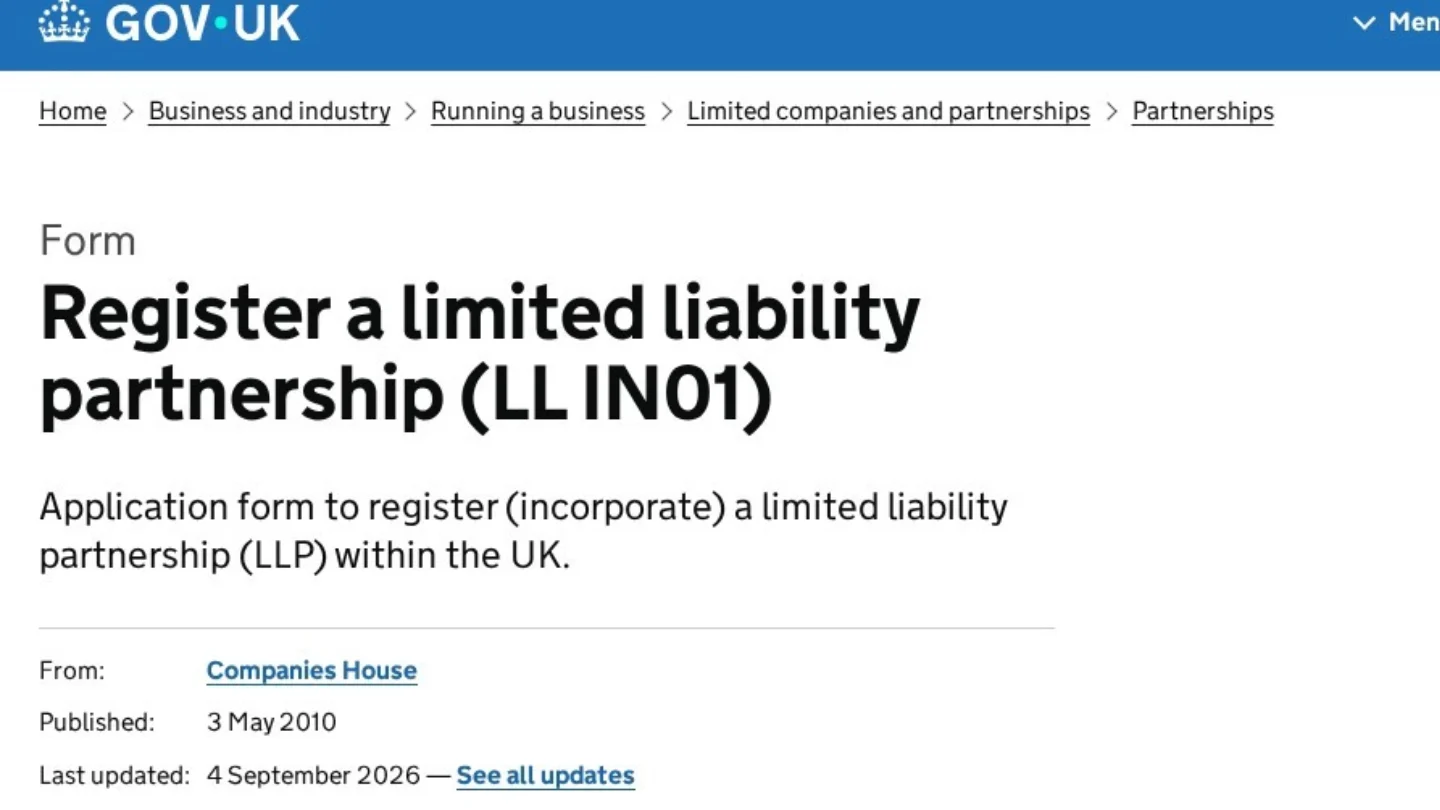
You register an LLP in the UK either through commercial software for £100 or with the paper form LL IN01 for £124. Software is usually quicker. Also, a formation agent can file for you. If it is signed up with Companies House, it can check IDs too.
| Route | Fee | Speed |
|---|---|---|
| Software | £100 | Usually quicker than paper |
| Software, same day | £156 | Same day if you apply before 3pm |
| Paper form LL IN01 | £124 | Usually takes longer |
Whichever route you take, the application covers the same ground. It needs these details:
- The LLP name and if its office is in England and Wales, Wales, Scotland or Northern Ireland
- The registered office address and the registered email address
- A statement that two or more persons are joining for a lawful business with a view to profit
- A choice between naming specific designated members or making all members designated
- Each member’s details and personal code
- Details of people with significant control (PSCs), or a statement that there are none
- A statement of compliance
The paper LL IN01 is a 31-page PDF. Chrome may not show checkboxes on printed copies, so open it in another browser. Also, nationalities and countries must match Companies House’s standard list.
Count the Companies House Bill for Year One
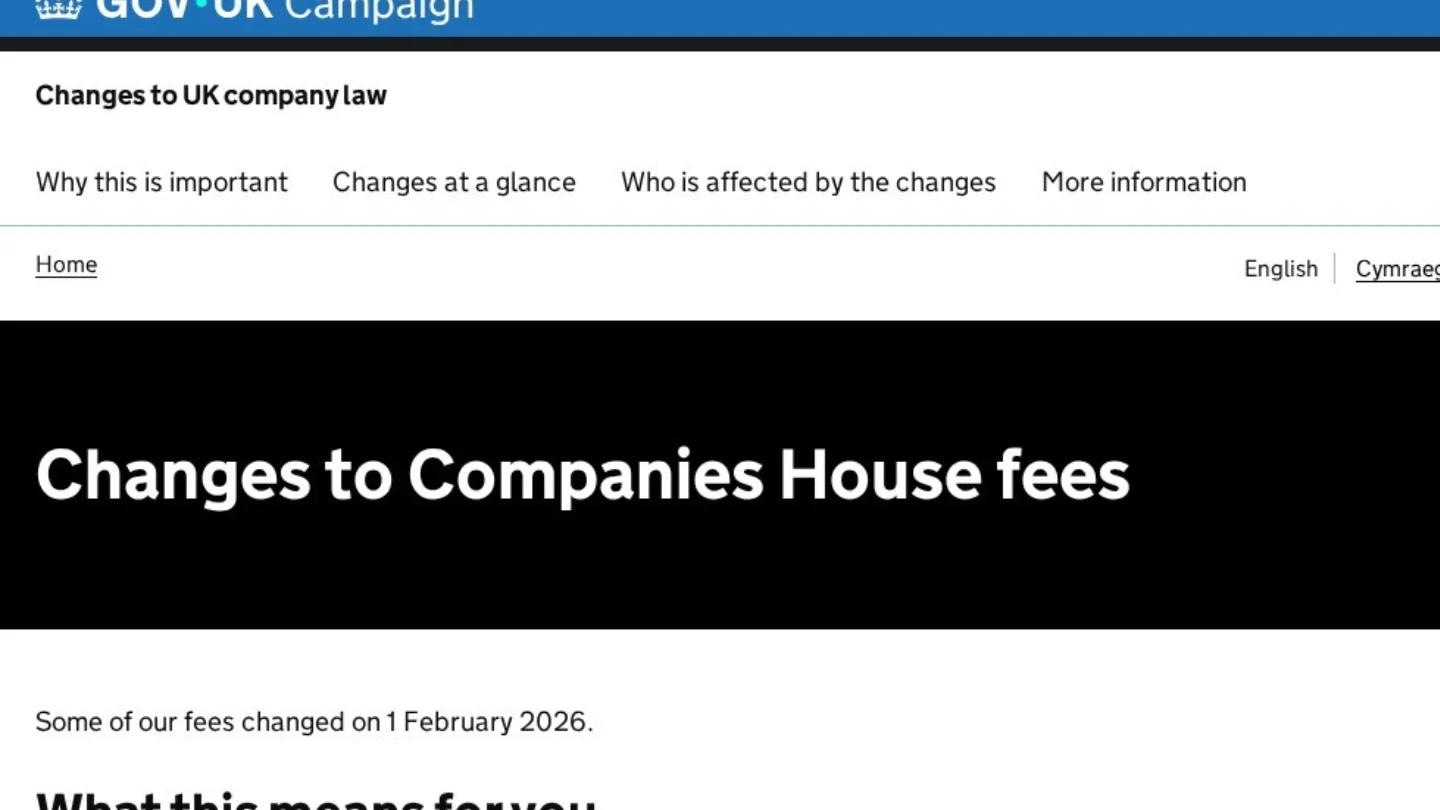
A new LLP pays Companies House £150 in its first year if it files online, or £234 if it files on paper. That covers registration and one confirmation statement, at the fees set on 1 February 2026.
| Fee | Digital | Paper |
|---|---|---|
| Register the LLP | £100 (£156 same day) | £124 |
| Confirmation statement | £50 | £110 |
| Total for year one | £150 (£206 same day) | £234 |
| Change of name, if needed | £20 (£85 same day) | £30 |
| Voluntary strike off, if you close | £13 | £18 |
So the cheapest route costs £150 in government fees for year one, while the all-paper route costs £84 more. Agent fees, a registered office service and accountancy come on top, and those vary.
Write an LLP Agreement and Register for Self Assessment
An LLP agreement is not part of the registration form, but you should make one with the other members before you trade. It covers profit shares, decision-making, each member’s duties and how people join or leave. You can hire a solicitor or write it yourselves. Also, members in different towns can sign online with one of these DocuSign alternatives.
Next, sort out tax. An LLP does not pay tax on profits itself. Instead, each member pays tax on their share and registers for Self Assessment with HMRC. Then the designated members register the LLP itself for Self Assessment, using form SA400.
VAT, meanwhile, has its own threshold. The designated members must register for VAT if they expect sales over £90,000 a year. For bookkeeping, compare the tools in our list of accounting software for small businesses.
Read also: How to Register an LLP in the USA
Diary the Accounts and Confirmation Deadlines
An LLP’s yearly accounts are due 9 months after its year end date. The yearly confirmation statement is due as well. First accounts get more room, though. If they cover more than 12 months, you get 21 months from the start date or 3 months from the year end, whichever is longer. The deadline applies even on a Sunday or bank holiday.
| How late the accounts are | Penalty on the LLP |
|---|---|
| Up to 1 month | £150 |
| 1 to 3 months | £375 |
| 3 to 6 months | £750 |
| Over 6 months | £1,500 |
Late filing is also a criminal offence, and designated members risk prosecution. On the plus side, a small LLP can skip the audit. To count as small, it must meet two of three tests. Sales must be £15 million or less, the balance sheet £7.5 million or less, and staff 50 or fewer on average.

The confirmation statement took the place of the old annual return. Also report changes to the name, office, members and PSCs as they happen. If you are comparing countries, see our guides to registering an LLP in Singapore and registering an LLP in India.
UK LLP Registration Questions
How much does it cost to register an LLP in the UK?
It costs £100 to register an LLP in the UK by software, £156 for same-day service and £124 on paper. After that, the first confirmation statement costs £50 online or £110 on paper.
Can I register an LLP online with Companies House?
Yes, you can register an LLP online with Companies House through commercial software. The only other route is the paper LL IN01 form, and a formation agent can also file for you.
How many people do you need for an LLP?
You need at least two people for an LLP, and at least two designated members at all times. Members can be individuals or companies.
Do LLP members need to verify their identity?
Yes, all LLP members need to verify their ID with Companies House. The form then asks for each member’s personal code. You can verify through GOV.UK One Login, a Post Office or an authorised service provider.
Does an LLP pay corporation tax?
No, an LLP does not pay corporation tax. Instead, each member pays tax on their share of the profits through Self Assessment. The designated members also sign the LLP itself up for Self Assessment.