AR and VR application design careers cover the people who plan, draw, build and test apps for headsets like Apple Vision Pro and Meta Quest. The best paid route is XR development, since US software developers earned a median $135,980 in May of last year, going by the Bureau of Labor Statistics. Designers and 3D artists earn a little over $100,000 at the median in the closest BLS job groups.
The BLS does not track “XR designer” as its own job. So the pay numbers come from the nearest groups: software developers, QA testers, web and digital interface designers, and special effects artists and animators. Each one maps to a real role on an XR team.
Nine roles stand out, from XR designer and 3D artist to spatial audio designer, and each needs its own skills. Pay, the main tools from Apple, Meta, Unity and Epic, and a clear plan to land a first job matter just as much.
Each role also has a type of person who should skip it. In fact, the gap between a coder’s day and an artist’s day on the same headset app is wide, so it pays to know which side you lean toward before you spend months on a course.
Best Career Options in AR and VR Application Design
The best career options in AR and VR application design are XR developer, XR designer and 3D artist, with technical artist close behind. Developers earn the most, while designers and artists earn a little less and shape how the app looks and feels. The other roles, such as UX research and spatial audio, are smaller but growing niches inside bigger teams.
1. Unity XR Developer
Unity is one of the main engines Meta supports for Quest, and its Unity setup docs walk you through its Meta XR Core SDK, plus extra kits for hand input, body movement and voice. A Unity XR developer writes the C# code that makes objects react when a user grabs, points or looks. You also learn to test on a headset, using Link on Windows or the Meta XR Simulator on a Mac.
Pay tracks the software developer group, the best paid of the four BLS groups used here. If you dislike debugging for hours, though, pick a design or art role, because much of the day is spent finding why a hand model slips through a table.
2. Unreal Engine Developer
Unreal Engine is the other big choice, and teams often pick it when visuals matter most, such as in car showrooms, training sims and film previs. You work in C++ and Blueprints, Unreal’s visual scripting tool. Studios use it when the app must look close to real life.
Unreal is free for people and small firms with under $1 million in yearly gross revenue. So you can learn and ship at no cost. Skip this path if you want quick results on a low-end laptop, because Unreal projects need a powerful graphics card and a lot of disk space.
3. XR Interaction Designer
An XR interaction designer decides how people move, pick, type and read inside a 3D space. Apple’s visionOS pathway asks designers to learn windows, volumes and spaces first, then its guides on eyes, gestures and spatial layout. You will also make sure text stays readable and menus sit at a comfortable distance.
Pay lines up with web and digital interface designers, who earned a median $104,000 in May of last year. Screen-based UX designers move into this role most easily. People who want to code full time should choose the developer track instead, since this job is mostly sketches, prototypes and user tests.
4. 3D Artist and Animator
Special effects artists and animators held about 51,900 US jobs last year and earned a median $102,030 in May of last year. In XR, they model objects, rig characters and build scenes that must run fast on a headset. Those who work for software publishers earned a median $127,670, the highest of any industry the BLS lists for them.
However, the BLS expects little or no change in jobs from last year to 2035, with about 4,200 openings a year. Also, 63% of these workers are self-employed. So this path favors freelancers over people who want a steady salary right away, and it is a poor choice if you hate building a portfolio.
5. Technical Artist
Halfway between art and code, a technical artist makes 3D assets run well on a headset. That means shaders, lighting, texture limits and frame-rate checks. On Apple’s platform, it also means Reality Composer Pro, which uses the USD file format to build scenes and add MaterialX shaders.
The job needs someone who enjoys both art and code. If you only want to paint or only want to code, though, the daily mix of tasks will wear you down.
6. VisionOS App Developer
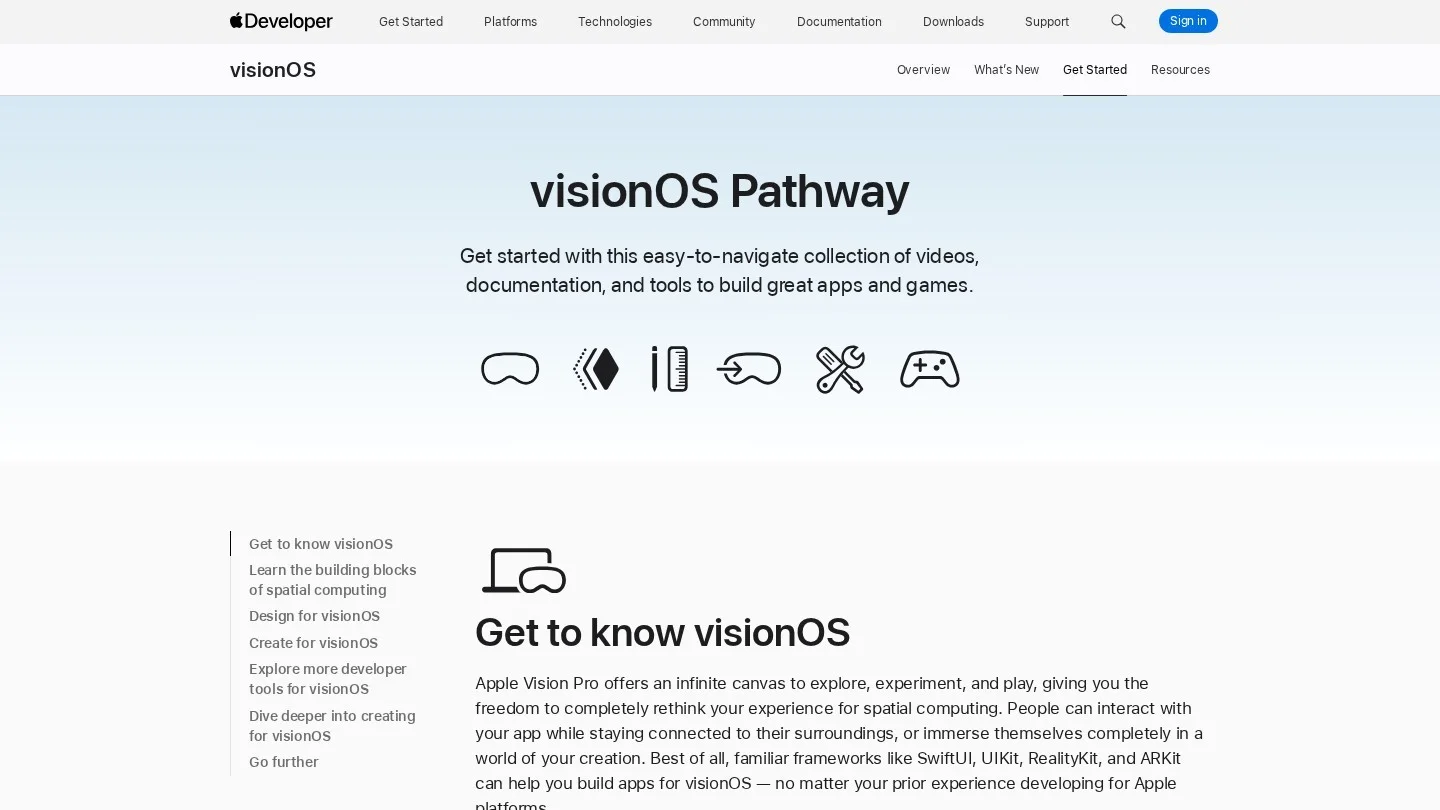
Apple Vision Pro apps are built in Xcode with SwiftUI, RealityKit and ARKit. Apple says all new projects use SwiftUI, while RealityKit handles 3D objects and their motion. ARKit adds hand tracking, plane detection and world anchors once an app opens a Full Space.
iOS developers can move into this role fast, since the language and tools are the same. You do need a Mac to build. Anyone who wants to reach the widest base of headset owners on a budget may do better with Unity and Quest first.
7. XR UX Researcher
Motion sickness, tired arms and lost users are the problems an XR UX researcher hunts for. You run tests with real people in headsets, watch where they get stuck and write clear notes for the design team. Good research finds these issues early, before the team builds the wrong thing.
This job is a natural next step for people with a psychology or UX research degree. It is rare as a full-time post, though, so most researchers also do some design. If you want to make things with your hands every day, choose design or art.
8. Spatial Audio Designer
In XR, sound tells users where to look. A spatial audio designer places sounds in 3D so a voice seems to come from the left or a bell rings behind you. Apple lists its PHASE audio engine among the tools for visionOS apps.
Sound designers from games and film fit in well here. However, expect to mix XR work with game or film audio at first, often on contract.
9. XR QA Tester
Software QA analysts and testers earned a median $104,300 in May of last year, with 6% job growth projected from last year to 2035. In XR, testers check frame rates, hand input and comfort, often in short headset sessions. Apple’s pathway also points teams to XCTest for automated tests.
QA is a common way into a studio without a degree in computer science. Our list of top paying certifications without a degree covers other routes. On the other hand, it is not a good choice if long, repeated test runs bore you.
What AR and VR Jobs Pay
AR and VR jobs pay from about $102,000 to $136,000 at the median in the US, based on the four closest BLS job groups for May of last year. Developers sit at the top. Designers, testers and animators sit close together just above $100,000.

| BLS job group | XR role it maps to | Median pay, May of last year | Job growth to 2035 |
|---|---|---|---|
| Software developers | Unity, Unreal and visionOS developer | $135,980 | 10% |
| Software QA analysts and testers | XR QA tester | $104,300 | 6% |
| Web and digital interface designers | XR interaction designer | $104,000 | 6% |
| Special effects artists and animators | 3D artist, technical artist | $102,030 | 0% |
Keep in mind that these are national medians for whole job groups, not for XR alone. Also, software developers held 1,717,800 US jobs last year, while special effects artists and animators held about 51,900, so the developer track has far more openings. For a wider view, see the highest paying AI careers.
Read also: Top Career Options After 12th PCB Without NEET
Tools to Learn for XR Design
The tools to learn for XR design are Unity or Unreal Engine for building, plus Apple’s and Meta’s own kits for each headset. Both engines are free to learn. Even so, the paid tiers matter once you earn money from your work.
- Unity: Unity Personal is free for those with up to $200,000 in revenue and funding. Unity Pro costs $2,310 a year per seat, or $210 a month, after a 5% price rise that began on January 12, 2026.
- Unreal Engine: Free under $1 million in yearly gross revenue. Games and apps then pay a 5% royalty on lifetime gross revenue above $1 million, and non-game firms over the limit pay $1,850 per seat per year.
- Apple visionOS: Xcode, SwiftUI, RealityKit, ARKit and Reality Composer Pro, all listed on the visionOS pathway.
- Meta Quest: The Meta XR Core SDK, the Interaction SDK, the Movement SDK, the Voice SDK and the Mixed Reality Utility Kit, plus Meta Quest Developer Hub to send apps to a headset.
Also, pick one 3D tool, such as Blender, for modeling. If you start from flat plans, these 2D to 3D model tools can save time. Many teams care more about clean, light models than about which tool made them.
How to Start a Career in AR and VR
To start a career in AR and VR, pick one role and one headset, build three small apps and show them in a portfolio. A bachelor’s degree is the usual entry level for software developers and for animators. However, a working demo on a real headset often opens doors faster than a certificate.
- Choose your side: code, design or art. Then pick Unity with Quest, or Xcode with Vision Pro.
- Follow the free getting-started docs from Meta or Apple until you can run a sample app on a device or simulator.
- Build three small projects, such as a room you can walk through, an object you can grab and a menu you can use with your eyes or hands.
- Record a short video of each one in the headset, so people without a headset can see it.
- Post your work on a portfolio site and share the code on GitHub if you are a developer.
- Apply for junior, QA or contract roles at studios, training firms and agencies, then move up from there.
Also, test every build on a real device before you show it. Comfort problems such as jitter or text that is too small do not show up on a flat screen. It also helps to study paid Quest apps, such as the one in our Supernatural VR price guide.
FAQs
Which AR and VR Job Pays the Most?
XR developer pays the most, in line with US software developers, who earned a median $135,980 in May of last year. Designers and 3D artists earn a little over $100,000 at the median.
Do I Need a Degree for AR and VR Design?
A bachelor’s degree is the usual entry level for software developers and animators. Even so, a portfolio of working headset apps carries a lot of weight, and QA roles are a common way in without one.
Should I Learn Unity or Unreal First?
Learn Unity first if you want to build for Meta Quest, since Meta’s Unity docs cover its full set of XR kits. Pick Unreal if you want photo-real visuals for training, cars or film.