Median US pay in the job groups closest to autonomous vehicle testing runs from $37,290 for shuttle drivers and chauffeurs to $135,980 for software developers, in May data from last year from the Bureau of Labor Statistics. That gap exists because “AV tester” can mean the person at the wheel, the engineer who writes the test plan or the one who builds virtual test roads.
Hiring is narrow. The California DMV has given 25 firms permits to test self-driving cars with a safety driver, and only 6 firms hold permits to test with no driver, so most jobs sit with a small group of firms in a few cities. Most people get in as a test driver or a test engineer.
Engineering interviews tend to touch on two safety standards, ISO 26262 and ISO 21448, and a California safety driver needs a clean record plus a state permit, form OL 314. AV work is one branch of a wider set of highest paying AI careers.
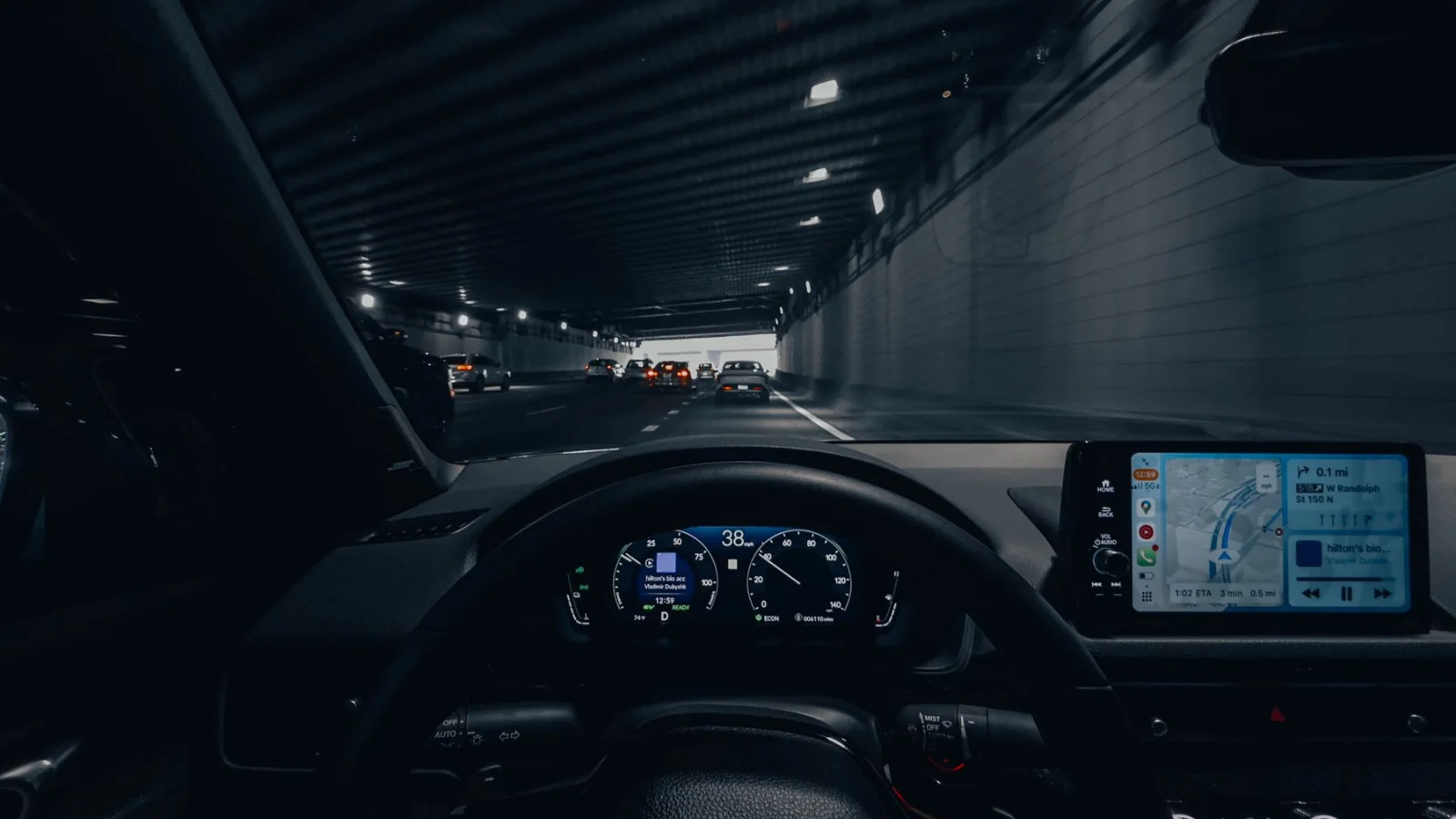
Where AV Testing Jobs Are Today
AV testing jobs are mostly with the firms that hold state permits to test or run self-driving fleets. In California, the DMV’s permit list shows 25 firms cleared to test with a safety driver.

The list of firms that may test with no one at the wheel is much shorter. Six hold those permits: AutoMo USA, Nuro, Tensor Auto, Waymo, WeRide and Zoox. Four held deployment permits, which let them serve the public: Mercedes-Benz Research and Development North America, Nuro, Waymo and Zoox.
Trucks and delivery robots add more jobs. Freight has its own group of autonomous trucking companies, and autonomous delivery robot companies run small robots on the sidewalk, where test teams tend to be small and each person does more than one job.
Six Roles in Autonomous Vehicle Testing
Six main roles make up AV testing, from the driver’s seat to the data desk. For most people with no degree, the best way in is as a test driver, while the best pay is on the engineering side.
Test Operator or Safety Driver
Test operators ride in the car during road tests, watch the system, take the wheel when needed and log what happened. In California, each driver must be named to the DMV and hold a test vehicle operator permit, and the maker must certify that the driver finished its own training program. Shifts can be long and repetitive. If you dislike sitting still for hours while staying alert, this role will wear you down fast.
Systems Test Engineer
Writing test plans is the core of this job. A systems test engineer takes a feature, such as a left turn across busy traffic, and turns it into test cases on a closed track, on public roads and in software. Then they read the logs to see what went wrong. An engineering or computer science degree is the usual route in, and BLS lists a bachelor’s degree as the typical entry level for software QA testers. People who want to avoid code should look at other roles, because log analysis is daily work.
Simulation Engineer
Simulation engineers build the virtual roads where AV software gets tested before it reaches a real car. They script rare events, such as a child running out between parked cars, and replay real drives with small changes to see how the system copes. Skills from games and 3D work carry over well, and so does time spent on AR and VR application design careers. You will spend most days at a desk, far from real cars.
Validation and Verification Engineer
Verification asks “did we build it right?”, while validation asks “did we build the right thing?”. V&V engineers link every safety need to a test and a result, so the firm can prove its case to the state and to its own board. The work is careful and paper-heavy, and it rewards people who like order. Those who want fast, hands-on tinkering will find it slow.
Safety Analyst
Safety analysts look for ways the system could fail before it does. They run hazard analyses, rate risks, and track the triggers that could fool the sensors or software, which is the heart of ISO 21448. The same skills carry over from other safety fields, such as aerospace, rail and medical devices. Graduates with no safety background rarely start here, so plan on a few years in test or systems work first.
Data Annotator
Data annotators label camera, radar and lidar data. They mark cars, people, signs and lanes so the models can learn and test teams can score each run. Some of this work is remote, and it can be a door into QA roles, much like other remote jobs in software testing. Pay and job security vary a lot from one vendor to the next, so ask whether a post is staff or contract before you accept.
How Much AV Testing Jobs Pay
Pay tracks the job group behind each role, from about $37,000 to about $136,000 in median US pay. Software developers sit at the top in the BLS Occupational Outlook Handbook for May of last year, and shuttle drivers and chauffeurs at the bottom.

| Job Group | AV Roles It Maps To | Median Pay, May of Last Year | Job Growth, Ten Years to 2035 |
|---|---|---|---|
| Software developers | Simulation, test tools, test automation | $135,980 | 10% (with QA testers) |
| Software QA analysts and testers | Systems test, V&V | $104,300 | 10% (with developers) |
| Mechanical engineers | Vehicle and hardware test | $104,110 | 11% |
| Taxi drivers, shuttle drivers and chauffeurs | Test operator, safety driver | $37,960 ($18.25 an hour) | 9% |
BLS also counted about 187,600 software QA analyst and tester jobs and about 298,500 mechanical engineer jobs last year, so these are large fields where AV skills can still lead to work outside self-driving firms.
Read also: Remote Jobs in Software Testing: The Best Career Path
Skills Hiring Teams Look For
Hiring teams look first for clear test thinking: the habit of asking what could go wrong and writing it down so someone else can repeat it. After that, the skills split by role.
- Test drivers need a clean record, calm hands and the habit of writing short, clear notes.
- Test and V&V engineers need Python, SQL for log data, and a working grasp of sensors such as lidar, radar and cameras.
- Simulation engineers need C++ or Python and some 3D tools, such as a game engine.
- Safety analysts need to know how to run a hazard study and the terms used in ISO 26262 and ISO 21448.
- Every role gains from knowing how the parts fit, from the sensors to the route plan to the brakes and wheel.
A good drill is to sketch how self-driving delivery vehicles work, from sensor to wheel, and then draw the same flow for a robotaxi.
Safety Standards Worth Learning
The two standards worth learning are ISO 26262, on functional safety, and ISO 21448, on the safety of the intended function, or SOTIF. Engineers, analysts and V&V staff hear both names in job talks.
ISO 26262 deals with safety in the electric and electronic systems of mass-built road vehicles, though not mopeds. Part 1, the word list, is in its second edition from December 2018. A new draft is on the way, so check which edition a job post means.
ISO 21448 came out in June 2022. It defines SOTIF as “the absence of unreasonable risk due to a hazard caused by functional insufficiencies.” In plain terms, a car can be unsafe even when nothing is broken, for example when glare fools a camera. ISO has also marked this standard for review.
Many training firms sell short courses on both standards. They are optional, but a course plus a small project, such as a hazard study of a lane-keeping feature, gives you something real to talk about in a job talk. Plenty of other high paying certifications without a degree work the same way, as proof you can point to.
Rules for Safety Drivers in California
Safety drivers in California must meet the record and training rules in Title 13, section 227.34 of the state’s regulations. The firm must name each driver to the DMV in writing, and each driver must hold the state’s test vehicle operator permit, form OL 314.
- You must have held a driver’s license for the three years right before the application.
- You can have no more than one violation point under the listed Vehicle Code rules.
- You cannot have been the at-fault driver in a crash that hurt or killed anyone.
- You cannot have a DUI conviction, or a license suspension for impaired driving, in the past ten years.
- You must finish the maker’s own AV test driver training program, and the maker must certify the date.
Other states set their own rules, so check the motor vehicle agency in the state where a job is based before you apply.
How to Get Your First AV Testing Job
The fastest way into AV testing is to pick one role, build proof for that role and apply where fleets are already running.
- Pick a target role from the six above, based on your degree, driving record and how much code you want to write.
- Check the permit lists in states such as California to see which firms are testing near you.
- For driver jobs, keep your record clean and practice writing short, plain notes on what went wrong.
- For engineering jobs, build one public project, such as a test plan for an open set of driving data or a small sim of a tricky road scene.
- Read the free abstracts of ISO 26262 and ISO 21448 on the ISO site, and learn the main terms.
- Apply to tier-one suppliers and test track operators as well as AV firms, since their test jobs teach the same skills.
- After a year, ask about a move into triage, data or test support, since by then you know how the system acts on the road.
Read also: Top Career Options After BCom Without Maths, Ranked
Who Should Not Pick This Career
This career is not a good choice for people who need to live far from the few test cities or who want a fixed, quiet routine. Firms tend to cluster where they hold permits, and teams can shrink or move when a program changes.
Driver jobs are also at risk as more fleets go driverless. With six firms already cleared to test with no driver in California, treat the driver’s seat as a first step and build data or test skills while you are in it.
Common Questions About AV Testing Work
Do You Need a Degree to Work in AV Testing?
You do not need a degree to be a test driver or to label data. But engineering jobs in test and sim work tend to ask for a bachelor’s degree, and BLS lists that as the usual entry level for software testers and for mechanical engineers.
What Is the Best Entry Role in AV Testing?
The best first job for most people is test driver, because it needs no degree and shows you how the system acts on real roads. Those with an engineering or computer science degree should aim straight for test or sim work, since the pay gap is wide.
What Is ISO 21448 in Simple Terms?
ISO 21448 is a standard for making sure a system is safe even when nothing is broken. It deals with limits in what sensors and software can see and decide, such as glare, odd road markings or rare objects.
How Many Companies Test Self-Driving Cars in California?
Twenty-five firms hold California permits to test self-driving cars with a safety driver. Six held permits to test with no driver, and four held permits to serve the public.